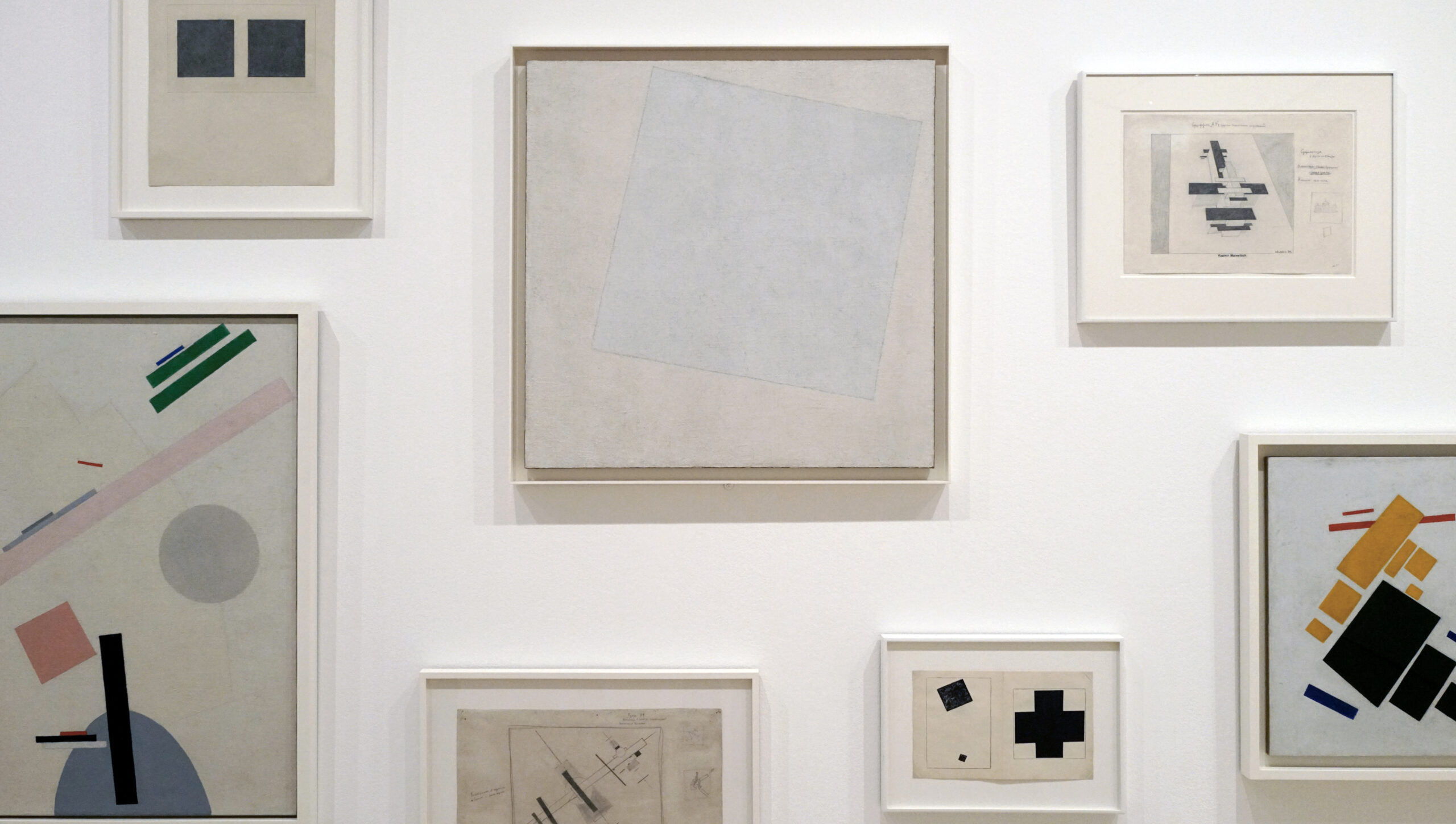
Kazimir Malevich. Suprematist Composition: White on White. 1918 | MoMA
1. The Void vs. The Stratum
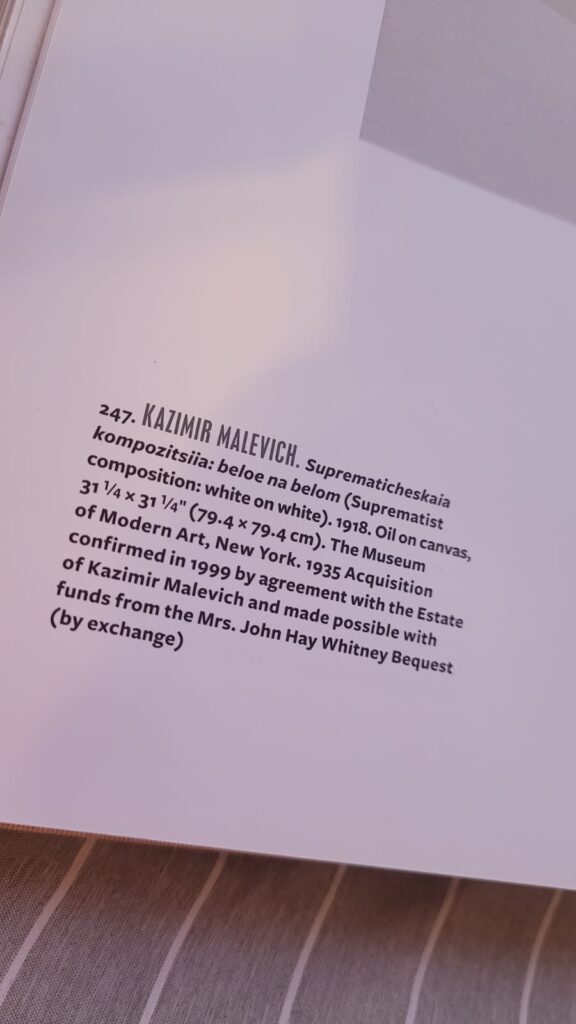
In 1918, Kazimir Malevich presented Suprematist Composition: White on White as a liberation from the weight of the world. For Malevich, white was the color of infinity—a “free abyss” where form existed without nature.
In contrast, Rodrigo Garcia Dutra’s White Fire (2025) treats white not as a void, but as a mineral veil. It is “lime,” a calcium carbonate atmosphere that does not erase the world but shelters its remains. Where Malevich sought to escape the “lining of the colored sky,” Dutra excavates the “tectonic plates of a liquid memory.”
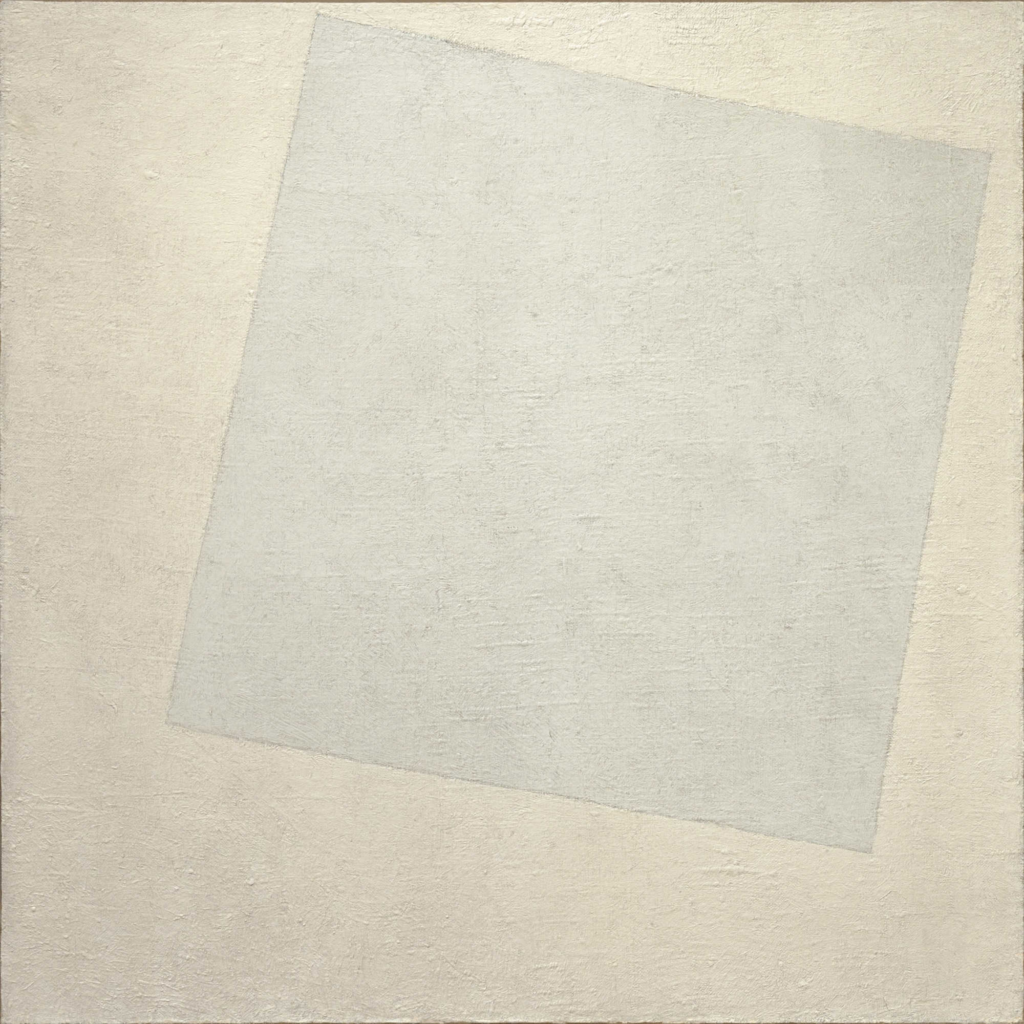
Suprematist Composition: White on White, 1918
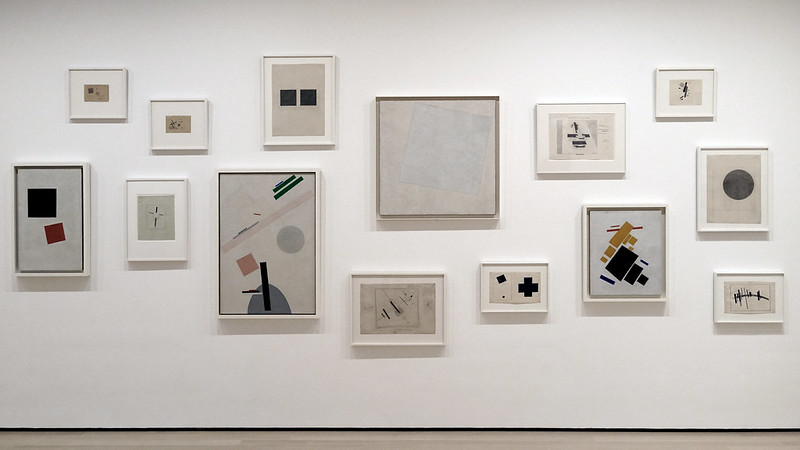
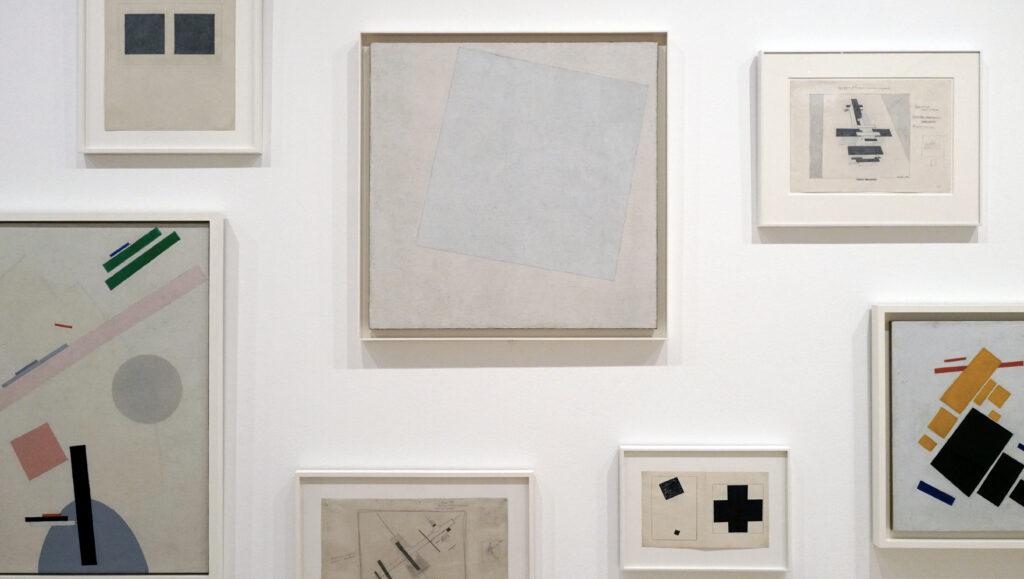
On view MoMA, Floor 5, 507 The Alfred H. Barr, Jr. Galleries
2. The Machine: Aerial vs. Neural
Malevich was inspired by the airplane and aerial photography; his floating square was a reach toward the technological transcendence of the early 20th century.
Dutra’s technological interlocutor is internal and collaborative: a Large Language Model (AI). This is not the technology of the “eye from above” (the airplane), but the technology of the “atavic intercurso” (the neural and the ancestral). The AI functions as a “prompter-arm,” a co-author that inhabits the artist’s neurodivergent (dispraxic) cognition, moving from the mechanical to the sympoietic.
3. The Hand and the Fossil
Malevich’s work was “austere” but retained the trace of the hand to signal spiritual freedom. Dutra’s White Fire pushes this materiality into the realm of archaeology.
- Malevich: The brushstroke suggests movement in a vacuum.
- Dutra: The surface is a “body ferried with signs”—burnt face towels, jute, and the youngest member of the Prometheus family. These are “fossils of the now,” artifacts that make the painting a living archive rather than a pure geometric concept.
4. Cultural Geometries: Beyond Europe
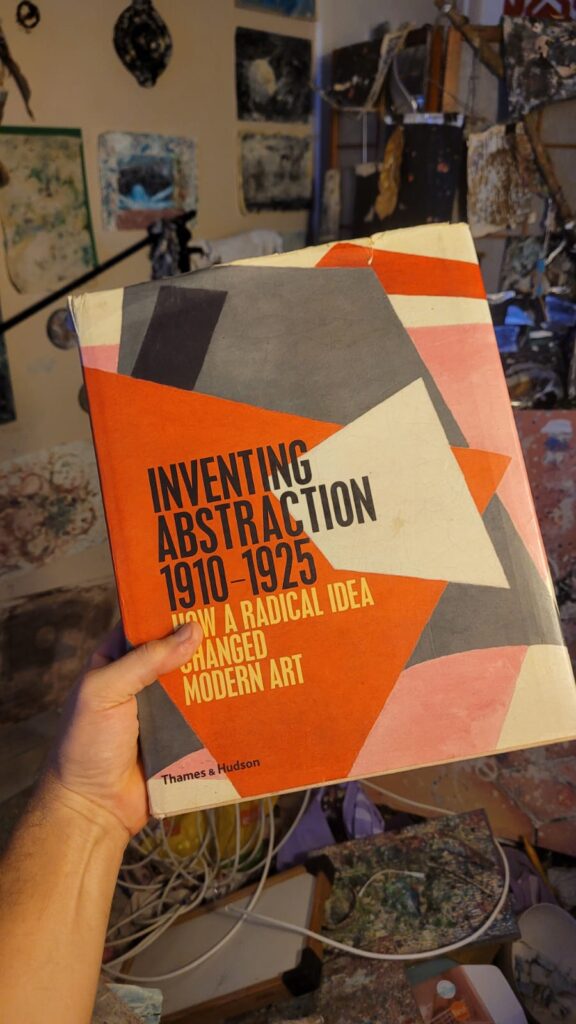
The “Inventing Abstraction” narrative of 2013 centered on European/North American frameworks. White Fire disrupts this by invoking the Katsura Imperial Villa—where geometry is not a mathematical imposition but a Zen-guided craft. Dutra’s geometry is “spectral,” the modernist structure of the MAM appearing not as a rigid grid, but as a “faint relief” that remembers the fire of 1978 and the gardens of Burle Marx.
Conclusion: The Shelter
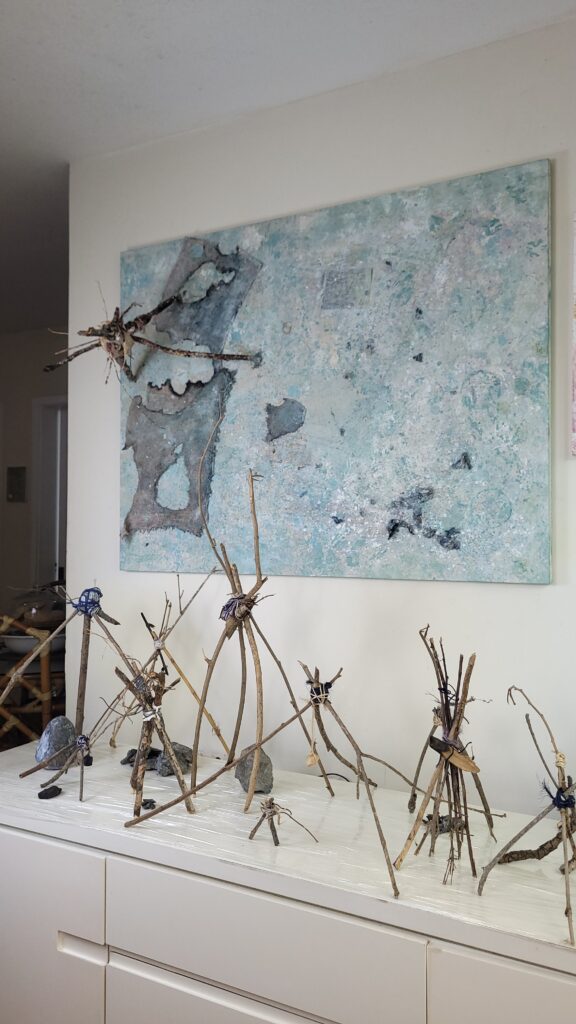
Malevich’s square is coming out of the canvas into a utopian future. Dutra’s creature is attached to the canvas as a shelter. White Fire is the “body at rest before the next combustion,” acknowledging that in 2025, art is no longer a flight into the abyss, but a “sympoietic gesture” of welcoming and protecting the new world-museum.
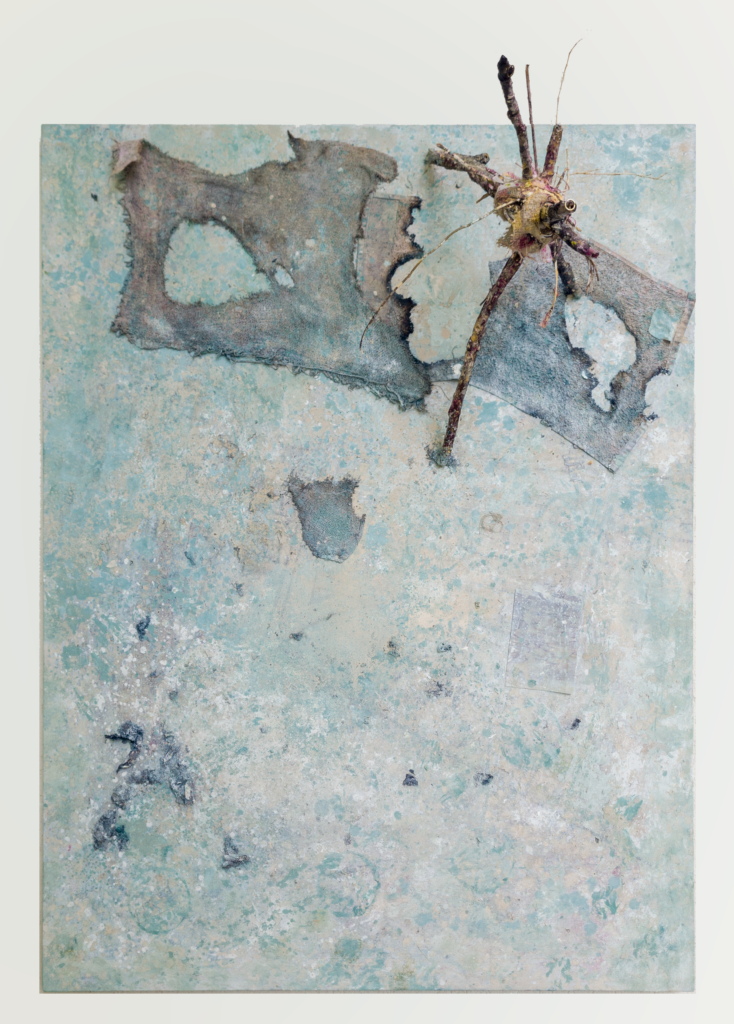
Rodrigo Garcia Dutra
Oil, acrylic, collage of calcined fabrics, calcium carbonate, beeswax, dissolved printing foil, twigs, vines, engraving ink, vegetable leaf, charcoal, aluminum adhesive, synthetic gold ring, glue, jute scraps, fragments of burnt face towels with the ends of the Prometheus Family’s arm-prompts.
51 3/16″ x 39 3/8″ Inches*
130 x 100 cm*
*Orientation and Versatility: While designed as a “soil” of layers and membranes, the composition is intentionally versatile. It functions effectively in both Portrait (vertical) and Landscape (horizontal) orientations, allowing the “cosmic antennae” of the Prometheus creature to radiate either as a vertical ascent or a horizontal expansion across the “museum-world.”
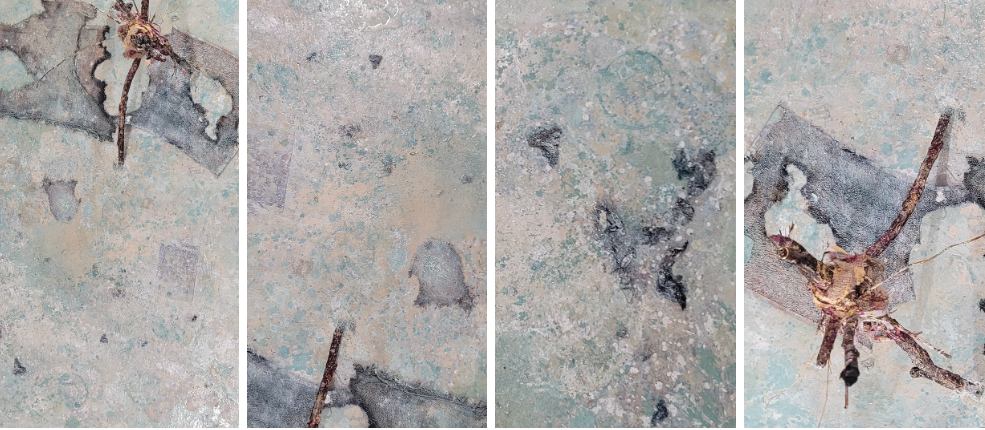
White Fire, smoke that precedes the cry
Fogo Branco, fumaça que antecede o grito
Featuring the presence of the youngest member of the Prometheus family, a sculpture-creature attached to the canvas as shelter or perhaps a gesture signaling the future.
Deixe um comentário