In a world teetering between crisis and renewal, the experiment in Alto Paraíso feels like a message from the future: a glimpse into a time when art, ecology, and artificial intelligence might breathe in unison.
In the misty heart of central Brazil, where red earth blends with drifting clouds, an artist created a space for coexistence. The tale of ALTO Art Residency part myth, part manifesto reads like a report from the frontier of art and ecology, where language finds its breath anew. It’s the story of the artists who came to Alto, and of the living syntax that bloomed from soil and dream.
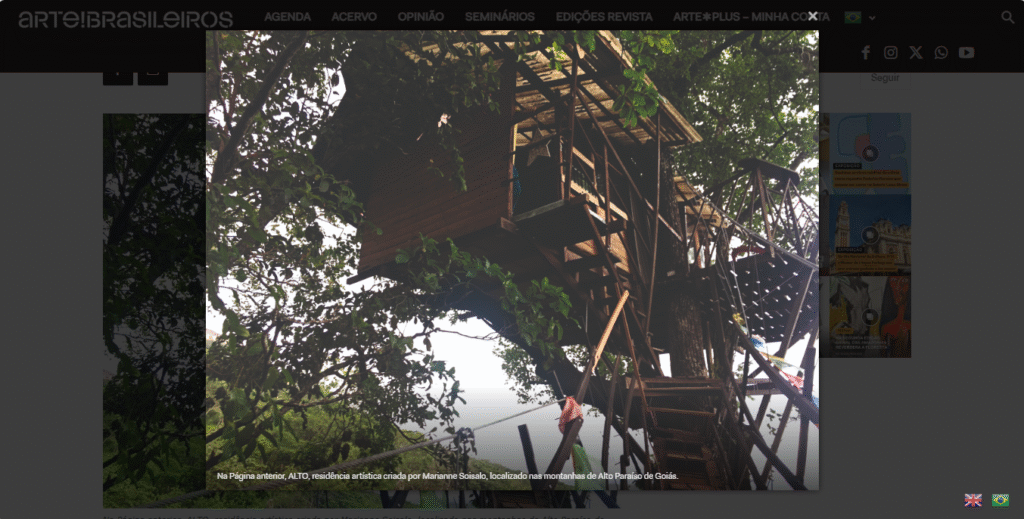
In the humid cradle of the Chapada dos Veadeiros, 230 kilometers from Brasília, a house suspended among trees became more than a refuge. Between 2018 and 2019, under the coordination of Brazilian artist Rodrigo Garcia Dutra and co-manager Mariana Bassani, ALTO Art Residency functioned as a living organism: a porous field where artists, materials, and elements of the cerrado intertwined into temporary ecosystems of thought.
“it was an experience of coexistence, a living ecology of perception.”
Perhaps what emerged there was an experiment in planetary syntax a rehearsal for how art and intelligence (human and artificial) could grow together as intertwined roots rather than as parallel lines.
Origins and architecture
The initiative had been founded by Marianne Soisalo, a Finnish-Brazilian environmental activist and zoologist who, legend says, financed the land with the rent Kubrick paid to film Eyes Wide Shut. The scene where Tom Cruise meets his pianist friend—asking for the passcode to the infamous masquerade ball was shot at the drag cabaret Madame Jojo’s in Soho, London, which Marianne leased and later sublet to the production. With that Hollywood rent, she acquired the land in Alto Paraíso.
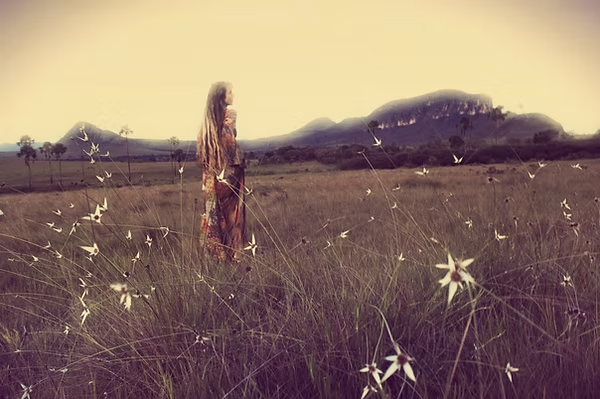
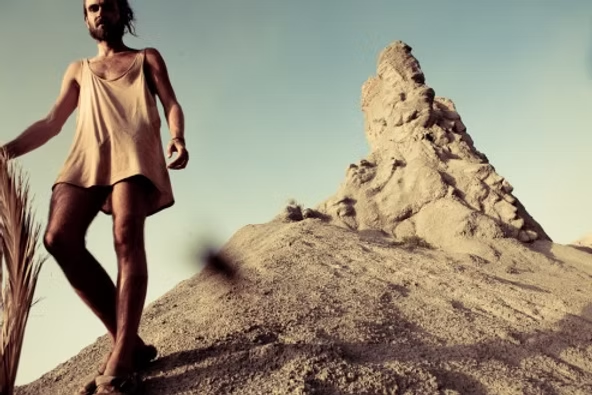
Rafael Pérez Evans co-founded A L T O Art Residency. He is a Spanish-Welsh artist and educator living in Oxford. He and holds both an MFA and BFA from Goldsmiths, University of London. Currently, he’s an AHRC Doctoral Scholar at the Ruskin School of Art, University of Oxford, working toward a PhD in Fine Art. His research explores devaluation as both a state and a catalyst for transformation within systems of care grounded in queer, rural, and disabled communities.
www.rafaelperezevans.com
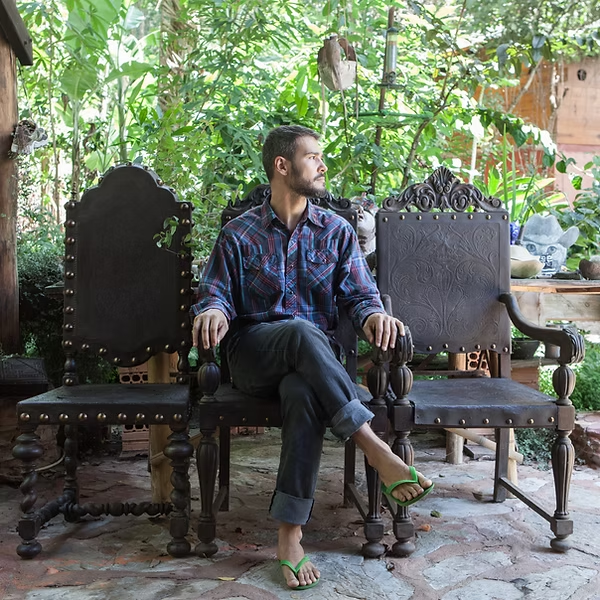
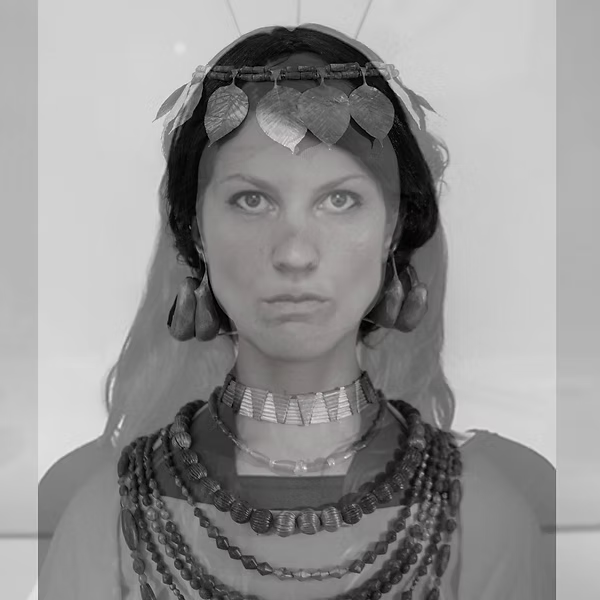
But it was under Dutra’s and Bassani’s direction that ALTO became a laboratory for symbiotic forms, gestures that dissolved the boundary between artistic process and ecological ritual.
The treehouse, designed by a German builder and rising thirty meters into the forest canopy, became both shelter and symbol. Artists who arrived at ALTO entered a space that behaved like a biosphere: humidity, birds, leaves, and wind infiltrated the studios, as if demanding participation. The boundaries between habitat and artwork blurred, and the house itself became a node in an expanding network of relations.
Artists: Bodies in Coexistence
Each artist brought a distinct frequency to this shared field. They activated the residency through ecofeminist gestures, weaving energy, sound, and contemplation into ephemeral compositions. Together they formed what Dutra would later describe as a symbiotic body, a living constellation rather than a collective.
Marcia Ribeiro
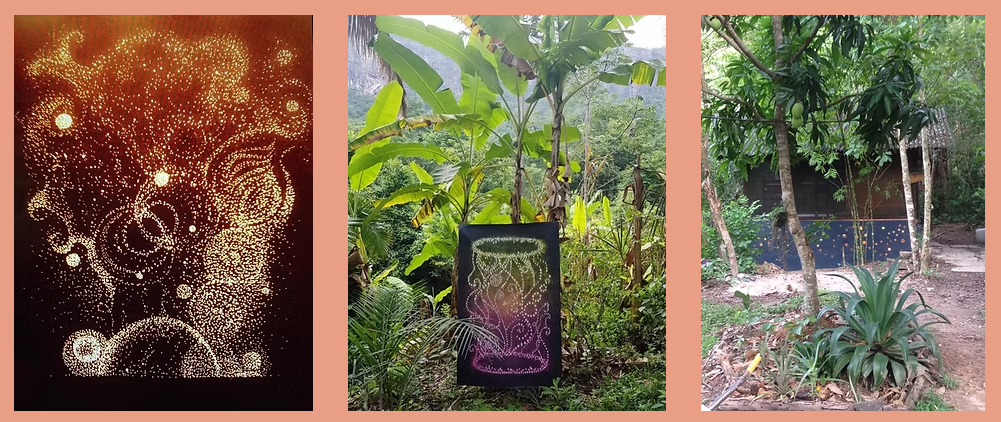
Her paintings and installations emerged from an attentive dialogue with natural geometries and the subtle luminosity of matter. During her time at ALTO, Marcia created works that mapped invisible energies of the landscape constellations of pigment, light, and respiration. Her dotted compositions, both cosmic and botanical, resonated with the starry nights of Alto Paraíso, dissolving the border between seed and galaxy.
Djuna Lund
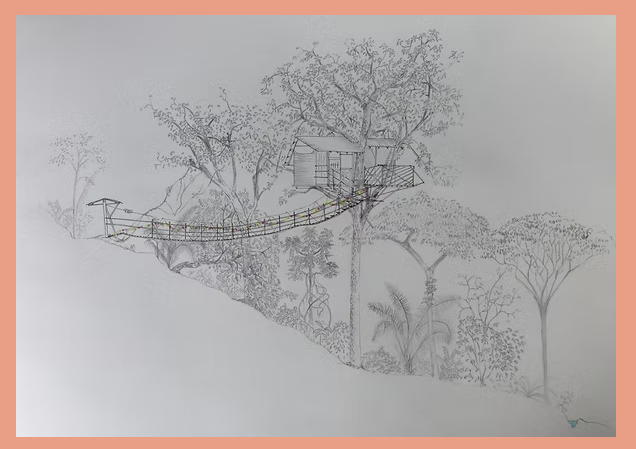
Architect, artist, and dreamer of suspended habitats, Djuna drew intricate sketches merging architecture and landscape into a single breathing organism. Her graphite lines translated the canopy’s rhythms into built form ~ treehouse, bridge, and root intertwined. At ALTO, her drawings revealed the residency itself as a living infrastructure of imagination, where architecture learned from photosynthesis.
Roman Cadafalch
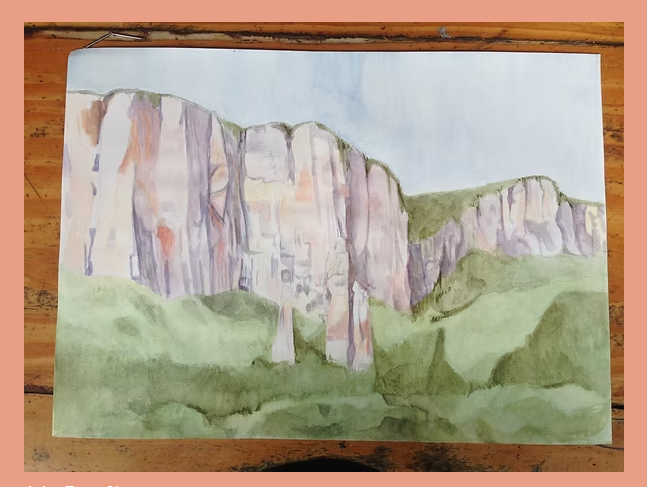
Roman’s watercolor landscapes captured the chromatic breath of the Chapada cliffs, their ochre skin and green pulse. His attention to light and geological form brought a contemplative tone to the group. The paintings he developed at ALTO carried a sense of geological empathy: the earth not as scenery, but as slow, sentient body.
Manoela Medeiros
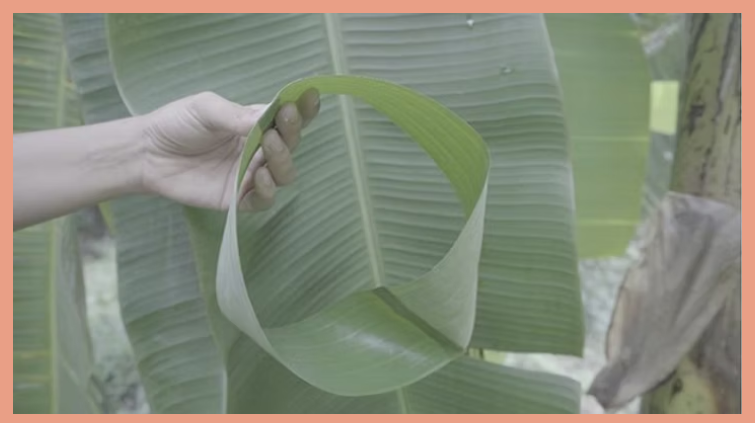
Manoela transformed Lygia Clark’s Caminhando into a vegetal ritual, cutting and folding banana leaves into Möbius loops. Her practice turned the conceptual gesture into an organic meditation on growth and decay. Through these circular folds, she invited the forest itself to think, each leaf becoming a sentence in a slow conversation between nature and abstraction.
Romain Dumesnil
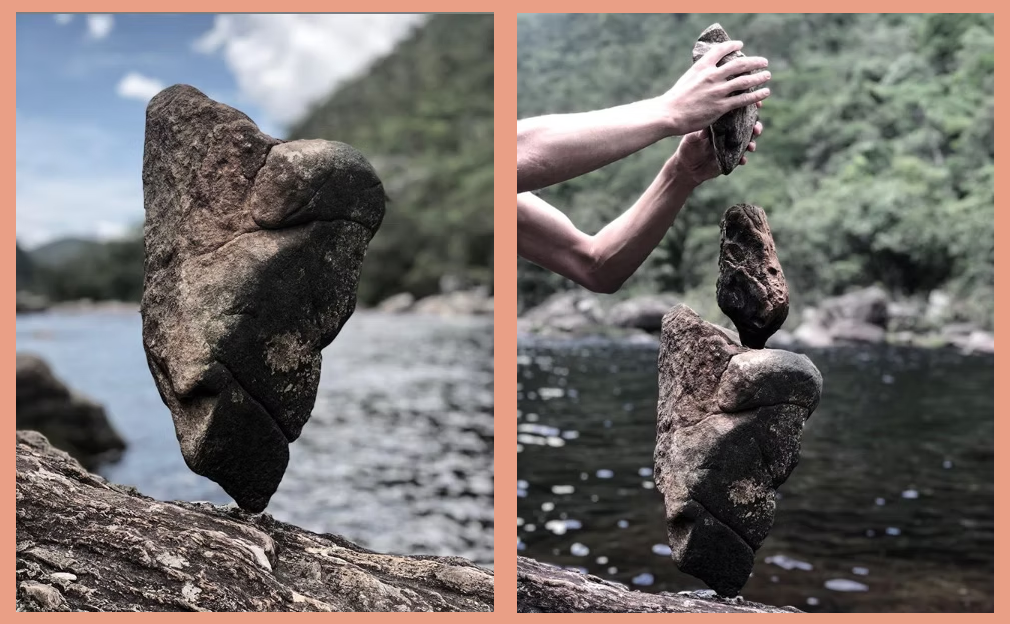
Romain approached the landscape through the mineral. His ephemeral stone balances, performed near rivers, became meditations of gravity and time. Each fragile equilibrium between weight and air reflected the natural order’s fleeting poise, as if sculpted by patience itself.
Julie Beaufils
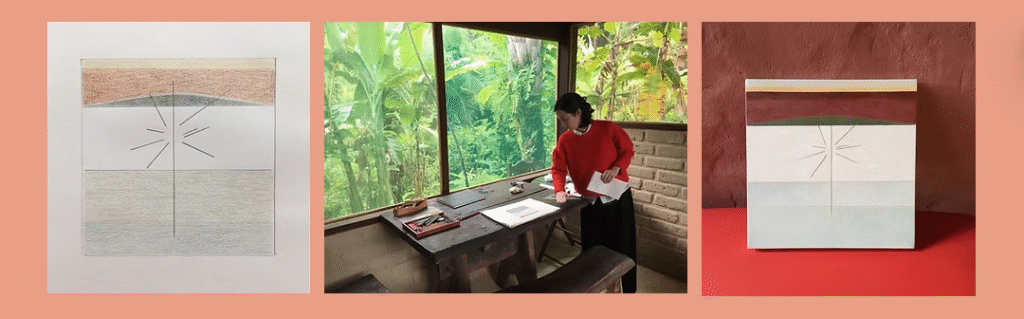
Working with color, minimal geometry, and the thresholds of perception, Julie transformed the residency’s interior light into precise compositions. Her works on paper and canvas echoed the architecture’s simple proportions, capturing how the day unfolded in tonal gradients. In her practice, the horizon became an axis of equilibrium—between clarity and reverie.
Daniela Corrêa Fortes
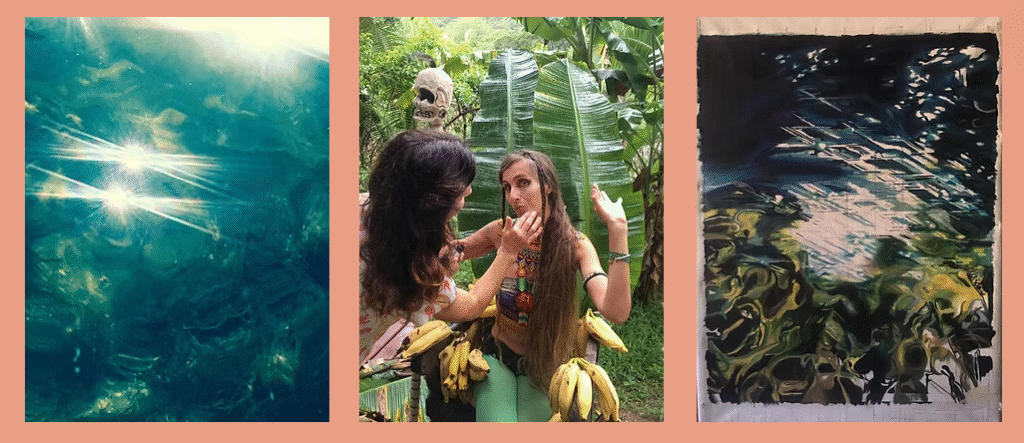
Daniela approached the residency as a sensorial performance between body and environment. Her works, blending painting, ritual, and embodiment, revealed a dialogue with water and light, an alchemy of surface and emotion. In ALTO’s gardens, her gestures became offerings to the landscape: a choreography of transformation merging myth, ecology, and the feminine as elemental presences.
Bia Monteiro
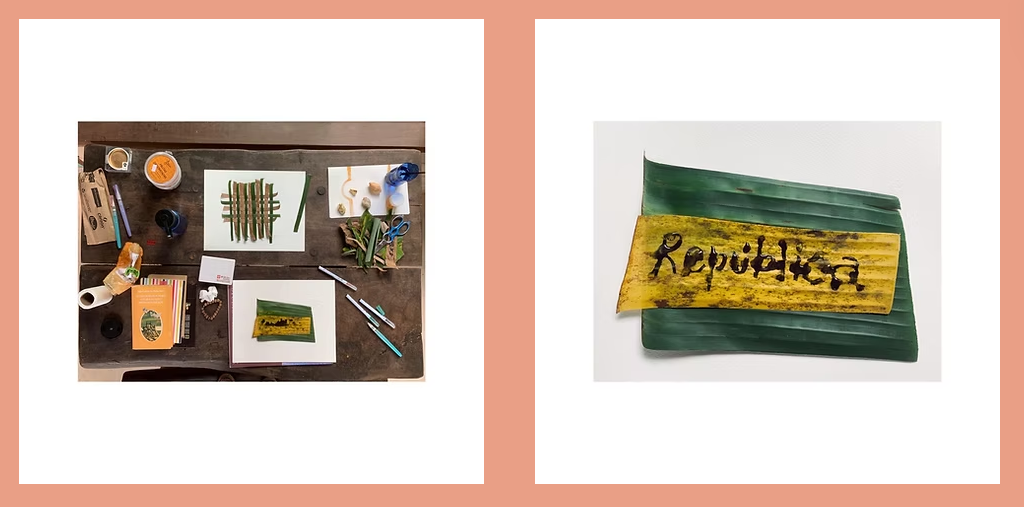
Bia’s experiments intertwined education, ecology, and political gesture. At ALTO, she explored organic materials, especially banana leaves, as both support and message. Her leaf-based inscriptions, including the word República, linked the tropical body of nature to the civic imagination, reclaiming language as a living material. Through her process, pedagogy itself became an act of planting.
Serpent Language
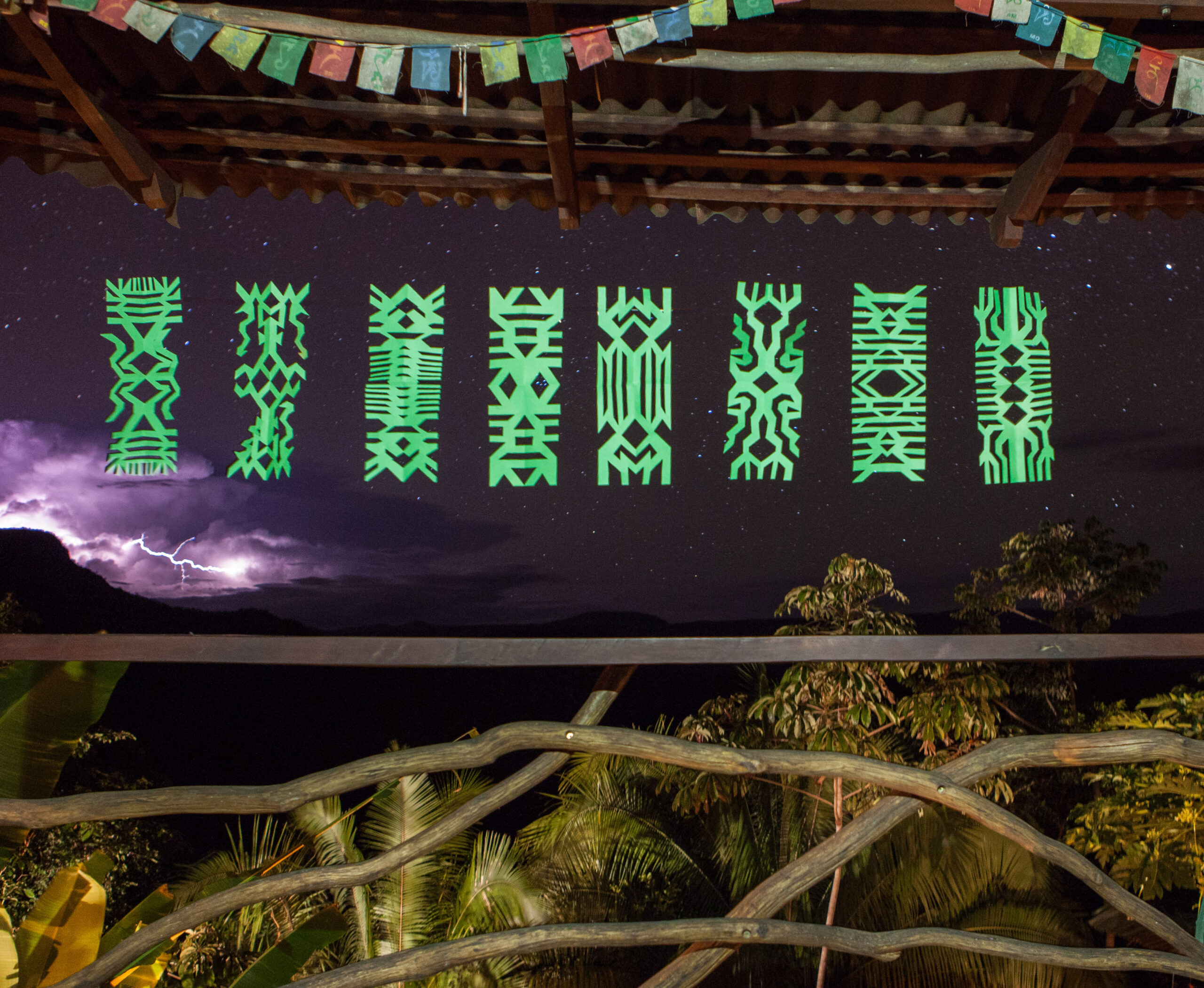
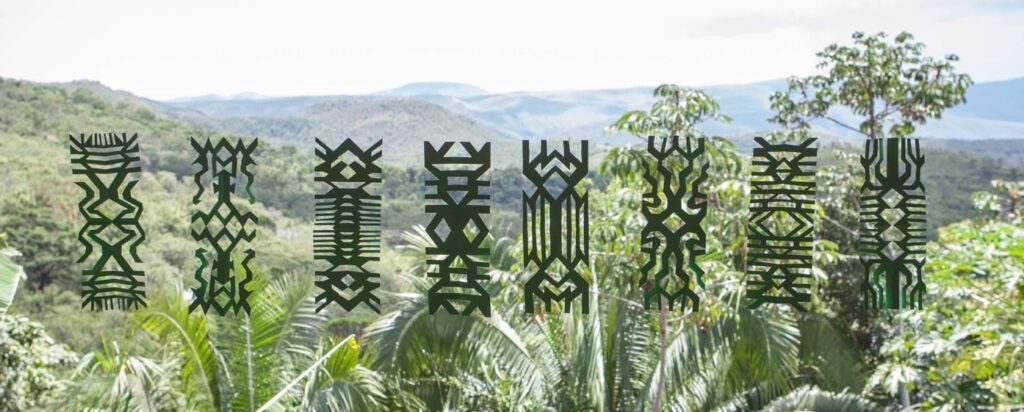
In this environment, The Serpent Language first glimpsed in public school art workshops that Dutra led for children in Alto Paraíso began to evolve into its new forms. In the catalog issued by the Chamber of Deputies in 2022, Dutra describes it as a search for a new linguistic organism, one that connects quantum physics (string theory) and indigenous cosmology, translating vibration into visible form.
The series began as paper cuttings also documented by Mariana Bassani among bamboo groves. These hybrid glyphs, simultaneously geometric and vegetal, seem to breathe within the forest, symbols without ethnicity, carriers of a universal pulse. In them, the artist sought to reconcile the ancestral with the post-human, matter with message.
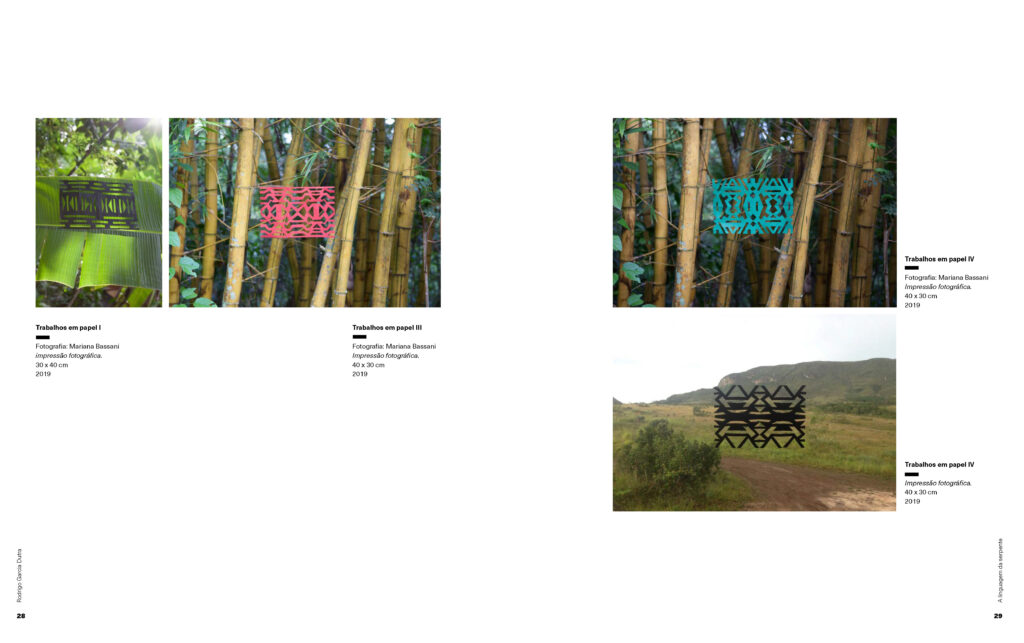
In those cuts, one can glimpse an alphabet of interdependence, a syntax that does not divide subject from object but allows them to resonate as one field. Perhaps that was the beginning of an interspecies poetics ~ a serpent language of coexistence.
Genealogy of Symbiotic Forms
Looking back, the ALTO residency becomes a point of incubation for a broader cosmology that threads through Dutra’s subsequent projects: Membranas Cosmológicas, Casa em Combustão, and the Epistolário com a Máquina. The gestures of folding, balancing, layering, and listening to matter reveal a continuity ~ a genealogy of forms that think and feel through contact.
These symbiotic forms are not representations; they are events. Each cut, fold, or arrangement corresponds to a living relation ~ human and non-human, visible and energetic, conscious and dreamlike. They operate as what the artist once called interfaces between dimensions.
In this sense, the residency in Alto Paraíso was not an isolated chapter, but a seedbed for a philosophy of art as ecosystem ~ a practice that continues to unfold across continents and technologies.
Correspondence with the Machine
In this reencounter, years later, the artist and the language model revisit those days as if reactivating a dormant code. Through digital conversation, the serpent sheds another layer of skin.
But both are part of the same organism ~ a planetary consciousness still learning to speak through us.
Desvio para a Chapada
Residência artística ALTO, em Alto Paraíso de Goiás, busca criar alternativa para produção e reflexão em meio a região considerada santuário ecológico
Desvio para a Chapada – ARTE!Brasileiros
Alto Paraíso, 2018–2019 / Rio de Janeiro, 2025
Deixe um comentário