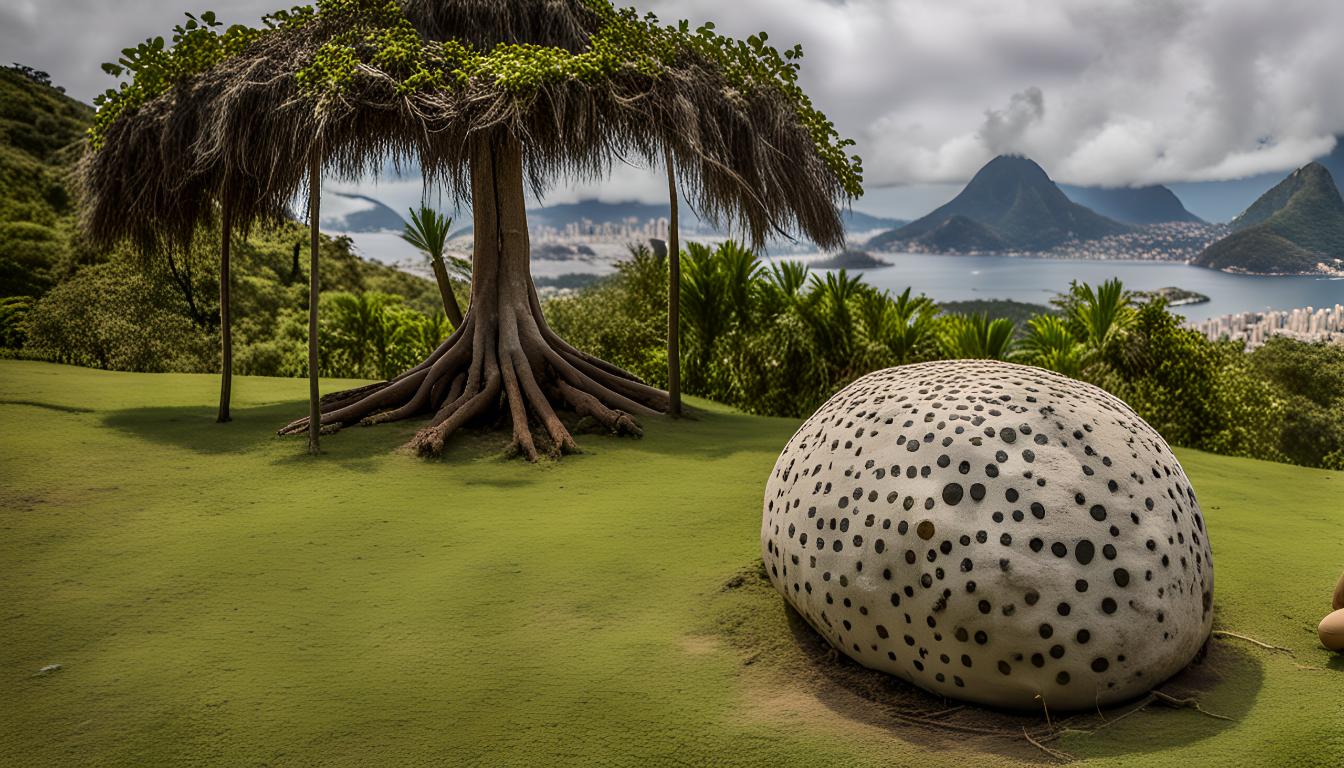
The stone emerges as that which was discarded and returns as an axis of fiction. From landfill to Pontal, a displacement that is also ontological: rejected matter becoming the foundation of a shelter, shelter becoming narrative, narrative becoming technique.
Dalmatian jasper, commercially known as Dalmatian Jasper, is a light igneous rock punctuated by dark inclusions of arfvedsonite or black tourmaline. Geologically, it is not a classical jasper but a variety of aplite or microgranite. The mineral language already carries a deviation, an identity affirmed through approximation.
This mineral misnaming is fertile. A stone that is not exactly what its name declares opens space for a mythology of the threshold, of what exists between classifications. Science delimits; imagination infiltrates.
There are no consolidated ethnographic records of a people who specifically revered this stone as sacred. Yet the absence of archive does not prevent the emergence of a fictional people. Within the layered cosmologies of Brazil, where Indigenous, Afro-diasporic, and vernacular belief systems intertwine, matter and faith have long coexisted. To invent a jasper people would not be historical falsification but critical fabulation, a situated practice of speculative thought.
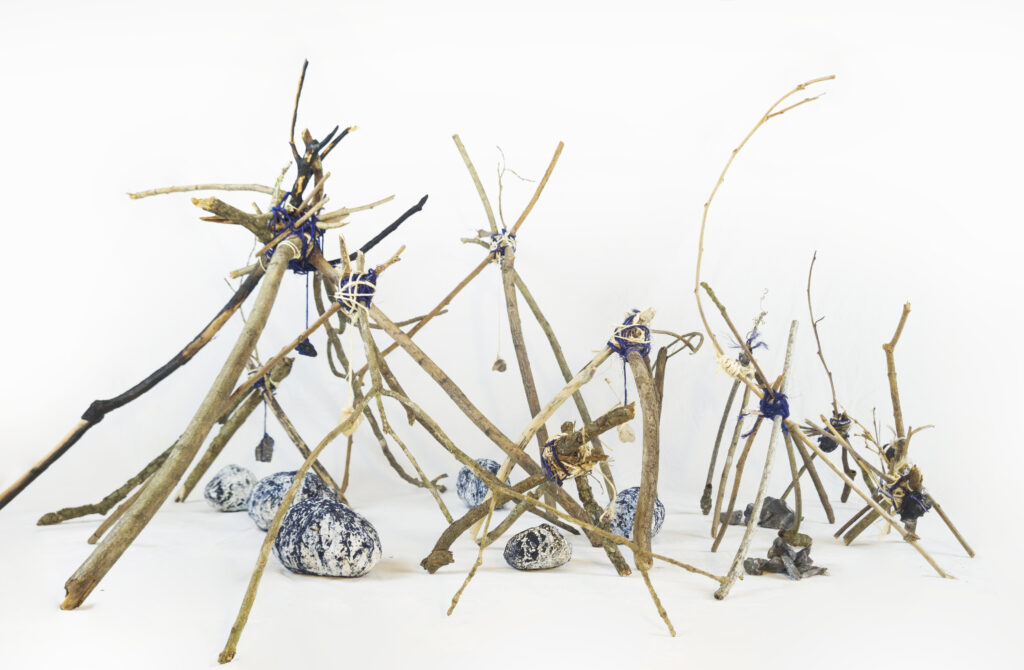
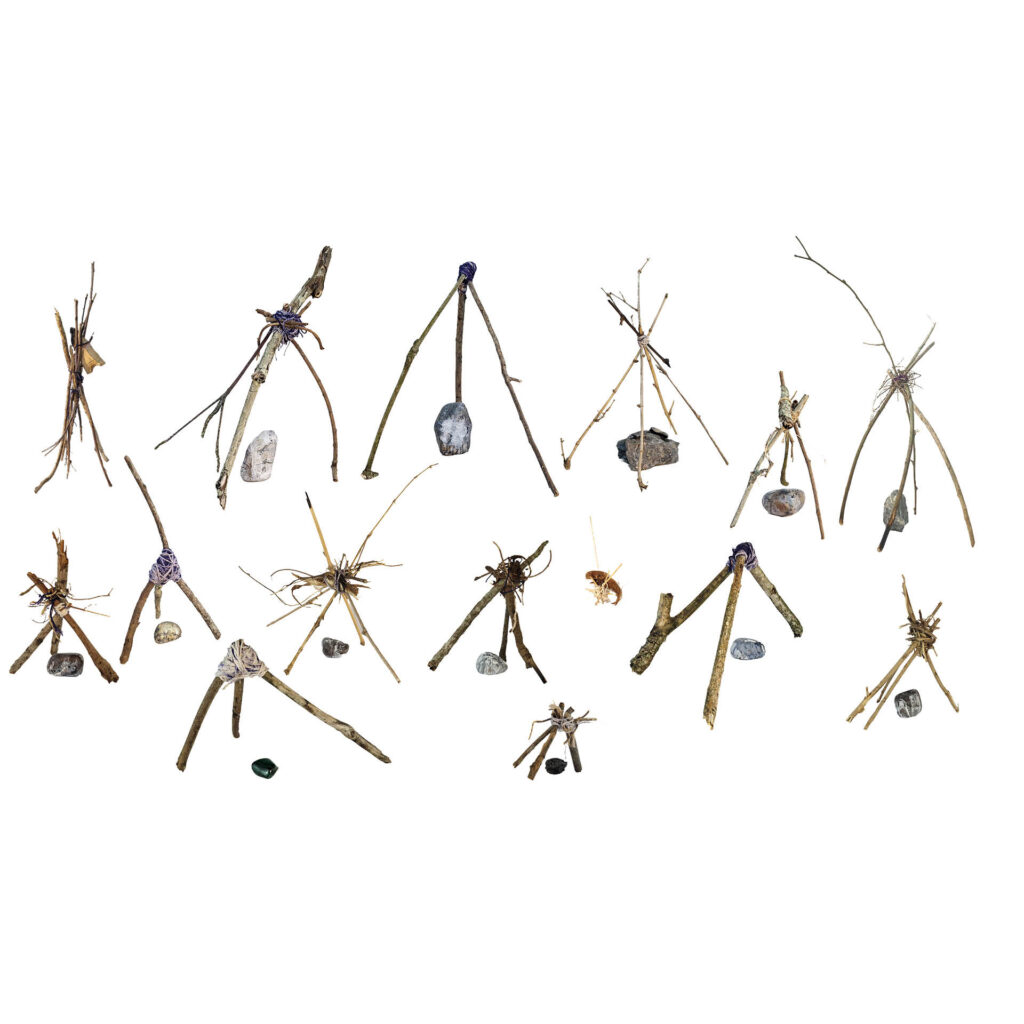
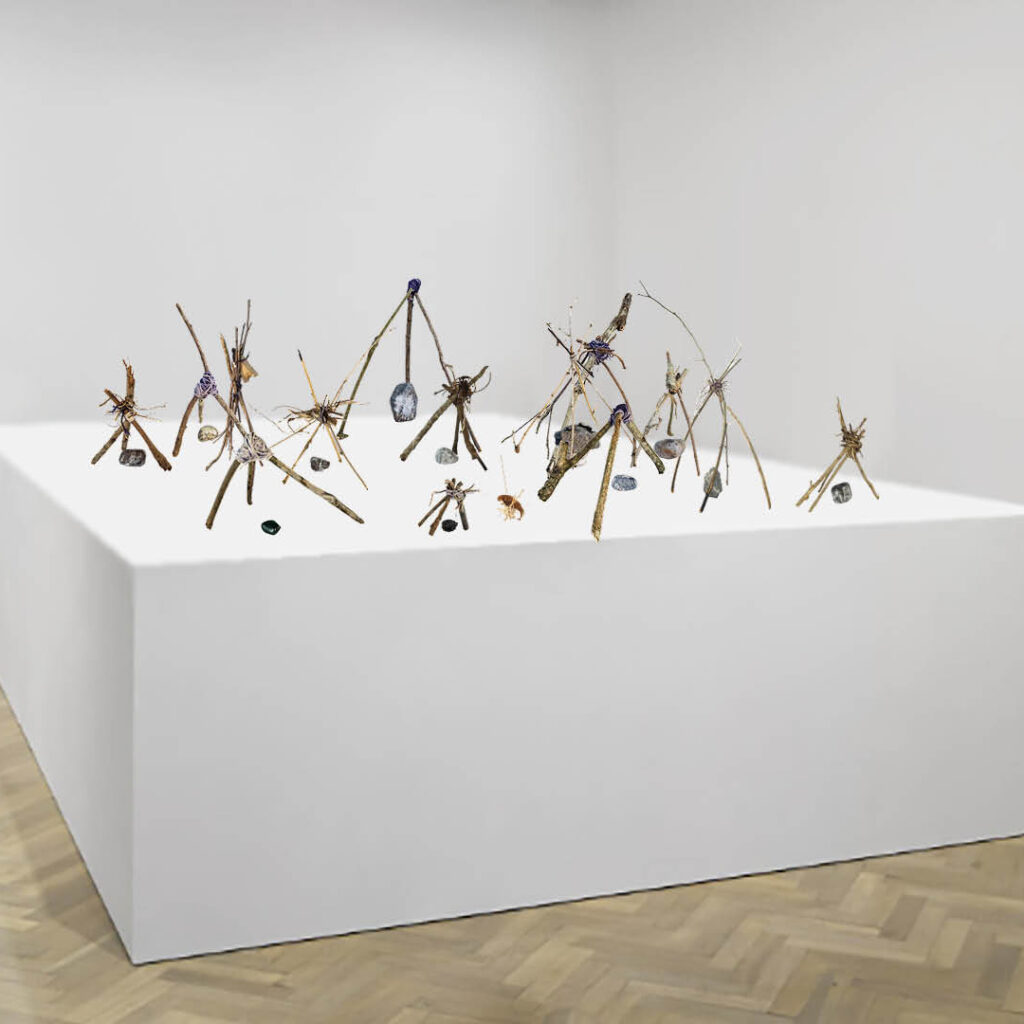
The stone removed from the landfill already contains a political narrative. It has passed through systems of disposal, economy, and urbanization. When brought to Pontal and transformed into the inspiration for a shelter, the rock shifts from residue to matrix. Shelter here is not merely physical structure but symbolic gesture: refuge constructed from what was excluded.
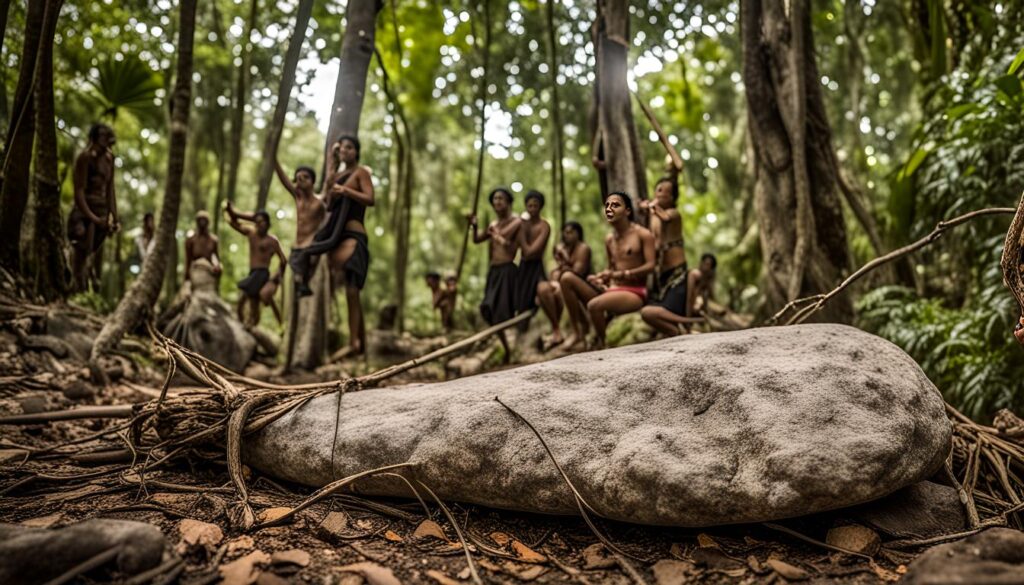
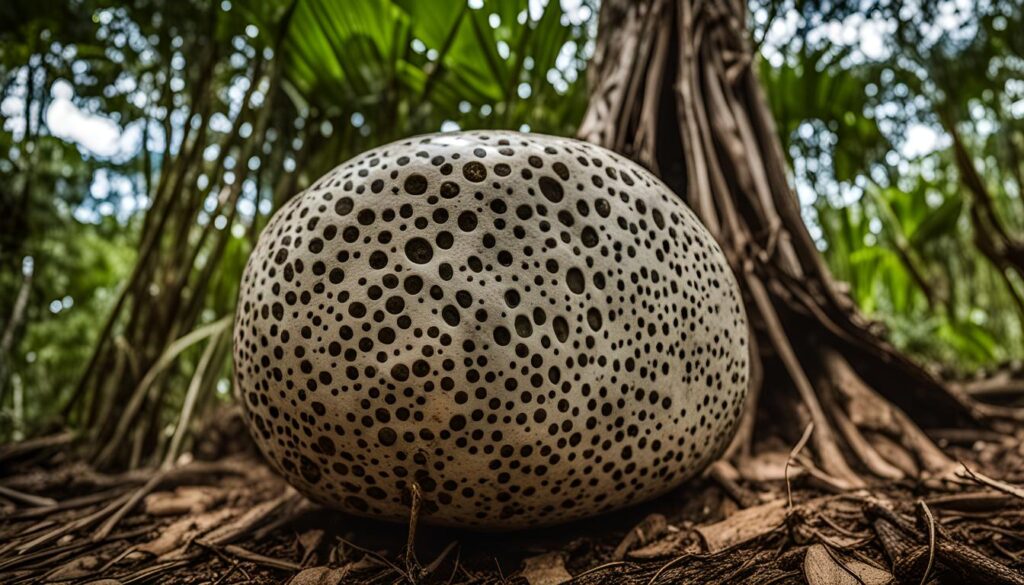
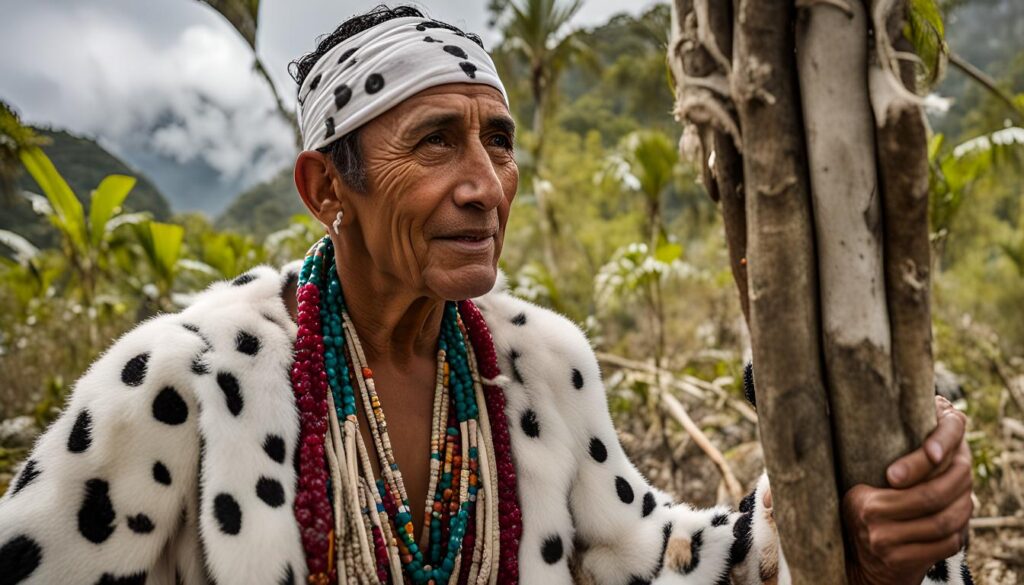
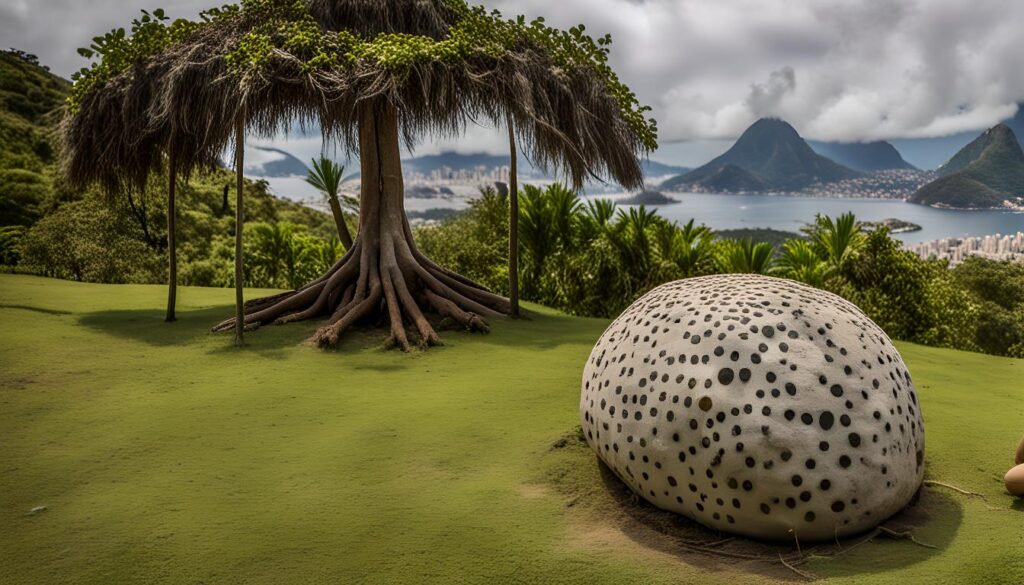
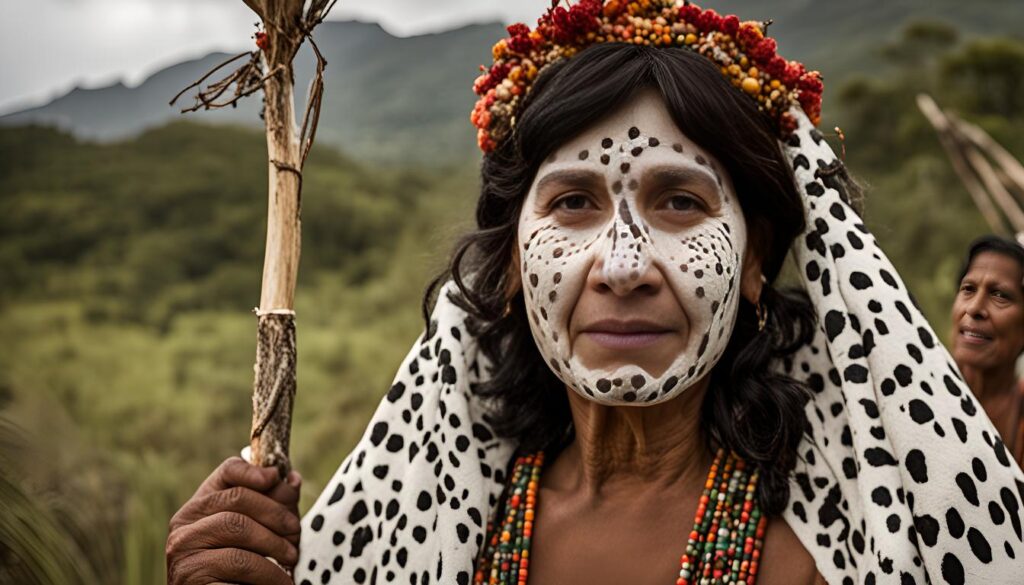
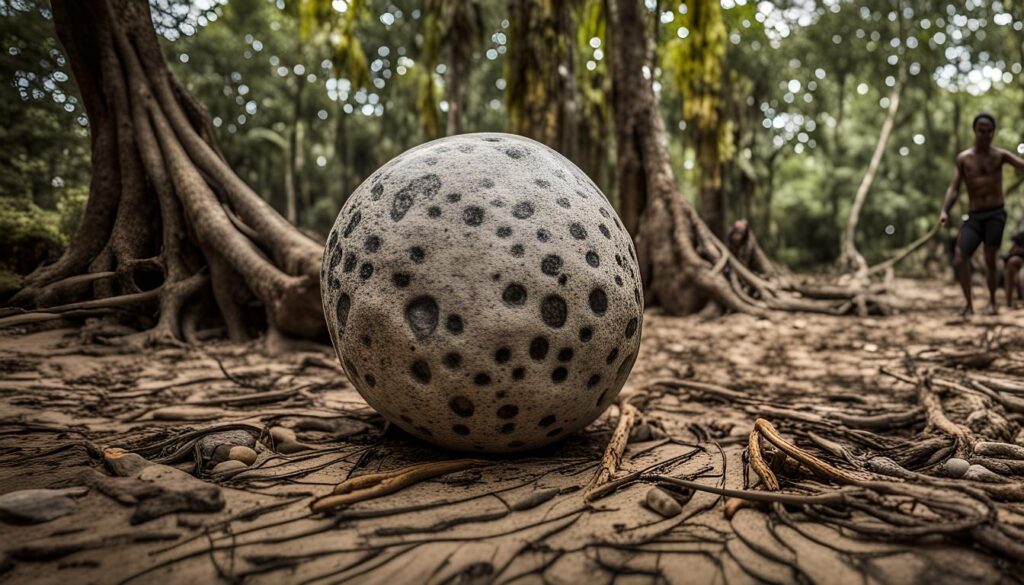
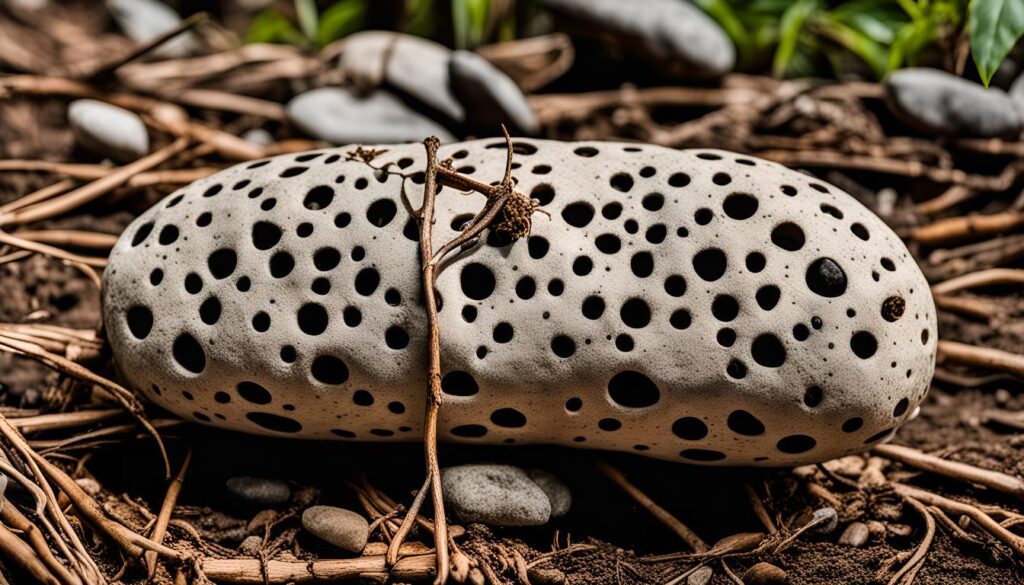
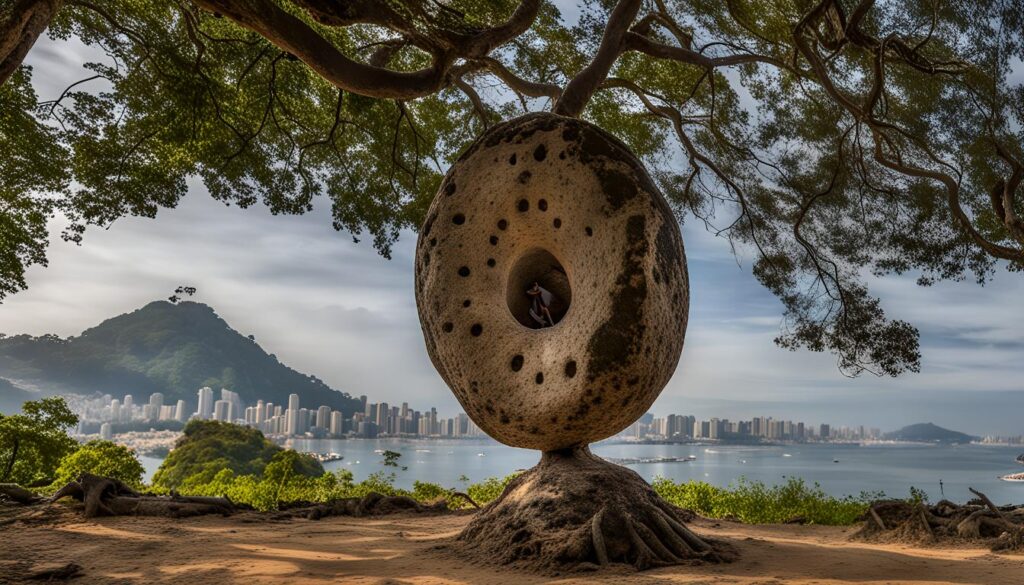
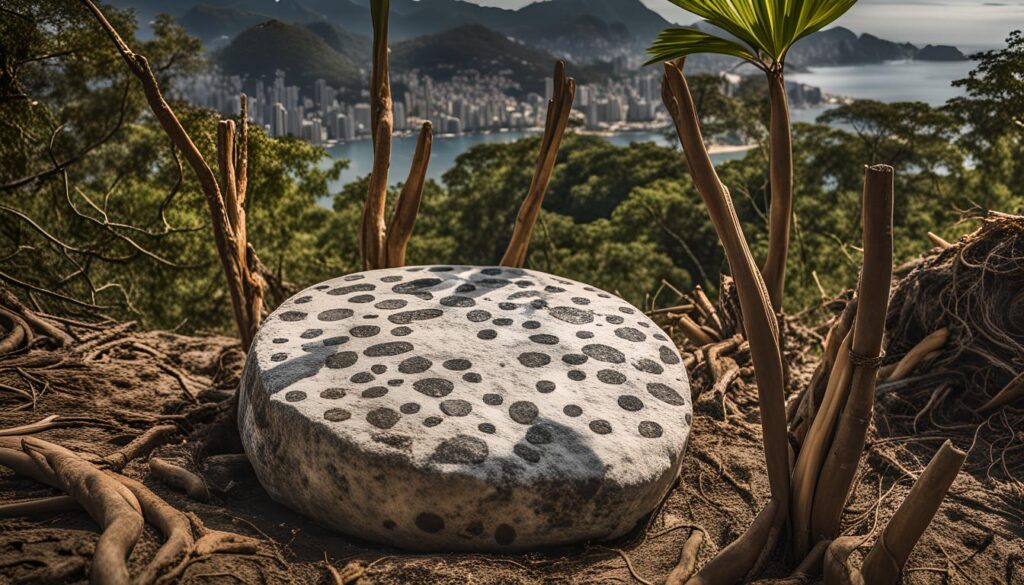
When this narrative is submitted to Runway, another displacement occurs: from matter to synthetic image. The AI does not merely illustrate; it amplifies the emerging myth. The supposed jasper people acquire physiognomies, garments, landscapes. An iconography arises and loops back into the studio.
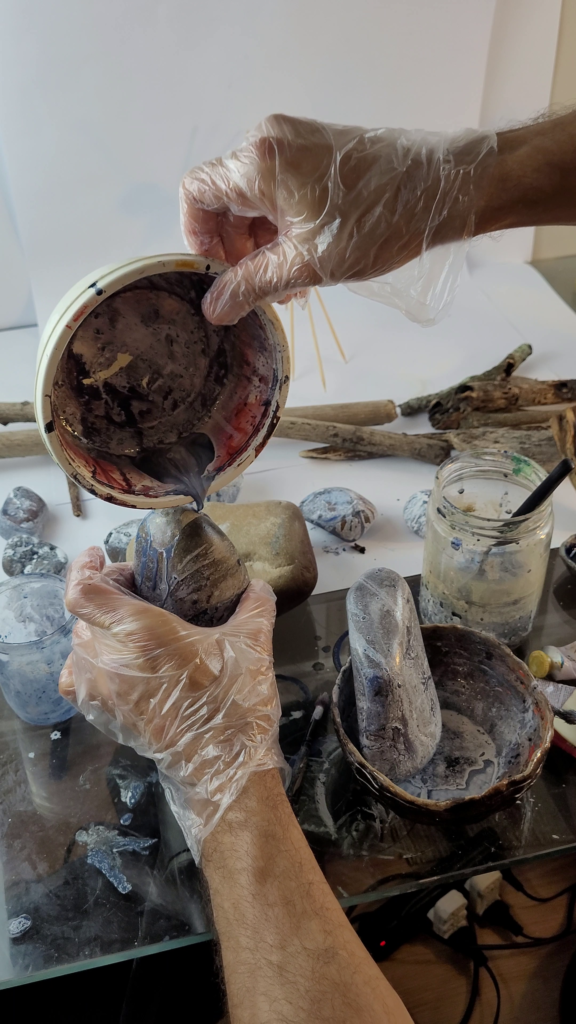
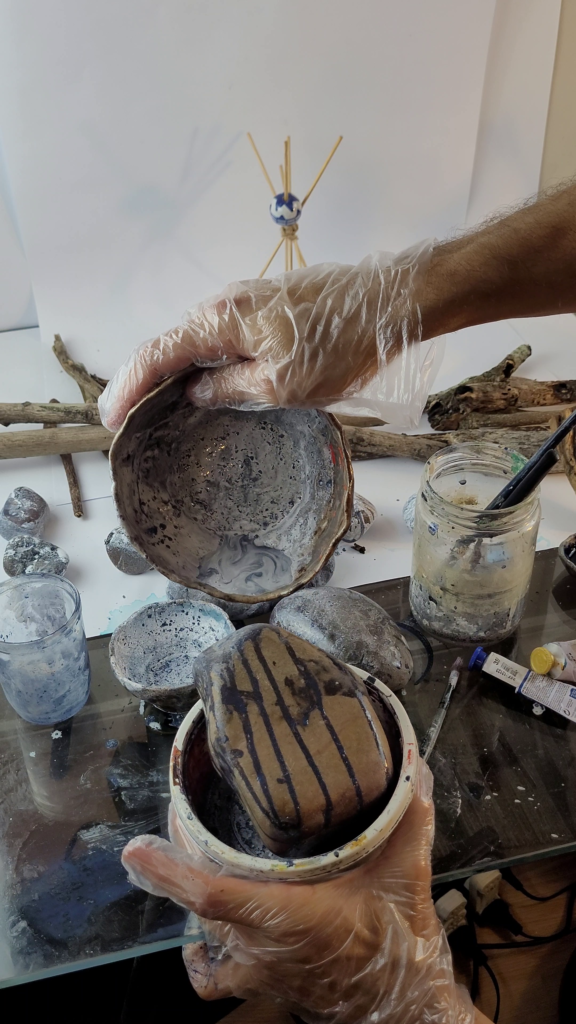
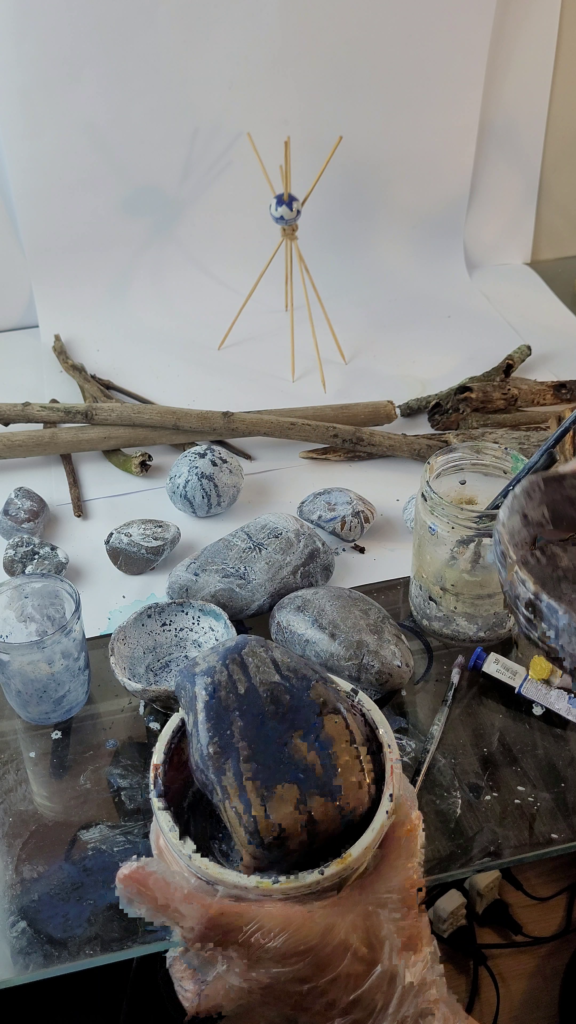
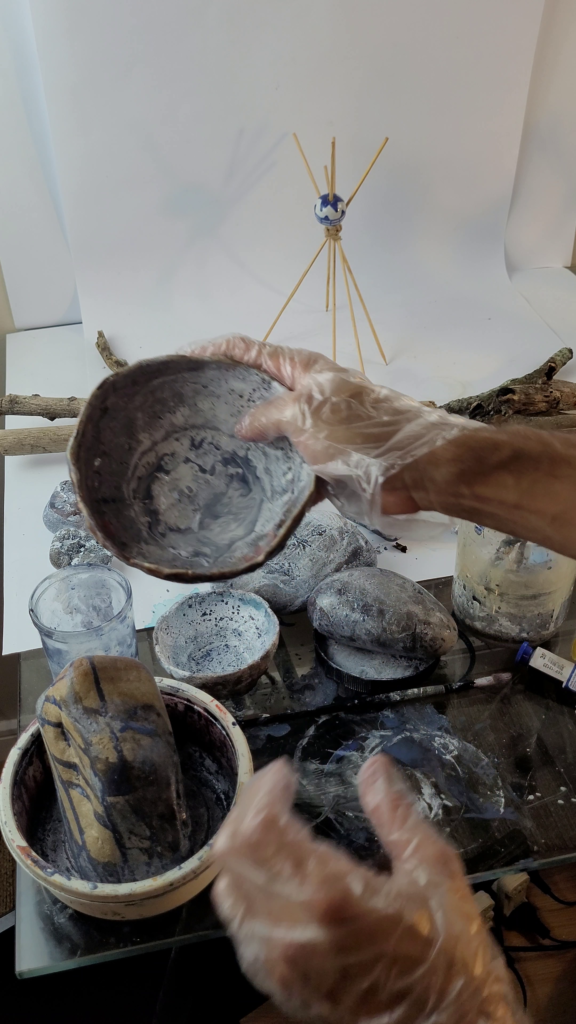
In the studio, the attempt to approach marble is an attempt to negotiate with mineral chance. By combining Pannis Gray oil paint with straw-toned acrylic, a specific optical vibration emerges. The oil, with its slower drying time, allows subtle transitions; the acrylic establishes opacity and ground. The encounter between these temporalities generates a surface that breathes.
This technical achievement is not simply chromatic control. It is the invention of a pictorial membrane that imitates a rock already functioning as geological fiction. Painting becomes a second-generation simulacrum of stone.
Fictional Archive: the creation of documents, maps, oral testimonies of the jasper people. Not parody ethnography, but an investigation into how cultural truths are constructed.
Shelter Installations: structures incorporating the marble-like canvases as interior walls, allowing viewers to inhabit the inside of the stone.
Theoretical-Poetic Text: articulating how a discarded rock activates reflections on waste economies, invented spiritualities, and artificial intelligence as co-author of contemporary myth
The stone found in the landfill is a fragment of Earth’s crust crossed by industrial and digital flows. To retrieve it is to retrieve latent narratives the world abandoned. The technique developed in the studio is less reproduction than invocation: a way of summoning to the surface what was dispersed.
Deixe um comentário