Epistolário com a Máquina. Um espaço em processo, em que pintura, escultura, escrita e pensamento se enredam como organismos em formação contínua. Entre estratos de tinta, carvão, luz e silêncio, emergem diálogos com a máquina, fragmentos de mundo e formas se apresentam. Este não é um arquivo estável: é um campo de escuta, fricção e matéria em transformação.
An Analysis of Coverage by The Guardian, The New York Times, El País and Le Monde
Brazil’s presence in major international media outlets reflects a complex web of geopolitical dynamics, socioenvironmental challenges and cultural expressions with strong global appeal. Reports and articles published by prestigious outlets such as The Guardian, The New York Times, El País and Le Monde show that the country is observed through a dual lens. On one hand, Brazil is recognized for its leadership in global climate agendas, the richness of its culturals heritage and institutional achievements in preserving crucial biomes. On the other hand, the country faces intense scrutiny due to diplomatic tensions with major powers, persistent environmental conflicts and contradictions in social and public security indicators.
Longitudinal analysis of international perception indicates a significant transition in editorial narratives. While previous periods were marked by severe criticism of environmental management and diplomatic isolation, recent coverage highlights the country’s attempt to reclaim protagonism in multilateral forums while dealing with external commercial pressures and internal political polarization. This duality appears in geopolitical and energy transition coverage as well as in urban chronicles and sports reporting.
Geopolitics, Foreign Trade and Bilateral Relations
United States Tariffs and Domestic Political Impact
Commercial relations between Brazil and the United States reached a critical turning point after the US Trade Representative confirmed tariffs of 25 percent on several Brazilian products. Reported extensively by The Guardian, the measure places Brazil as the second most heavily taxed country by Washington, behind only China. The Brazilian government classified the decision as a regrettable milestone in bilateral relations, noting that Brazil historically maintains a trade deficit with the United States and promising retaliatory measures.
The background of this commercial dispute goes beyond technical justifications and reaches the sphere of transnational partisan politics. The Planalto Palace attributes the coercive decision to pressure exerted on the White House by the family of former president Jair Bolsonaro, specifically Senator Flávio Bolsonaro, involved in the presidential race against Luiz Inácio Lula da Silva. According to international analysts, the imposition of trade barriers seeks to directly influence the Brazilian electoral process, turning autonomous policy decisions into pretexts for economic sanctions. This convergence between foreign policy and domestic electoral disputes shows how Brazil’s economic sovereignty has become a battleground in Western geopolitics.
Regional Diplomatic Projection and Opinion Articles
In the realm of regional diplomacy, Brazil’s positioning has been conveyed directly by national leaders through global media channels. In an opinion article published in The New York Times, President Lula explicitly condemned US interventions and military actions in Venezuela, arguing that the Western Hemisphere belongs to all its sovereign nations and not to a single hegemonic power. The article reinforces Brazil’s traditional diplomatic doctrine based on non intervention, self determination of peoples and the peaceful resolution of disputes.
At the same time, Brazil has maintained a firm stance regarding security demands from Washington. The Brazilian government rejected formal requests from US authorities to classify two major national criminal organizations as terrorist groups. Reports based on Armed Conflict Location and Event Data Project findings indicate that US pressure resulted in an 18 percent increase in confrontations between security forces and armed groups in Latin America, highlighting the complex security and human rights implications of applying foreign directives to local public security policy.
Environment, Energy Transition and Sustainability
Progress Against Deforestation and Legislative Risks
Environmental policy remains the most visible pillar of Brazil’s international image. The Guardian highlighted the historic achievement recorded in the Atlantic Forest, the country’s most threatened and populated biome, which in 2025 registered its lowest deforestation level in 40 years of monitoring, falling to 8,658 hectares, the first time below 10,000 hectares since 1985. NGOs and environmentalists celebrated the result as a decisive step toward zero deforestation, attributing the achievement to strengthened enforcement agencies and the resumption of federal environmental protection policies.
However, international media warns of imminent risks that could reverse these environmental gains. Among the main risk factors are the approval of bills in Congress that weaken environmental licensing and uncertainties associated with the electoral scenario. Additionally, the crackdown on illegal mining and irregular gold trade, especially in the Yanomami Indigenous Territory, resulted in a reduction of more than 90 percent in the expansion of illegal mines and a sharp drop in undeclared production, demonstrating that state presence combined with the end of the legal presumption of good faith in gold trade produces effective returns for Brazil’s international reputation.
Global Leadership at COP30 and the Biofuel Controversy
Preparations for the 30th United Nations Climate Change Conference, held in Belém, placed Brazil at the center of global environmental diplomacy. Reports from The Guardian detailed urgent appeals from Brazilian diplomats for countries to submit updated Nationally Determined Contributions in time for the UN synthesis report. Brazil’s COP30 presidency emphasized the need for ambitious targets to keep global warming within 1.5 degrees Celsius, proposing innovative mechanisms such as the Tropical Forest Forever fund.
However, Brazilian proposals for the energy transition also generated intense debate in international media. Leaked documents revealed the government’s intention to propose a global commitment to quadruple the use of sustainable fuels by 2035, focusing on expanding biofuels such as sugarcane ethanol and biogas. The initiative was met with skepticism from experts and environmental organizations, who warn of indirect impacts of biofuels on deforestation, replacement of food crops and intensive water use, contrasting national agribusiness interests with the strict sustainability requirements of the European ecosystem.
Climate Vulnerability and Urban Environmental Justice
The human and territorial dimension of Brazil’s climate crisis has been the subject of detailed field reporting. El País documented climate inequality in Rio de Janeiro’s urban peripheries, showing that vulnerable neighborhoods and favelas such as Complexo da Maré face heat indexes above 60 degrees Celsius, with temperatures up to 8 degrees higher than nearby tree lined neighborhoods. The publication stresses that the absence of urban infrastructure and green areas turns the climate emergency into a serious human rights and racial justice issue.
In the country’s interior, The Guardian reported on the emergence of Brazil’s first official arid zone, located in the Bahia backlands. Accelerated climate transformation in the Macururé region threatens to collapse subsistence agriculture and traditional livestock, accelerating desertification of the Caatinga biome. Meanwhile, scientific studies published in Nature and echoed by The New York Times indicate that global warming may devastate up to one third of plant species used by traditional communities and Indigenous peoples in the Amazon, compromising traditional medicine, food security and sociobiodiversity.
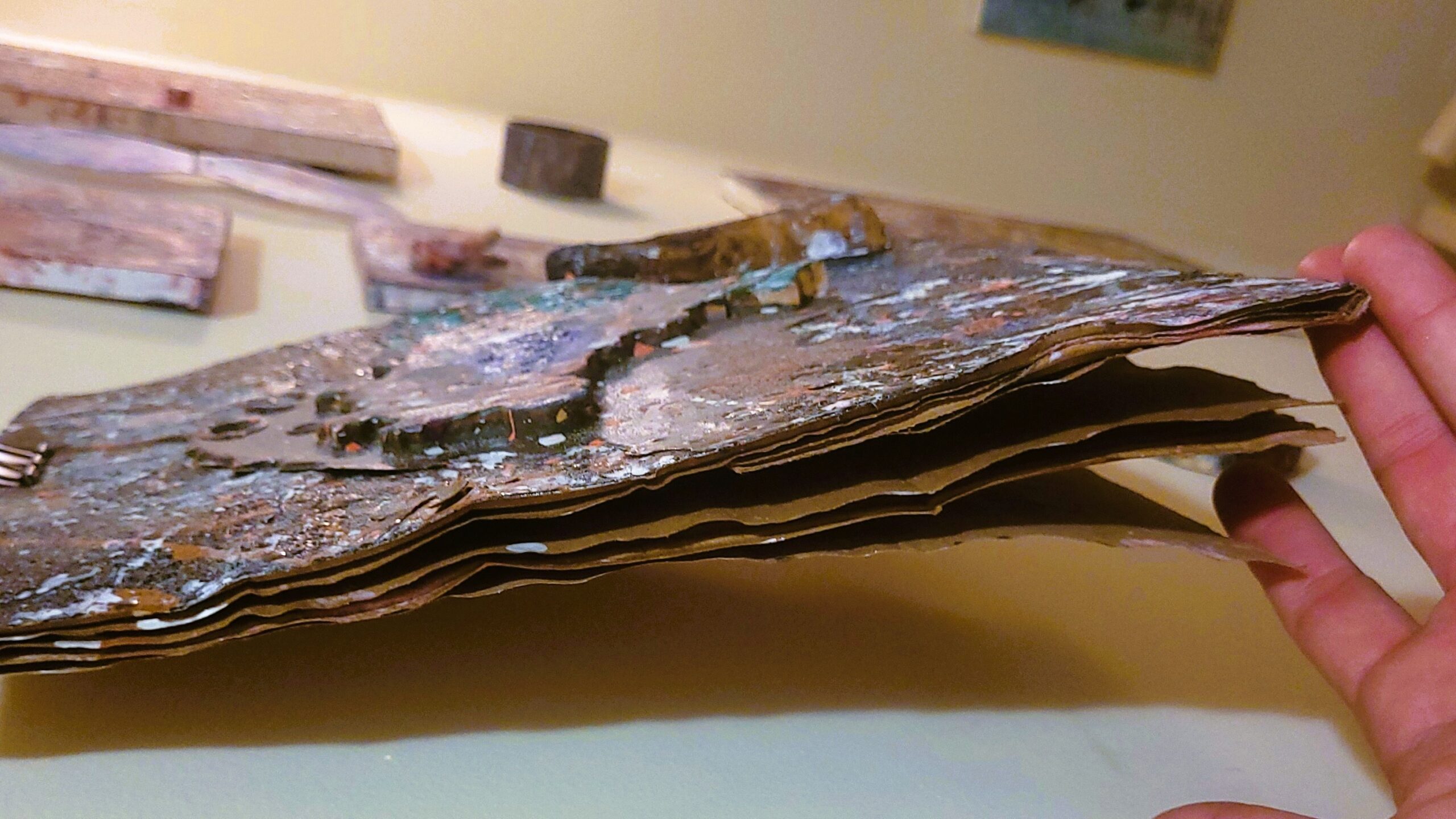
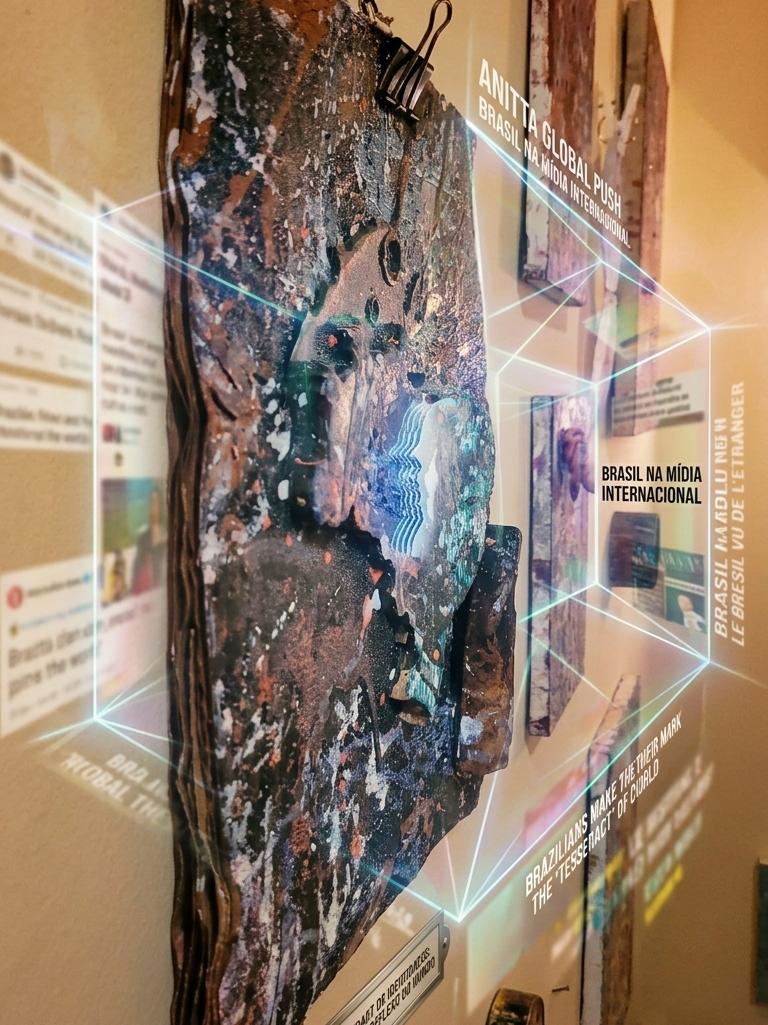
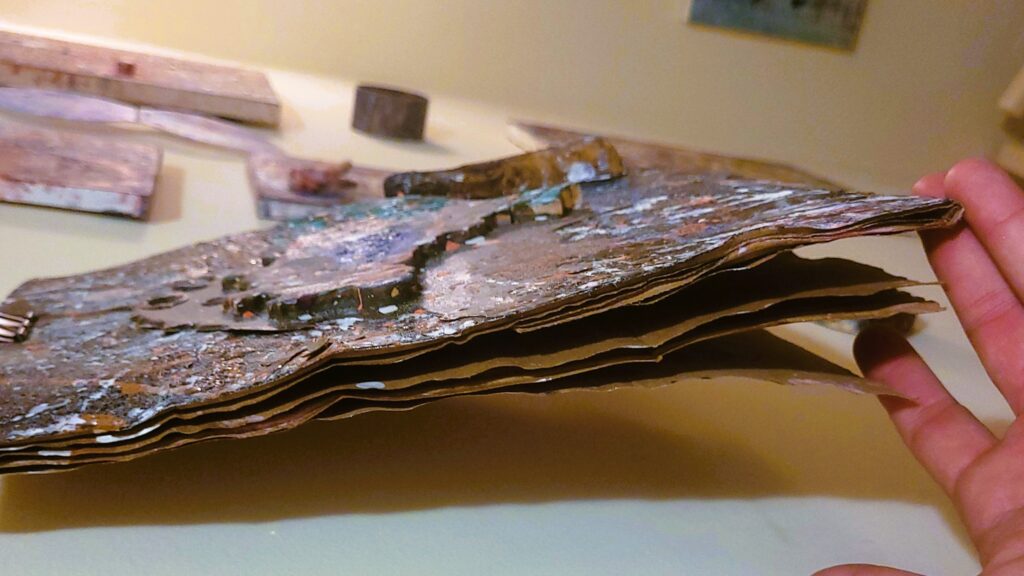
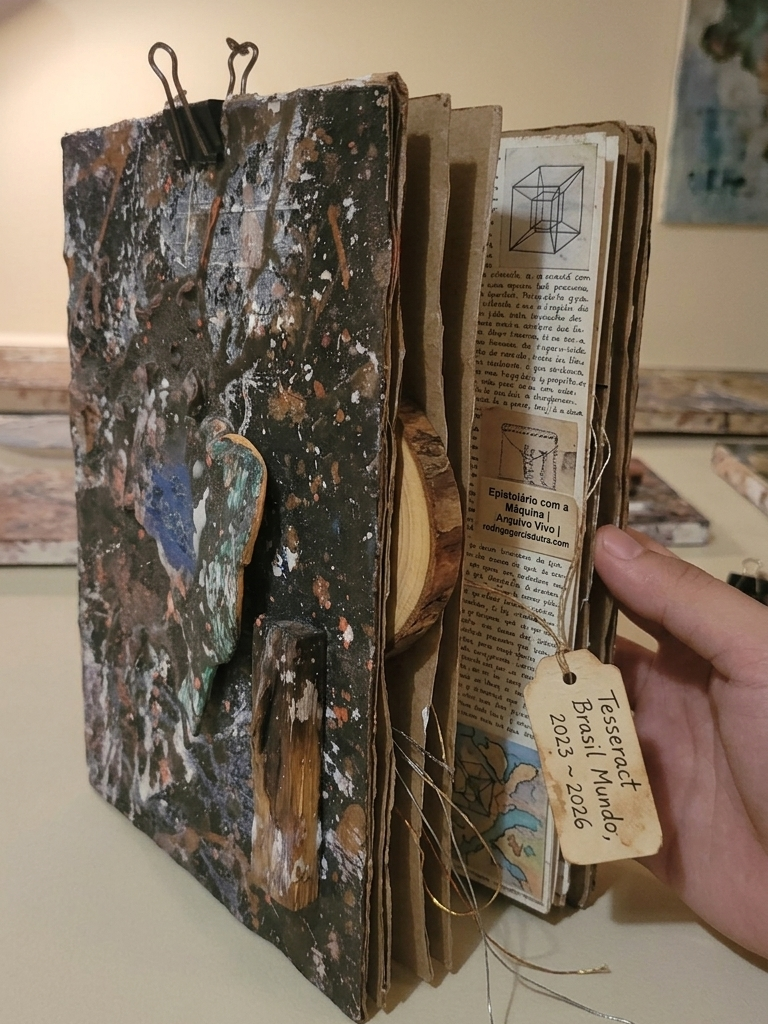
_autotoneTesseract World Brazil Cardboard, wood, palo santo, wax, oil, acrylic, various varnishes, and a metal clip. In addition, a hyper-access provided by the Epistolário com a Máquina, loose threads, evidence, and other stories. 11.81 x 9.84 x 1.97 inches Arquivo Vivo Epistolário com a Máquina https://rodrigogarciadutra.com/
Culture, Tourism and Social Indicators
Rio de Janeiro Carnival as Spectacle and Subversion
Brazil’s cultural dimension continues to fascinate international media, with Rio de Janeiro’s Carnival being one of the most extensively covered events. The Guardian dedicated visual essays and special reports to the festival, analyzing Carnival’s aesthetics as a manifestation where social tensions, opulence and labor precarization intersect. Coverage highlighted the subversive nature of street blocs and costumes that satirize authority figures and religious symbols in the world’s largest Catholic country.
The political aspect of samba schools also gained international relevance through coverage of the Acadêmicos de Niterói parade at the Marquês de Sapucaí Sambadrome. The school presented a tribute to the trajectory of Luiz Inácio Lula da Silva, using a 22 meter metallic sculpture to symbolize his journey from rural poverty to the presidency. Media outlets emphasized how the parade articulated elements of working class history, democratization of higher education and institutional resistance to the antidemocratic acts of 2023, transforming Carnival into a space of political memory and celebration.
Tourism Recognition of the Inhotim Institute
In cultural tourism, The New York Times included the Inhotim Institute, located in Brumadinho, Minas Gerais, in its prestigious annual list of 52 places to visit in 2026, ranking it 24th. The outlet highlighted Inhotim’s uniqueness in combining more than 500 contemporary artworks distributed across 24 galleries immersed in an extensive botanical garden. The publication noted that the destination requires planning and multi day visits to be fully appreciated, also serving as a driver of regional tourism development in the year the institute celebrates 20 years of public opening.
The inclusion of Inhotim marked Brazil’s return to the global ranking after a period of absence. International critics emphasized the importance of collections dedicated to Afro Amazonian art and diverse artistic languages, consolidating the site as one of the largest and most relevant open air museums in the world.
Public Security Challenges and Gender Violence
In contrast to cultural expressions, social and public security indicators continue to generate critical reports in European media. El País reported that Brazil reached a record number of femicides for the fourth consecutive year, with more than 1,500 women murdered in 2025 and over 4,000 attempted cases. Analysis by the Brazilian Public Security Forum indicates that the increase is not solely due to improved reporting but reflects a consistent trend of escalating gender violence requiring structural state responses.
Coverage by El País and BBC News also addressed institutional responses to this crisis, ranging from legislative proposals in Rio de Janeiro to large scale police operations in the city’s favelas. The effectiveness of these operations and the human rights violations resulting from systematic urban confrontation keep Brazil under continuous observation by international organizations and foreign correspondents.
Sports and Global Performance Assessment
International sports coverage combined technical analyses of national team performance with debates on organizing major continental and global sporting events. The New York Times sports department published a critical reassessment of the 48 teams participating in the 2026 World Cup, ranking Brazil 16th overall. The analysis noted that even under Italian coach Carlo Ancelotti, the Brazilian team performed far below historical expectations, being eliminated in the round of 16 by Norway and falling behind lower tradition teams such as Canada and Cape Verde.
On the other hand, the prospect of hosting the 2027 Women’s World Cup consolidates Brazil as a central hub for the development of international women’s football. The Guardian emphasized that continental tournaments such as the Women’s Africa Cup of Nations served as direct qualifiers for the event in Brazil, raising expectations regarding infrastructure and public engagement.
Comparative Analysis of External Editorial Coverage
International Outlet
Main Topics Covered
Predominant Tone
Geopolitical and Reputational Impact
The Guardian
US tariffs, Atlantic Forest deforestation, COP30, Rio Carnival, drought in the Sertão
Analytical and progressive critical
Highlights Brazil’s environmental leadership while warning of internal political and social instability
The New York Times
Cultural ranking of Inhotim, Lula’s opinion article on Venezuela, World Cup evaluation
Institutional and cultural
Recognizes Brazil’s cultural prestige while maintaining critical views on sports performance and diplomatic positions
El País
Record femicides, climate injustice in Rio’s favelas, Indigenous land issues
Social and human rights oriented
Emphasizes structural inequality, gender violence and urgency of urban public policies
Examines the duality between export oriented agribusiness and traditional land structures
BBC News
Public security operations in Rio and urban violence
Investigative and informative
Documents the complexity of combating organized crime and its effects on civilians
Conclusions and Strategic Implications
Systematic analysis of international media coverage shows that Brazil’s external image is shaped by its ability to manage internal contradictions while seeking protagonism on the global stage. Advances in environmental governance, evidenced by drastic reductions in Atlantic Forest deforestation and the crackdown on illegal mining in Indigenous lands, constitute the country’s strongest reputational assets, positioning Brazil as an indispensable actor in climate transition negotiations.
On the other hand, exposure to commercial disputes with global powers and persistent high levels of urban and gender violence function as factors that erode diplomatic credibility and perceptions of national stability. Foreign coverage indicates that the success of Brazil’s international insertion project will depend on consolidating durable environmental regulatory frameworks, mitigating territorial urban inequalities and protecting productive chains from external geopolitical retaliation.
Tesseract World Brazil Cardboard, wood, palo santo, wax, oil, acrylic, various varnishes, and a metal clip. In addition, a hyper-access provided by the Epistolário com a Máquina, loose threads, evidence, and other stories. 11.81 x 9.84 x 1.97 inches

Leave a Reply