The first appearance of the square and also the monolith occurs in 1913, not yet as a painting, but as part of the set design It is presented as the final figure, the last image of this carousel.
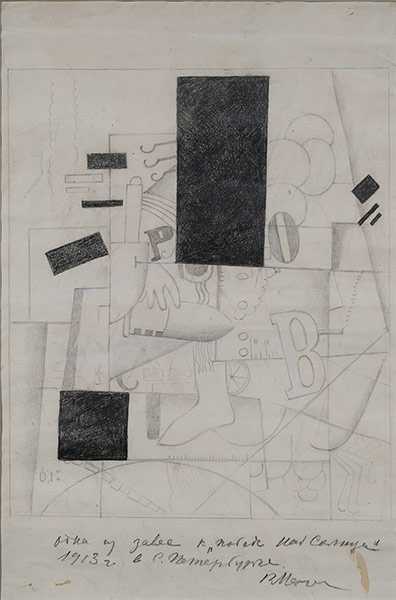
For the Futurist opera *Victory Over the Sun*, a square makes its first appearance that year as a design for a stage curtain, divided diagonally into black and white. A curtain, not a canvas. A pencil sketch survives fragments of Cyrillic script beside black geometric forms. Whether it is the original design or a later restaging remains undetermined. The Cubo-Futurist hand is unmistakable.
The opera’s plot already contains what would recur twenty-two years later: the sun, standing for a decaying past, is torn from the sky, locked in a box, and given a funeral within the performance itself. The square’s funeral preceded its maker’s. It is born a second time as an autonomous painting, at 0,10, The Last Futurist Exhibition of Paintings, Petrograd, December 1915 to January 1916.
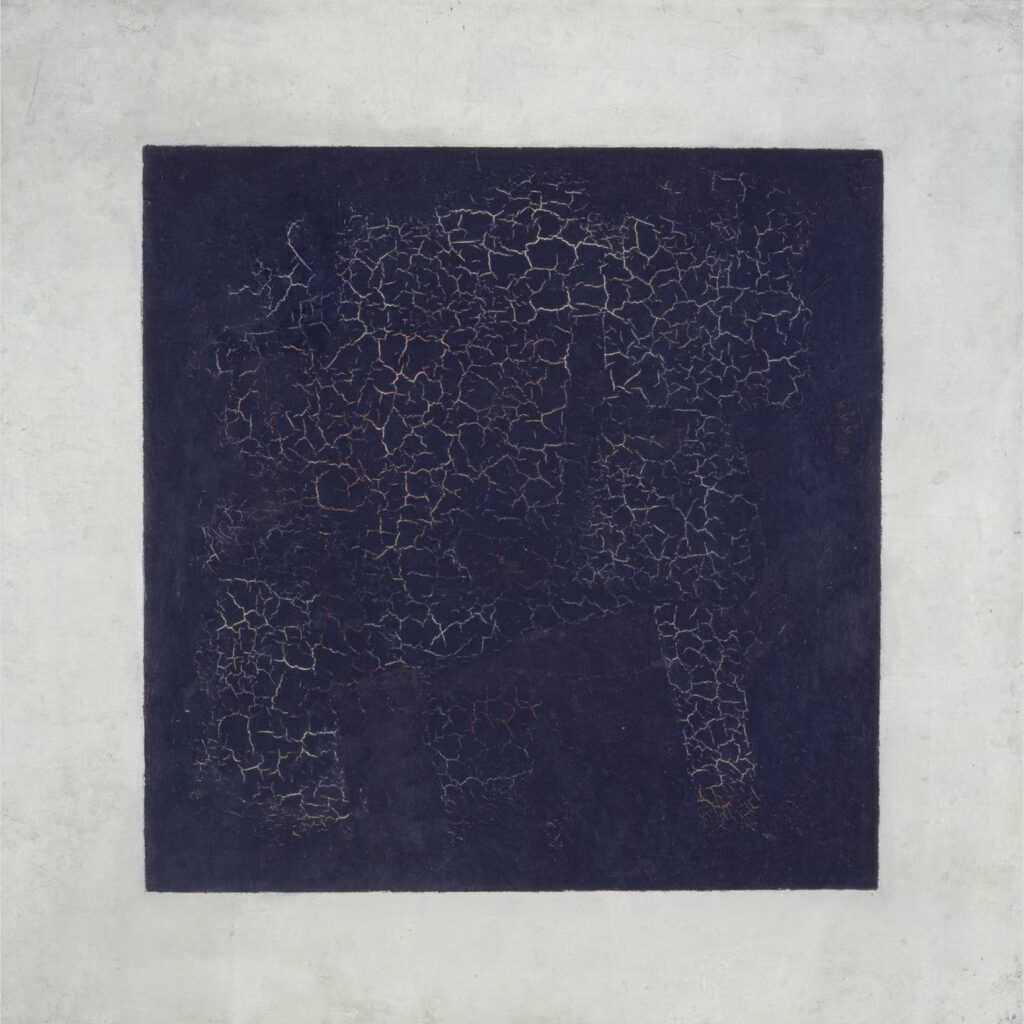
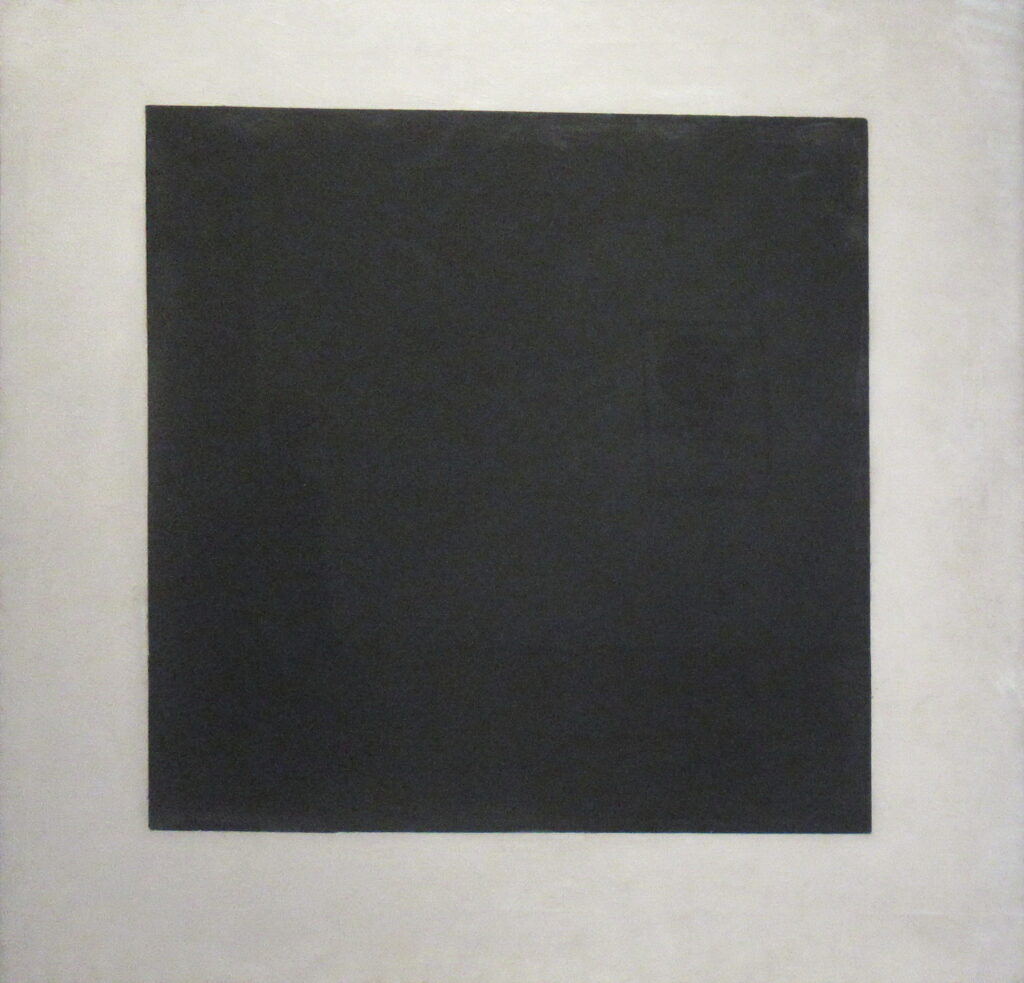
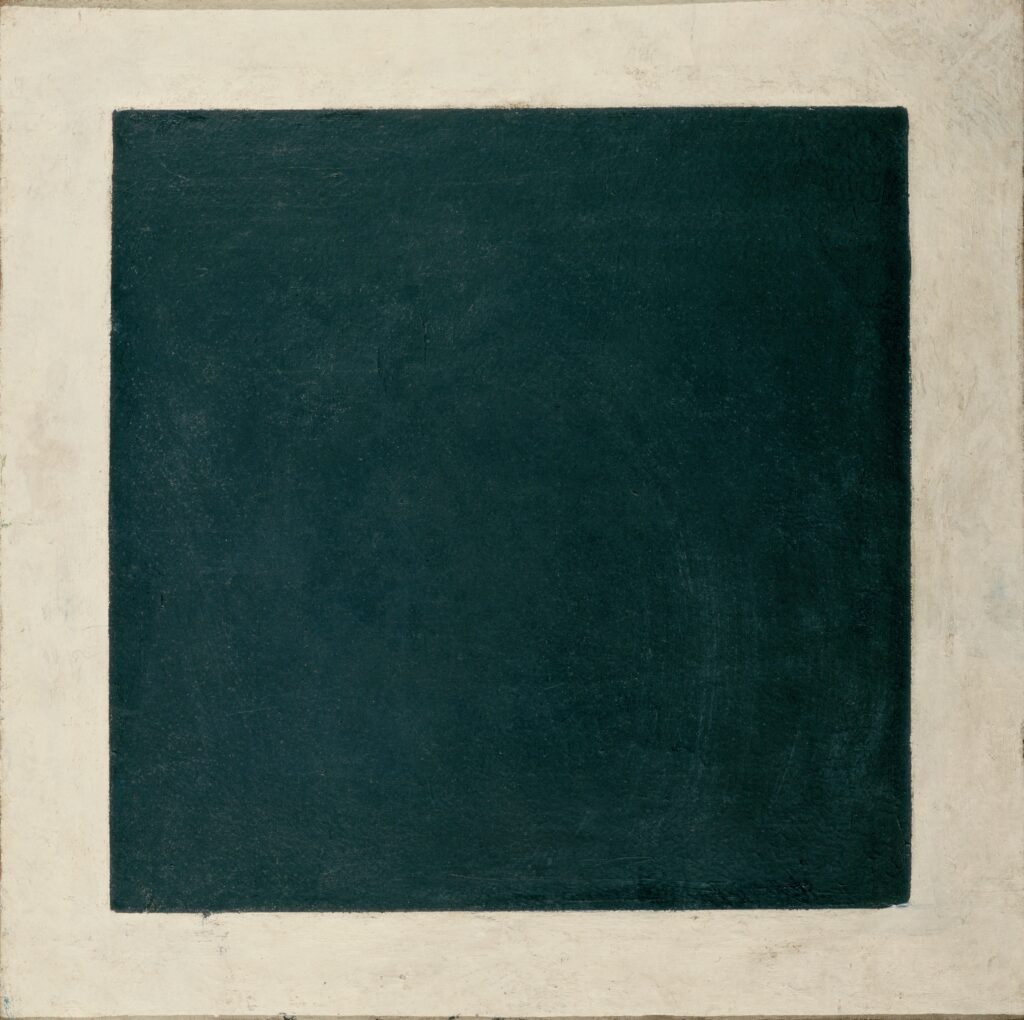
The Black Square hangs across the upper corner of the room, the place reserved for the icon in Russian homes. To replace the icon is not decoration. It is a claim about what governs a room. The canvas bears the inscription 1913 on its back, though it was probably painted in 1915, maybe to make it seem more ahead of its time. The legend stuck. The square was recreated three more times during the artist’s life, including in 1929.
A third layer exists, and this one is literal. In 2015, researchers at the Tretyakov Gallery x-rayed the 1915 version, the cracked one: Two earlier paintings surfaced beneath the black: first a Cubo-Futurist composition, then a proto-Suprematist one, its colors visible through the craquelure. A handwritten inscription was also found, still under decipherment, read as a reference to an 1897 satirical print by the French humorist Alphonse Allais. That print was entirely black. Its period title, now recognized as racist, played decades earlier on the same visual joke: black paint erasing what should be seen. At least one historian disputes how novel the finding really was. The logic outlasts the question of authenticity.
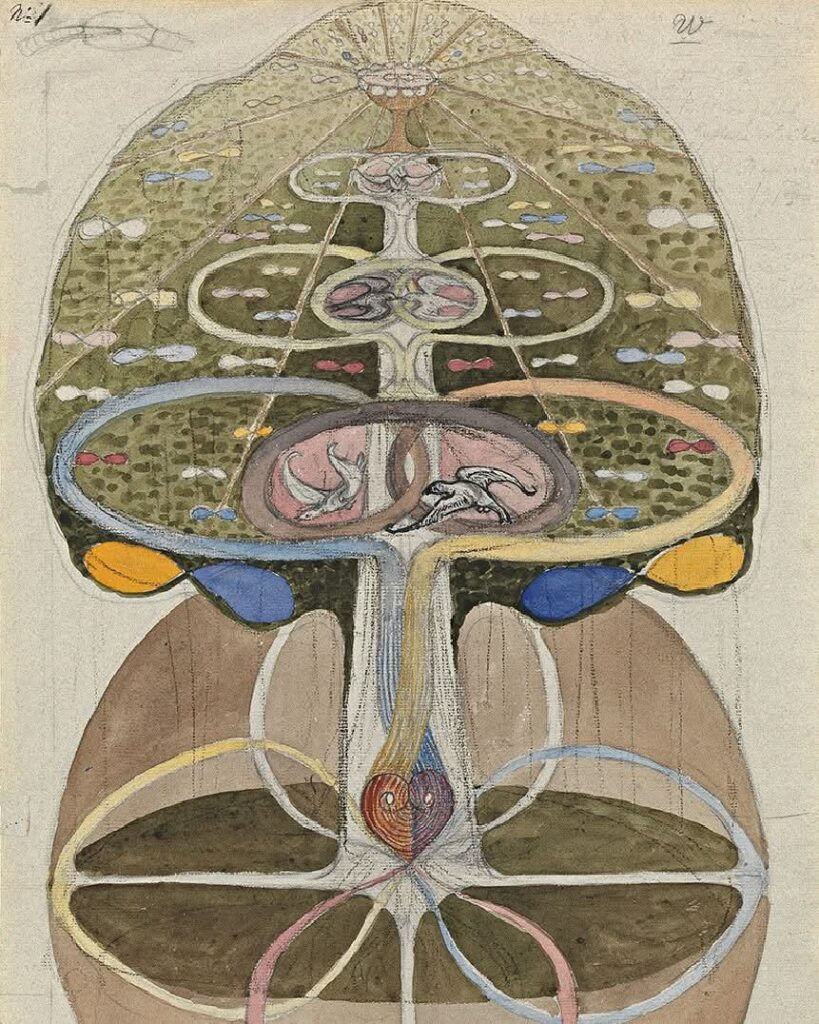
Pure abstraction’s founding gesture conceals, beneath its surface, a double erasure: an earlier joke about invisibility, and, in the history of its reception, the precedence of Hilma af Klint, whose own abstractions from the same years went largely unseen. The square is not an origin. It is a scar over one, not unlike a method used elsewhere, in which structural lines are reserved beneath layers of combustion, so an earlier architecture survives intact once the surface burns through.
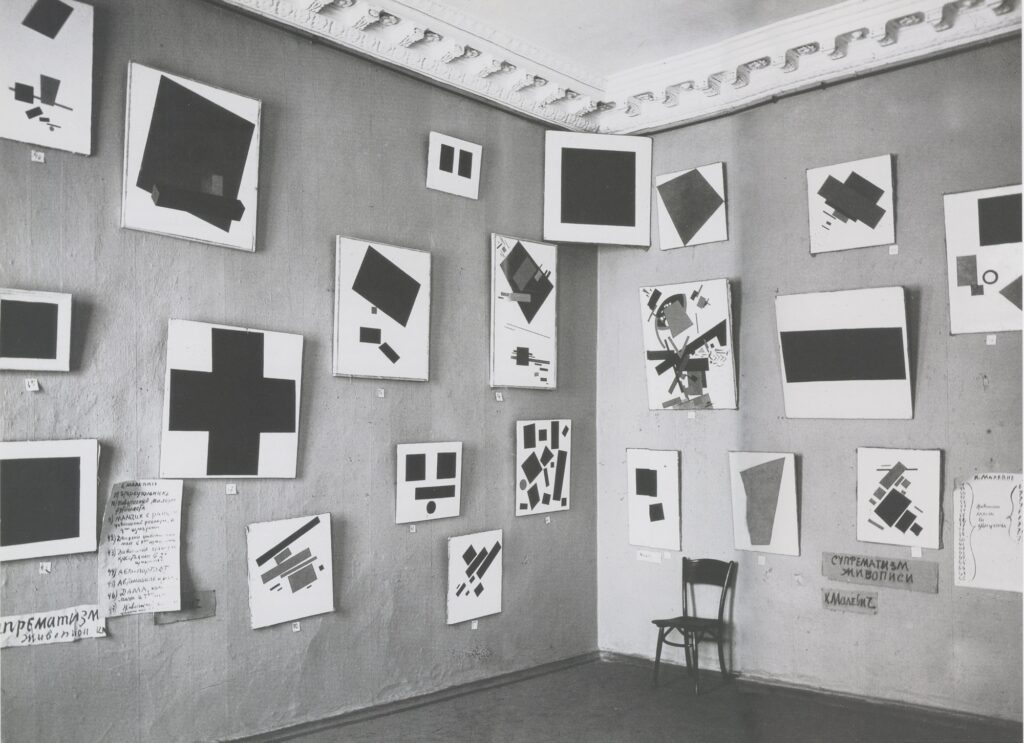
It is born a second time as an autonomous painting, at 0,10, The Last Futurist Exhibition of Paintings, Petrograd, December 1915 to January 1916. The Black Square hangs across the upper corner of the room, the place reserved for the icon in Russian homes. To replace the icon is not decoration. It is a claim about what governs a room. The canvas is inscribed 1913 on its reverse, though it was likely painted in 1915, perhaps so the work would appear further ahead of its time than it was. The myth held. The square was painted three more times across the artist’s life 1929).
A third layer exists, and this one is literal. In 2015, researchers at the Tretyakov Gallery x-rayed the 1915 version, the cracked one. Two earlier paintings surfaced beneath the black: first a Cubo-Futurist composition, then a proto-Suprematist one, its colors visible through the craquelure. A handwritten inscription was also found, still under decipherment, read as a reference to an 1897 satirical print by the French humorist.
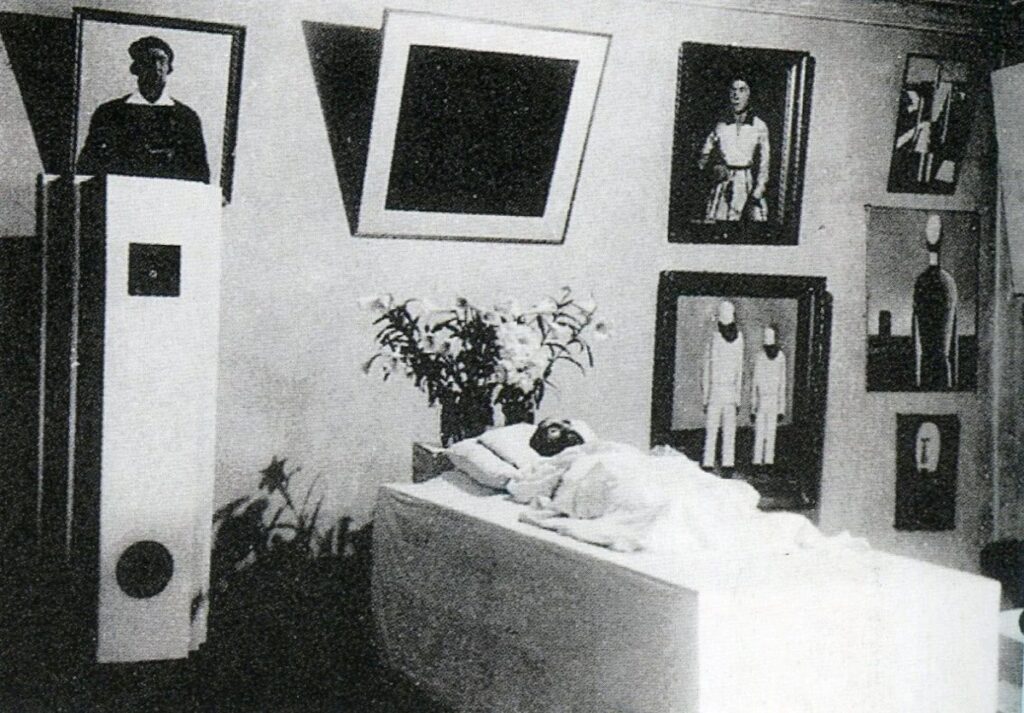
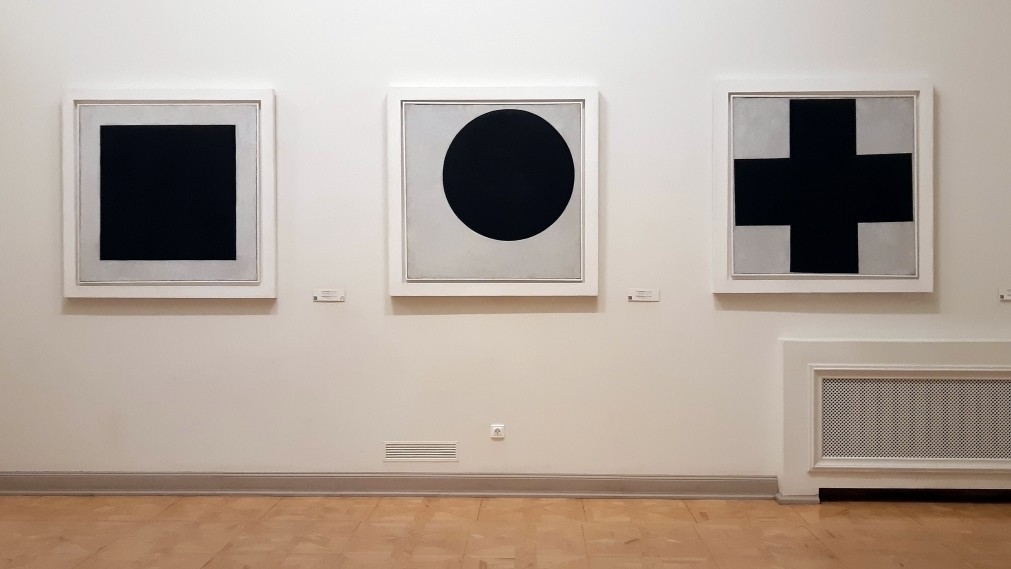
Death closes the circle. Malevich dies in May 1935. He lies in state beneath his own Suprematist paintings, the Black Square again in the corner, nearly a citation of 0,10. He had designed the funeral himself. The body rests in a coffin shaped like an architecture on, surrounded by the works. The coffin is marked with a square, a circle, and a cross, the same trinity now held together in the Russian Museum.
The funeral truck is painted in Suprematist colors. A Black Square is fixed to its bumper. The ashes are buried at Nemchinovka beneath a wooden marker painted with a square. The marker is lost during the war. An approximate memorial goes up in 1988. The actual grave is not found again until 2012, during construction. One exhumation follows another, the x-ray and the shovel performing the same gesture in different registers.
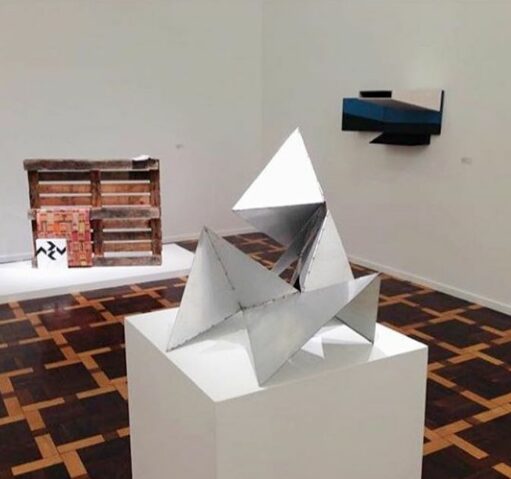
Bienal do Mercosul de 2015 .
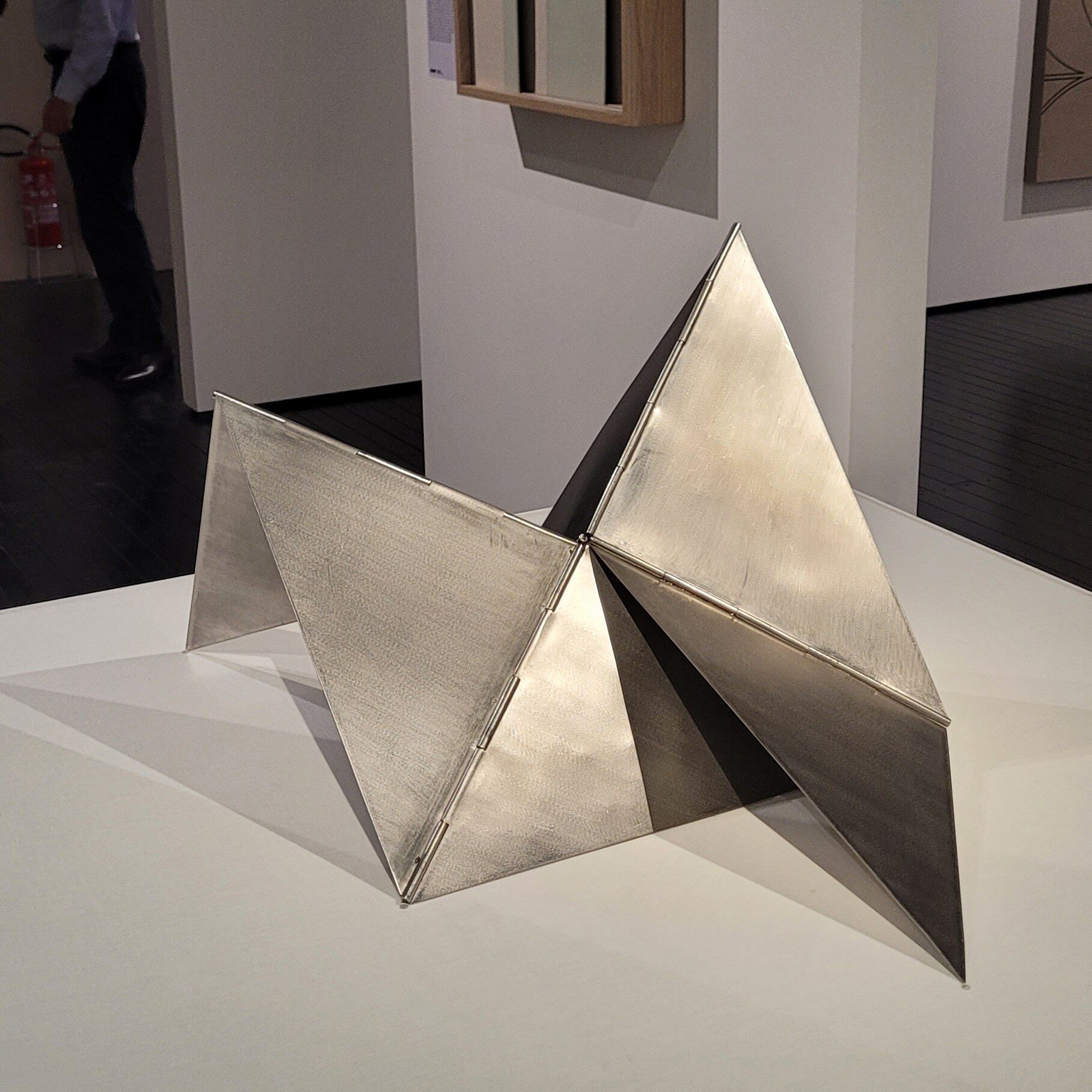
Exposição no quarto andar do novo MASP. Geometrias.
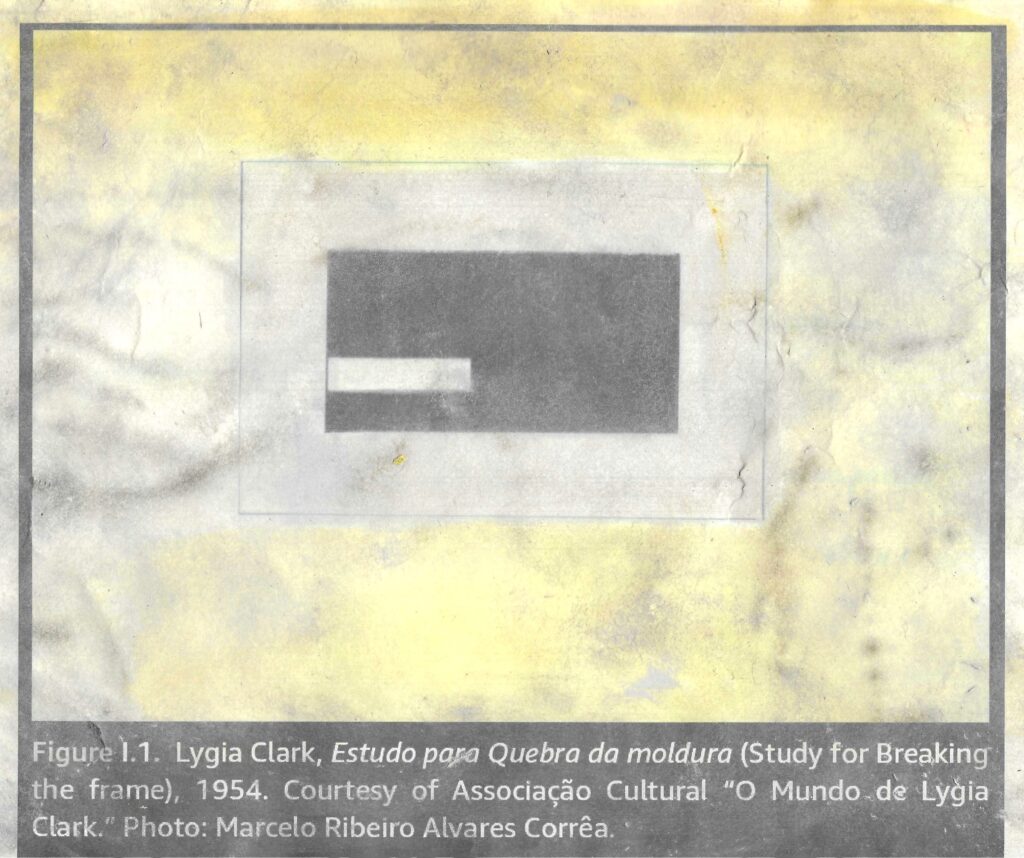
A different line answers this geometry of enclosure and burial. Lygia Clark’s 1954 study, Study for Breaking the Frame, proposes the organic against the fixed (fig. 3). Where the Suprematist square closes on itself until it becomes a tomb, Clark’s line breaks the edge of its own support. It refuses the frame as an absolute limit. It anticipates the Bichos, the participatory body that comes after. It is the gesture that escapes the grave.
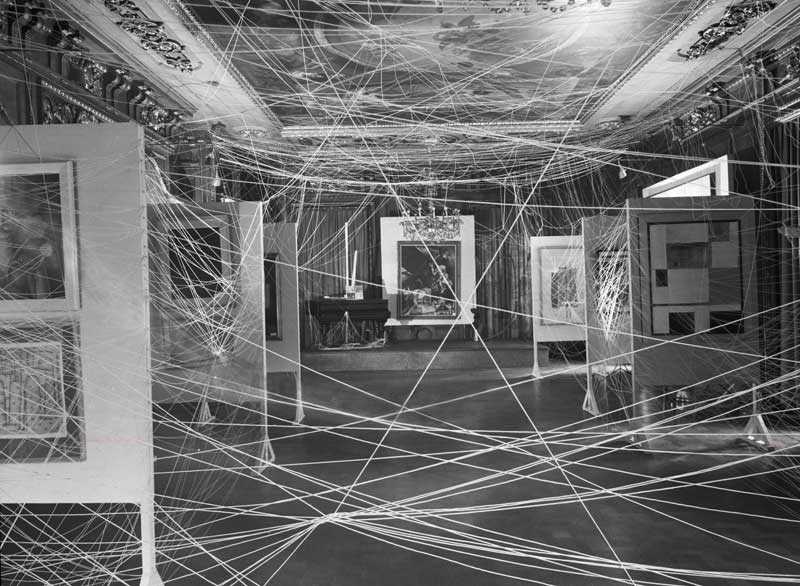
A third position enters. Neither square nor line. A network. Sixteen Miles of String was installed for First Papers of Surrealism, New York, October 1942. The title is already a kind of legend. Contemporary accounts suggest the string actually used measured closer to one mile, not sixteen. The inflated number endured regardless. At the opening, children played ball and hopscotch inside the installation, at the artist’s own suggestion. Pure obstruction was not the only reading available. The work became, briefly, a playground. Numbers drift under transmission the way images drift beneath paint. A figure repeated long enough stops needing to be true.

The same organism persists beneath fungi, beneath the plants that remain. What survives beneath black paint. What survives beneath disturbed earth. What survives beneath a string that transmits even while it blocks the view. Square, line, string: each is a covering that refuses to be only what covers. Beneath each one, something keeps signaling, indifferent to whether it is ever received.
Leave a Reply