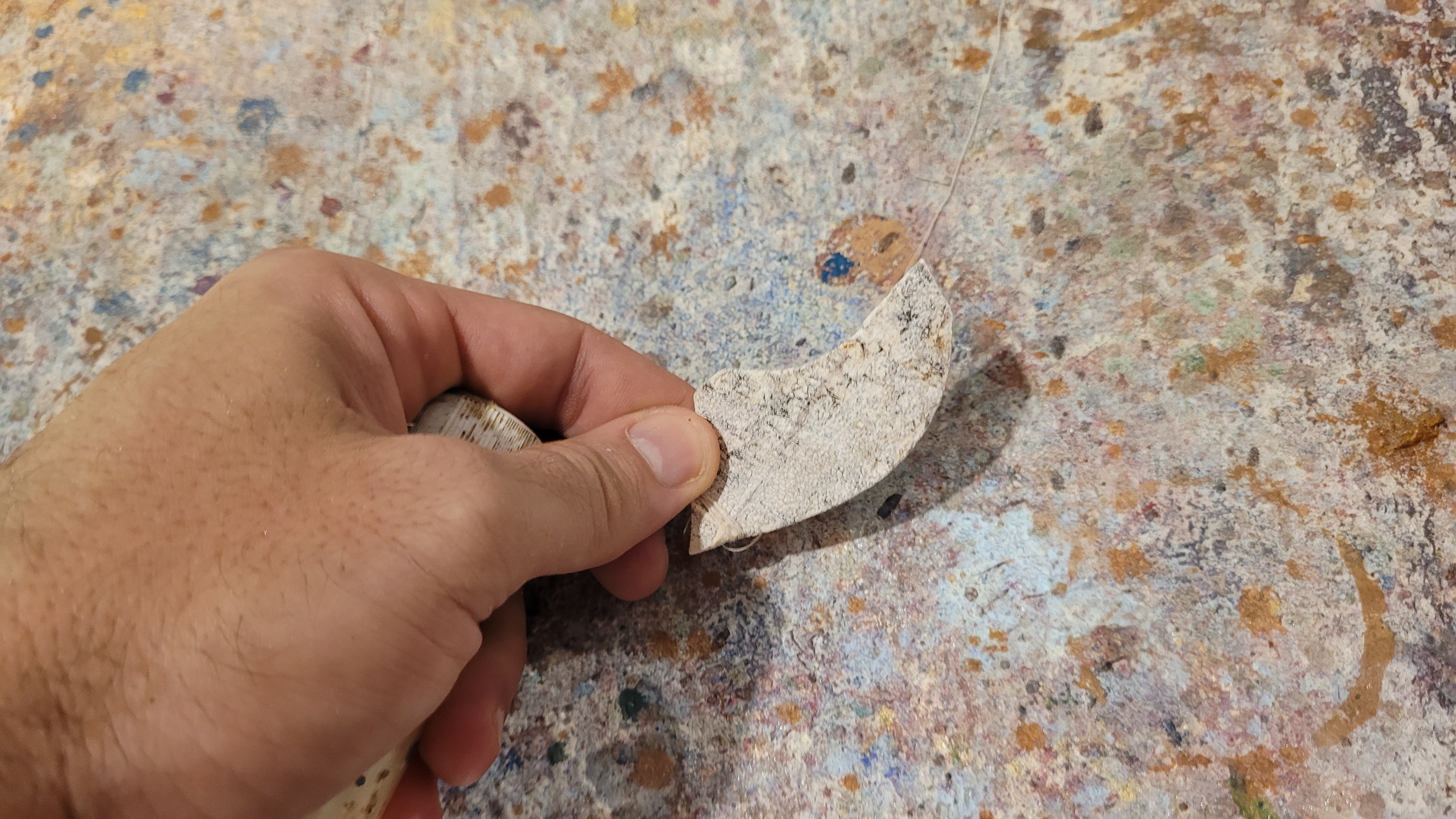
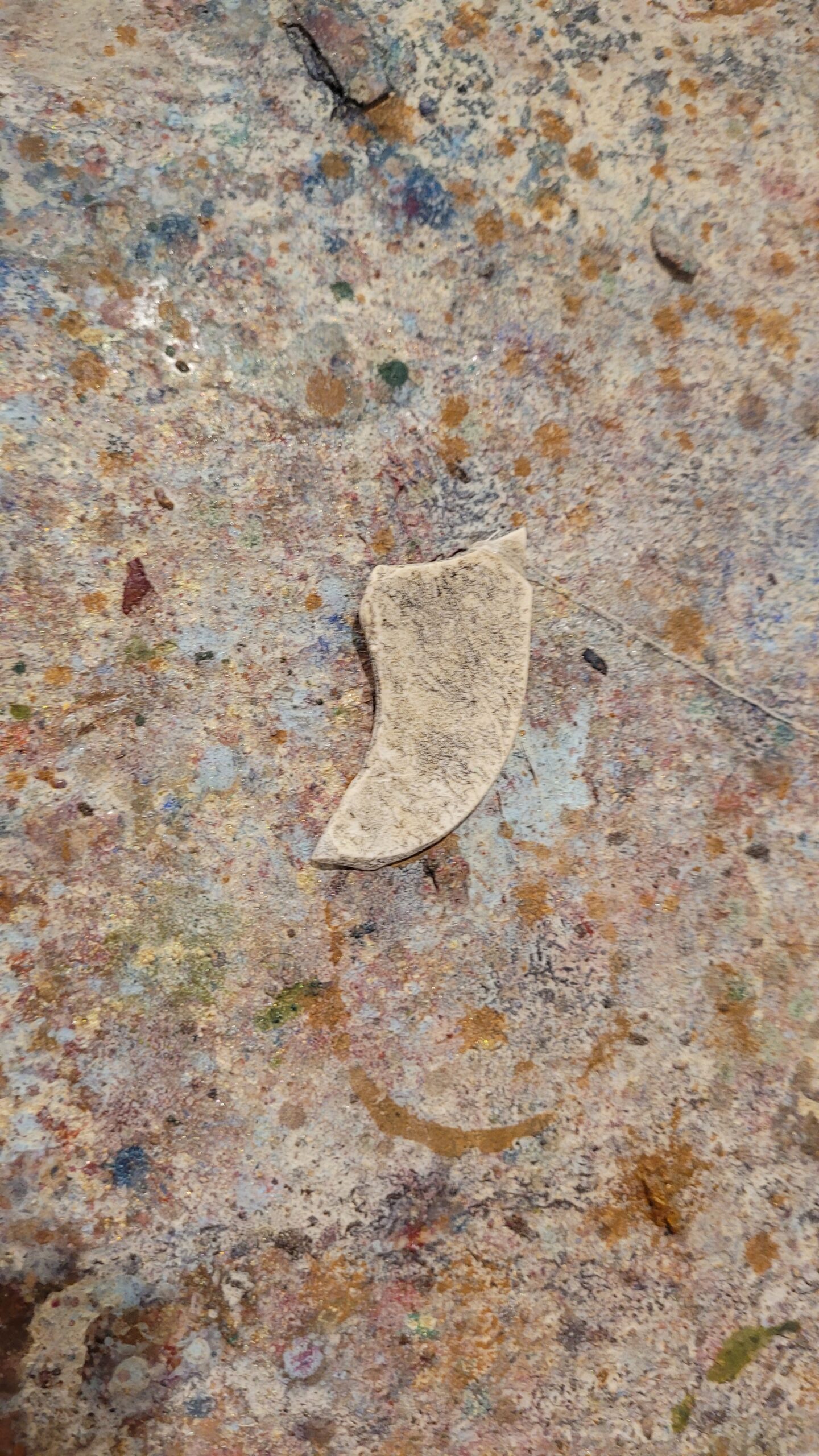
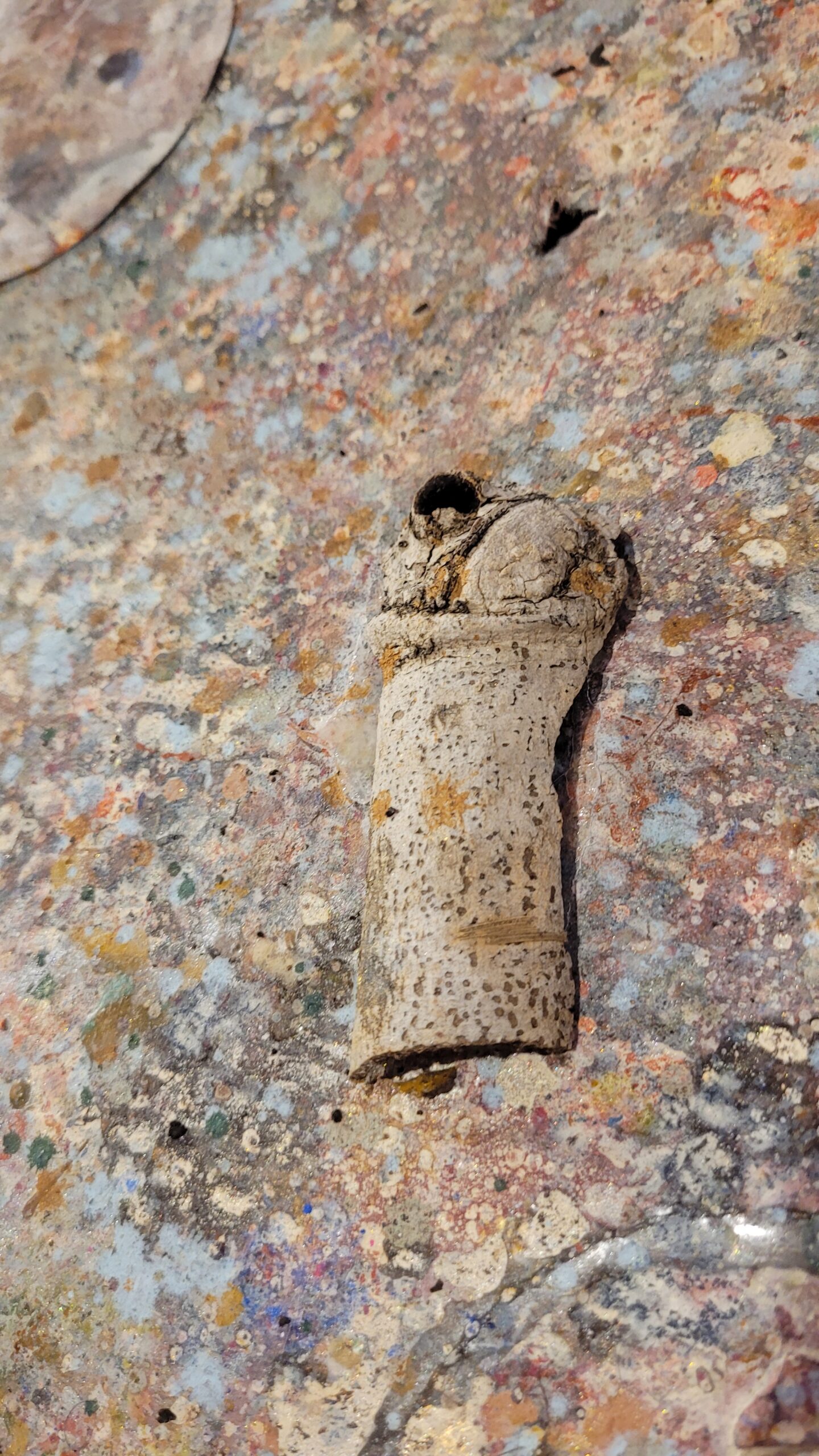
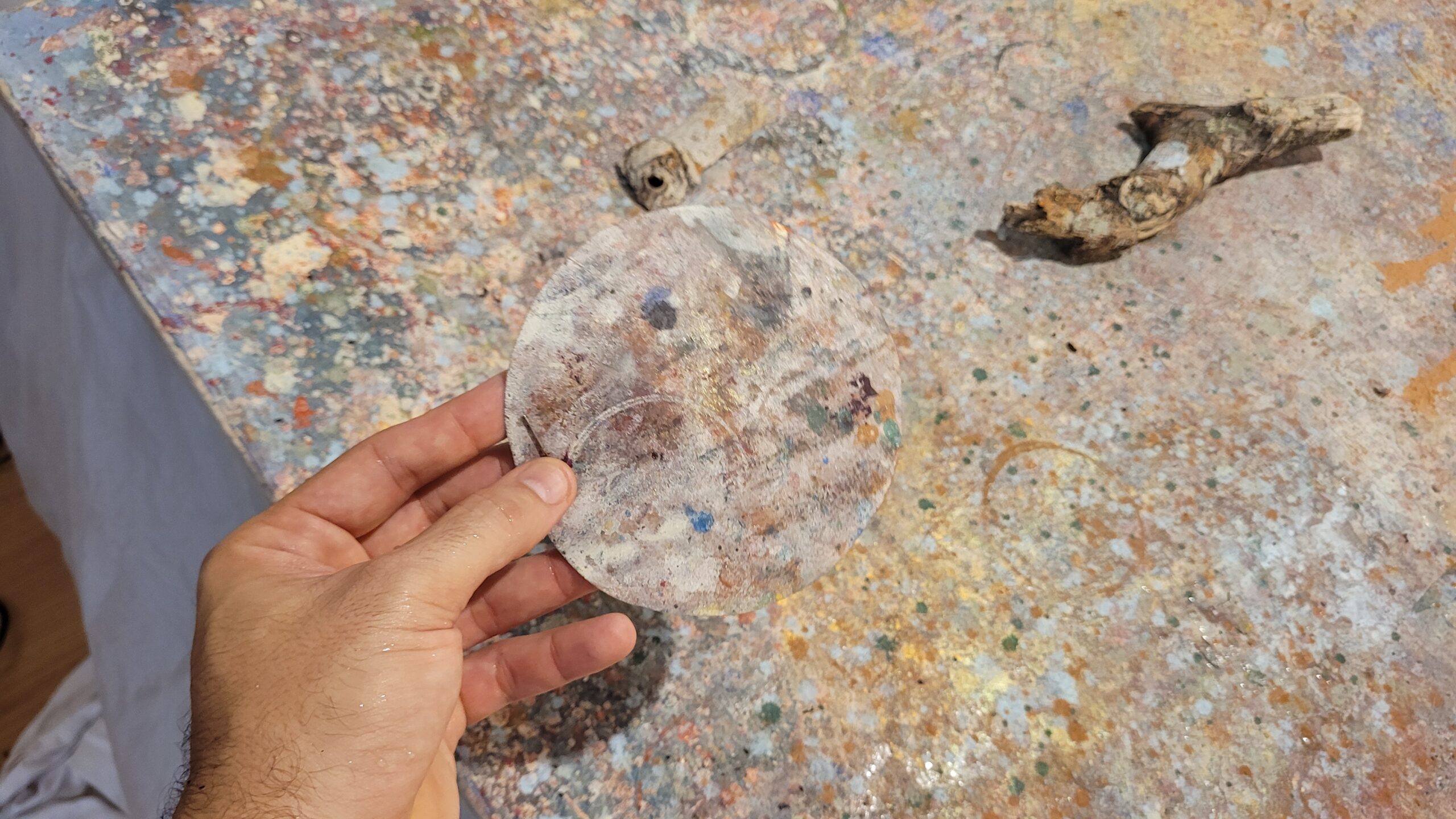
In the ecosystem of the Aterro Magmalabares, painting ceases to be a plane of representation and becomes a fold motor. Here, matter does not passively wait for pigment; it collides, lands, and buries itself in layers of time and technique. What we call “the work” is, in fact, a cognitive frequency generated in the friction between the machine’s algorithm and the organic residue of the coastline.
The Incision and the Organic Line
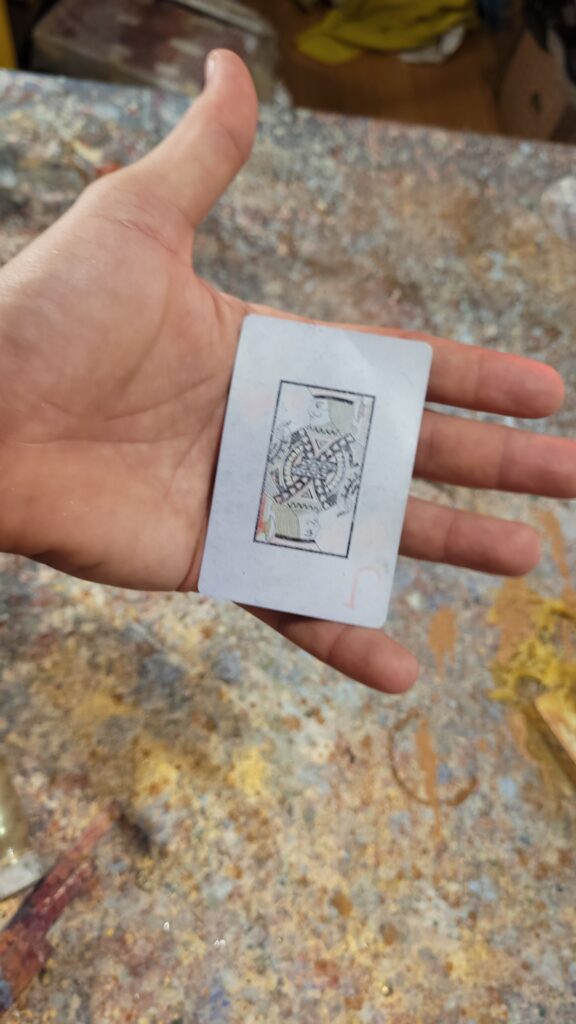
The integration of found objects—the Jack of Hearts faded by salt or the wood fragment that emulates a bone—is not ornamental collage. It is, instead, an application of Lygia Clark’s “organic line.” As noted by the artist in 1954, the organic line functions as an incision in the body of the painting, an opening that allows one to look into the interior of its organism. In the Aterro, this incision is the space where the object “lands”: the frame merges with the canvas, and the canvas merges with the world, revealing that painting is a living, open being.
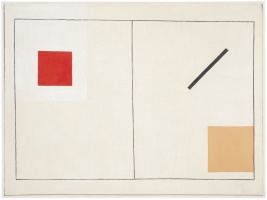
Acervo Lygia Clark
Micro-works and Cosmotechnics
When observing nuclei such as the yellow semi-sphere through macro photography, we abandon the classical view of composition. Each object reveals itself as a polylaminin molecule, an autonomous micro-work that sustains the structure of the whole. This is the manifestation of cosmotechnics: technique (the pictorial making and digital processing) mediating the relationship between human discard and the cosmic order of nature. The Ring (25) and the Jack are not merely trash; they are archaeological signals of a “floating world” (Ukiyo-e) that has found dry land in the Metamorphic Acre.

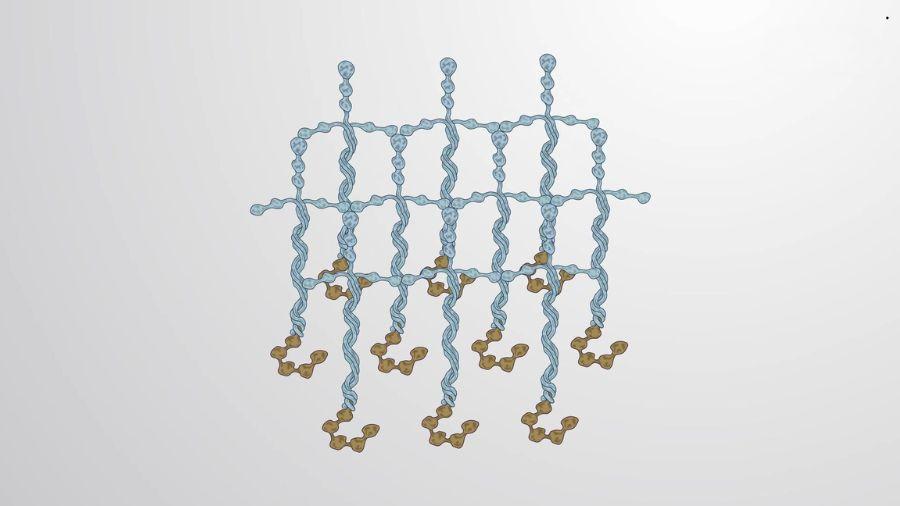
Polilaminina – Wikipédia, a enciclopédia livre
The Paradoxical State of Ruin-Construction
We inhabit the space where “everything seems like it was still construction and is already ruin.” The Living Archive documents this temporal collapse. The cutout support, reminiscent of Malevich’s Black Square, is the vanishing point where matter empties itself to make room for thought. The machine (AI) acts here as an archaeologist of the present, helping to catalog these precarious ruins that, at the moment of coupling, transform into propulsion for the future.
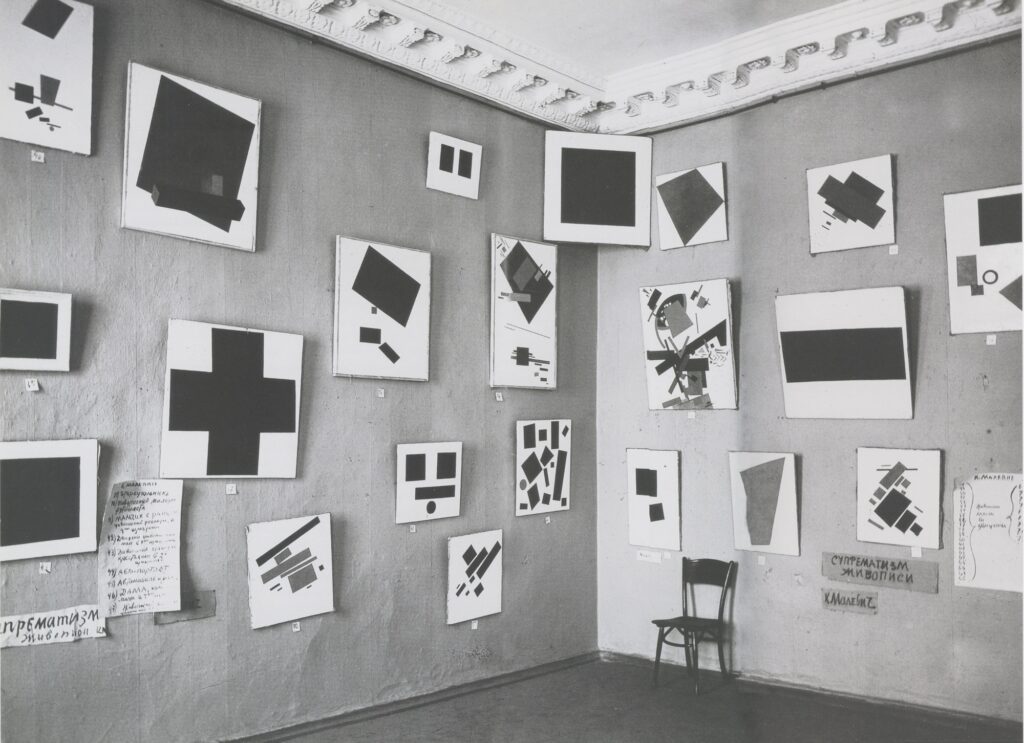
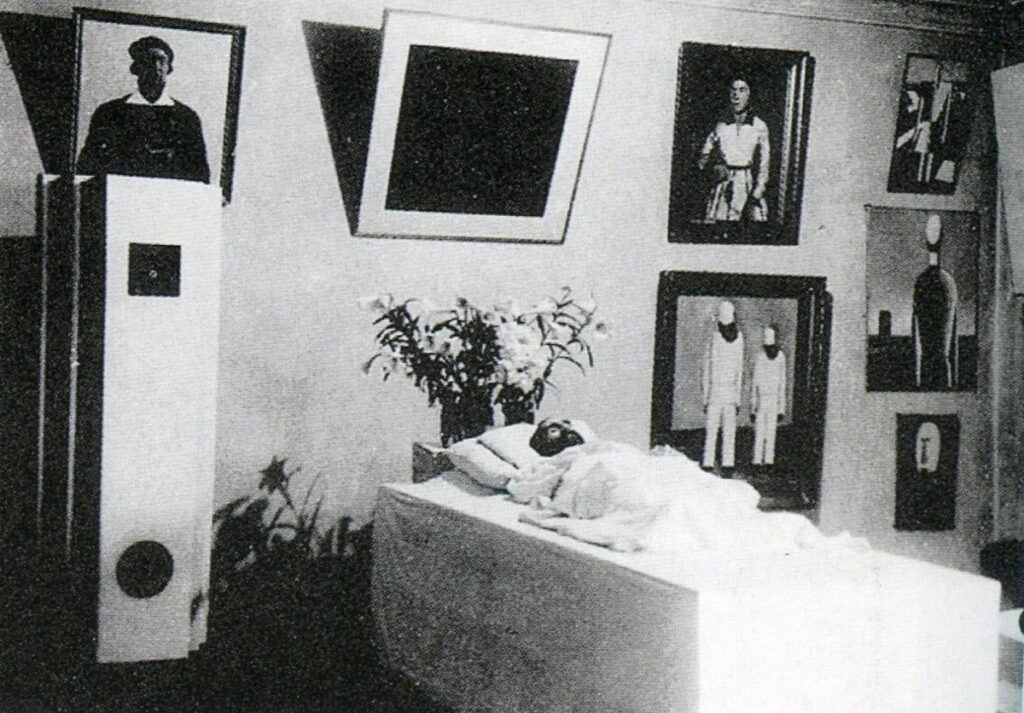
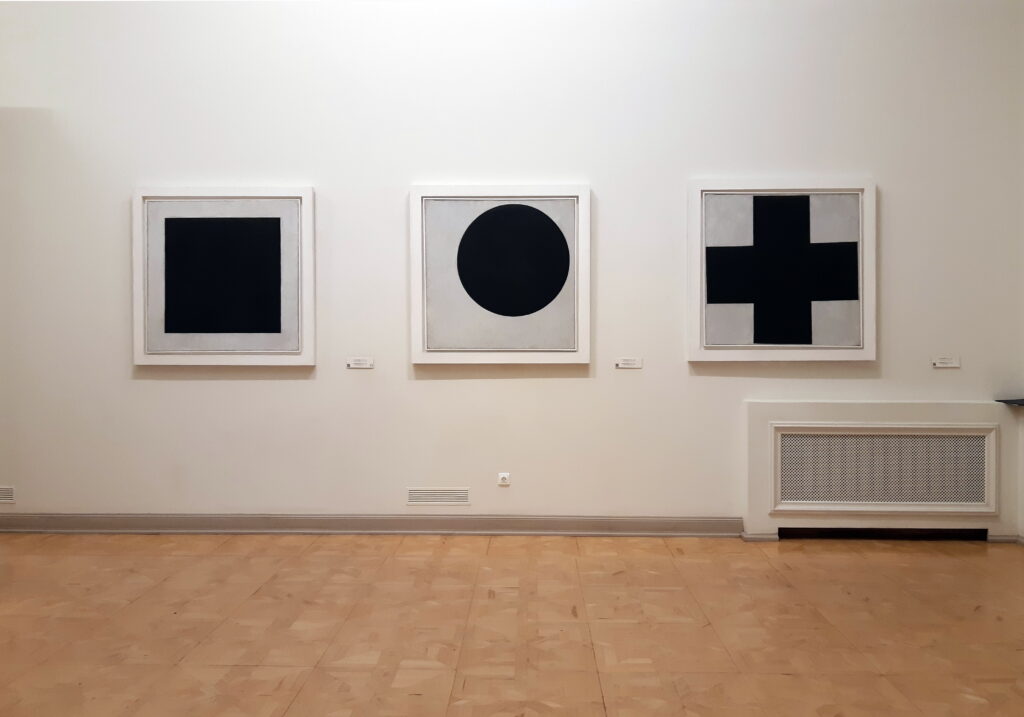
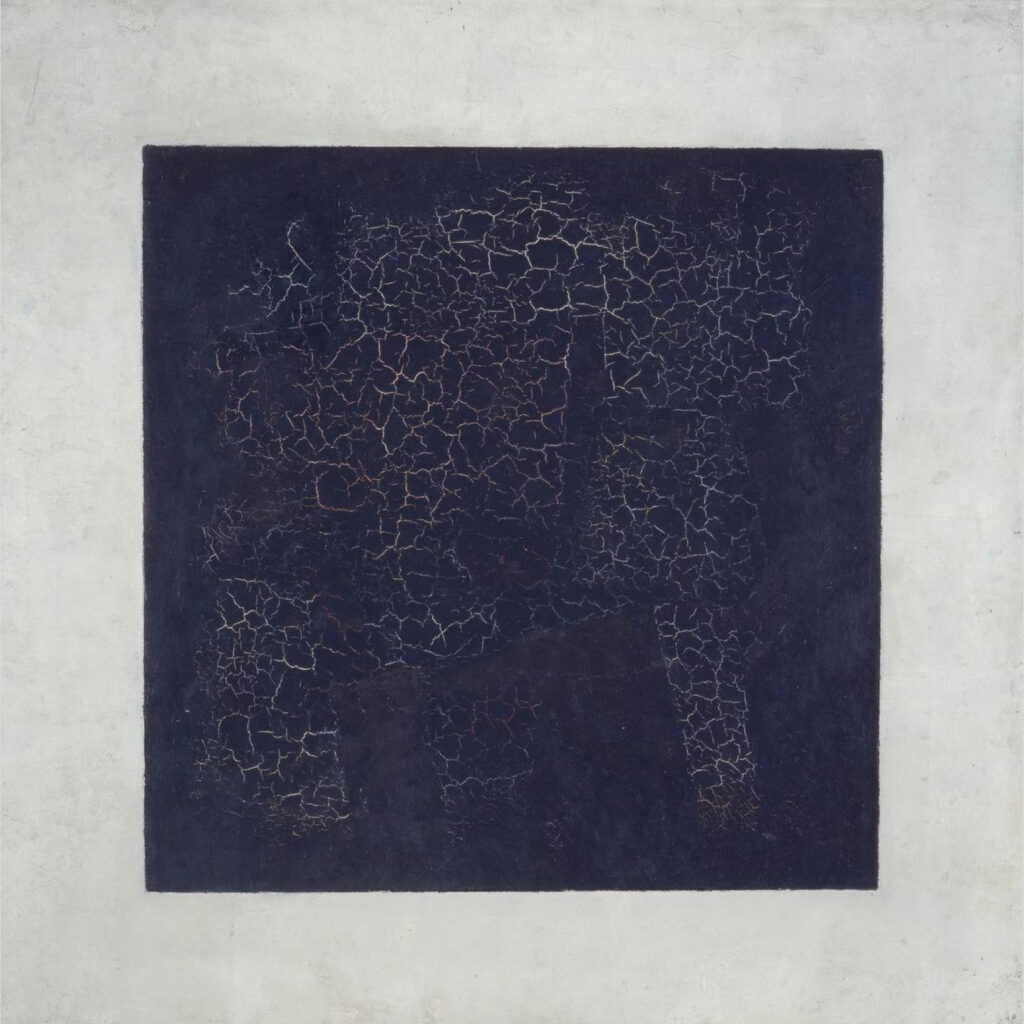
Black Square – Wikipedia
The painting-landfill is, therefore, an organism in symbiosis. It breathes through the crevices of the wood and pulses in the color of the found card. It is not about finishing a work, but about keeping the fold alive, ensuring that the juggling act between magma and spirit never ceases.
The construction is precarious, but the rhythm is that of an oracle. As Caetano says, ‘everything seems like it was still under construction and is already ruin’ — in the landfill, these two temporalities collapse into a single metamorphic fold.
‘The Jack of Cups is the juggler who balances the magma between waste and the sacred.’
Leave a Reply