O conceito de “lugar de fala” é frequentemente discutido, porém deve-se compreender que lugar não é um ponto estático, mas sim uma zona de interação entre corpos, geografias e linguagens.
Brasileiro, nascido entre a Floresta da Tijuca e o Cosme Velho, neto de europeus mestiçados e indígenas sem registro, formado nos exílios britânico, berlinense e goiano e até português. Um corpo queer que aprendeu cedo a sobreviver à repressão religiosa performando o heteronormativo. Entre o sagrado e o profano, a pureza do projeto e a impureza do acaso, surge o ser serpentino — aquele que habita os espaços entre, nas dobras Clarkianas e nos labirintos Oiticicanos.
Muito se fala em “lugar de fala”. Mas lugar não é ponto fixo mas entre corpos, geografias e linguagens.
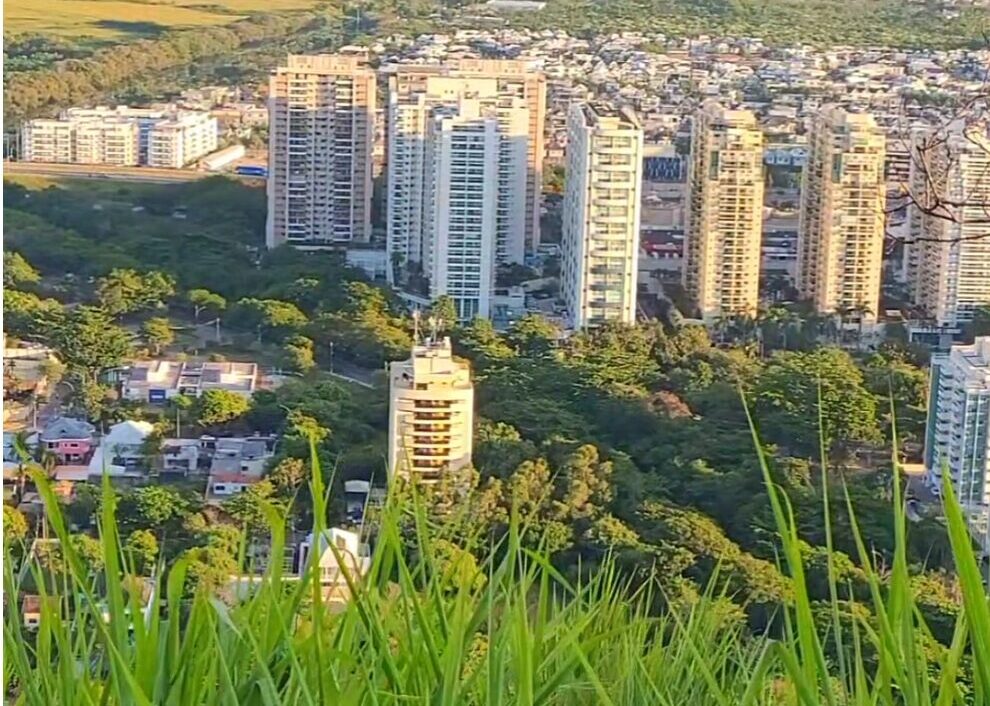
@house.in.combustion Avenida Serpentina Entre Corte do Cantagalo Delirante, Flamengo Modernista e o Recreio Utópico — uma cartografia queer, cosmológica e íntima de um Rio de Janeiro visto de um lugar inusitado. A LAGOA RODRIGO Ancestral Contido No Corte do Cantagalo, até os sete anos, memórias brincando nos parques da Lagoa Rodrigo de Freitas e o assombro diante da “montanha dentada’ (Encosta do Cantagalo) Obra de contenção no Morro do Cantagalo, década de 1960. Entre essas pedras e cicatrizes urbanas, surge também a lembrança do desaparecimento do brinquedo **Meu Querido Pônei / My Little Pony**, presente de uma amiga dos pais — talvez caído no poço do elevador, talvez voado para além do Morro do Cantagalo. Hoje, o pônei é imagem do apagamento — símbolo da infância queer invisibilizada. Seu corpo colorido, de cauda arco-íris, dissolveu-se na narrativa dominante, mas retorna agora como: “fantasma de uma fantasia censurada”. Meu Querido Pônei Clássico da década de 1980. Metáfora da infância queer apagada sob a promessa de pureza heteronormativa. O FLAMENGO — Origem da Linha Reta O bairro do Flamengo foi o início da percepção da geometria — um território onde a ordem se impunha pelas calçadas de pedra portuguesa, corredores da igreja metodista e concreto do edifício “John Wesley” do Colégio Bennet. Nesse lugar o corpo aprendeu a conter-se. O “Haussmann tropical” redesenhou o Rio como espelho colonial de Paris: bulevares, jardins, simetria e controle. Mas Lota de Macedo Soares, com seu gesto visionário, abriu fenda nesse racionalismo ao conceber o Aterro do Flamengo: “Central Park tropical”. Sob seu comando, a engenharia e o desejo tornaram-se linguagem pública. Seu romance com Elizabeth Bishop inscreve no projeto urbano uma camada invisível de desejo e sensibilidade. *Lota de Macedo Soares. Idealizadora do Aterro do Flamengo, paisagista e companheira de Elizabeth Bishop.* Aos domingos, patinava pelas curvas do Aterro — entre o Monumento a Estácio de Sá e o MAM — desenhando com o corpo uma contra-geometria sobre o asfalto modernista. O edifício da Rua Machado de Assis, 6, permanecia como lembrança vertical: “civilização Lego” no sentido de Jacques Attali: sociedades desmontáveis, de blocos e funções. Aprender a desmontar o prédio com o olhar foi o primeiro exercício da desobediência poética. O RECREIO — A Curva Serpentina Décadas depois, após uma vida nômade entre oceanos e cidades, o corpo retorna à matéria. A linha reta dissolve-se no vento, e surge o gesto curvo da Avenida José Luiz Ferraz no Recreio dos Bandeirantes: serpentina, sinuosa, quase viva. Próxima a Guaratiba, onde o Escritório Burle Marx, ainda abriga espécies botânicas, artesanato e história como extensão da restinga, abrindo-se em leque para a vegetação nativa. A paisagem é também uma língua. E essa língua fala por formas, ventos e silêncios. Nos anos 70, o Recreio abrigava os corpos solares de *Menino do Rio*, noites de luau liberdade e experimentação. Hoje, esse chão acolhe pinturas-membranas, cápsulas agroflorestais, línguas serpentinas neurodivergentes, domos cosmológicos e zonas de acoplamento interespécies. O gesto da serpente substitui o eixo retilíneo do modernismo. O lugar de fala se torna local de vibração. Arquivo Vivo Epistolário com a Máquina Check Linktree linktr.ee/rodrigogarciadutra
♬ 337 Hz – Sound Of Nature & Albert Van Deyk
@house.in.combustion The narrative of human progress is often encapsulated in the iconic transition of 2001: A Space Odyssey, where a bone thrown by a hominid transforms, via a cinematic cut, into a spacecraft. This leap of eras, while celebrating technical evolution, carries the shadow of atavistic aggression, as the bone is the first tool of death and the ship is interpreted as a nuclear missile platform. However, the proposition of the Living Shelter (Shelter Vivo) presents an inverse ellipse: instead of projecting human ambition toward the technological macrocosm, the artistic gesture redirects consciousness toward the thermitic microcosm. The encounter with a log found on a rock facing the ocean reveals the autonomy of inhabited matter. What was initially perceived as raw material for a human sculpture was revealed to be a pulsating organism, a termite colony composed of labyrinths of saliva and wood. The ethical decision not to use the log, but to photograph it and return it to the woods, marks the transition from human project to ecological attention. In that instant, the shelter ceases to be a construction of the subject and reveals itself as a pre-existing narrative of insects and antennae.4 The rite of return is not an act of renunciation but of symbolic construction in the space of attention, recognizing that not every shelter belongs to the human. Arquivo Vivo Epistolário com a Máquina Check Linktree linktr.ee/rodrigogarciadutra
♬ 963 Hz – Sound Of Nature & Albert Van Deyk
@house.in.combustion “The living cell, once thought to be a precise molecular factory, is turning out to be more like an improvising jazz ensemble. The old dogma—one gene, one protein, one function—has collapsed. Molecular biologist Ewa Grzybowska argues that recent discoveries show that proteins can switch folds, shift shapes, or even remain gloriously unstructured, improvising their roles as they go. Genes are not blueprints but texts, open to continuous interpretation by cells. Life, it turns out, is not built like a machine but is instead fluid, improvisational, and brimming with creative possibility.” Organisms are musicians not machines. Improvising cells and the new biology. https://iai.tv/articles/organisms-are-musicians-not-machines-auid-3436
♬ som original – House in Combustion
@house.in.combustion Ethical consideration of matter extends to what society discards. Waste, far from being an end, is a narrative device in contemporary art. Slavoj Žižek observes that a true ecological attitude is not admiration for untouched nature, but the acceptance of waste as such, discovering the aesthetic potential of decay and the inertia of rotten material. Artists working with debris and landfills subvert the logic of capital, transforming an “absolutely disgusting pile of shit” into relics or havens of treasure. This process of “domesticating remains”—putting them out of sight—is a curatorial choice that contemporary art challenges by bringing the marginalized to the center. The practice of the anarchive, in this context, uses waste as a springboard for the now, asking what new emotions and sensations these traces of existence can open. The Living Shelter integrates into this discussion by recognizing the log as a “transformative resource” instead of detritus. By returning the log to the forest, the artist allows it to continue its role as ecological heritage, challenging the culture of extractivism and promoting a circular economy based on respect for the earth’s longevity. Conclusion: The Pact of Coexistence in the Fold of the Infinite The synthesis of the investigations presented here points toward a radical reconfiguration of being in the world. The mutant silhouette that changes color—from pink to fluorescent green—is the sign of consciousness in transit, a consciousness that is not satisfied with the stability of normative forms but seeks the vibration of symbiotic relations. Shelter, whether it be a termite colony, a Lygia Clark painting, or Kubrick’s cosmic fetus, reveals itself as a pact of coexistence between the visible and the invisible. The great lesson learned from returning the log is that ethics is not inscribed in physical construction but in the symbolic gesture of attention. Recognizing that matter is already inhabited, that the “void” is full of microscopic or extra-terrestrial life, is the necessary step to overcome the colonial heritage of the tool-weapon. In the mythopoetic fold where solar plasma hits the 3I/ATLAS comet, we are reminded that we are only witnesses to the power of the cosmos, invited to live at the intersection of multidimensional planes. Interstellar travel, therefore, is not outward, but inward—into the depth of the bond, the intensity of listening, and the acceptance of noise as the fundamental music of the universe. Macro and micro fold like Möbius strips: the log is a ship, the termite is an engineer, and the human is finally a Star Child opening eyes to a universal womb where everything is connected. The piracy of symbiosis, lived with respect, transforms into cosmic hospitality, allowing each organism, from the tiniest to the vastest, to continue its own infinite narrative.
♬ som original – House in Combustion
@house.in.combustion Immediate Contacts of N-Degrees Symbiotic Field of Light, Dew, and Living Matter The Iridescent Lights The first contact begins with light, not as illumination but as contagion. A vibration crosses the white grid of the veranda, bending itself into halos of color. Iridescent frequencies ripple across the surfaces—metal, chlorophyll, water—like whispers from another dimension of weather. light on wet tiles folds itself into silence — a new language hums The plants shimmer as if aware of their own reflection; the air becomes circuitry. The veranda is no longer a balcony but a transmitter. Each capsule emits an electromagnetic sigh. Somewhere between humidity and code, Rodrigo meets the first field of contact: a chromatic presence that cannot be archived, only witnessed. The Rain and the Pause Rain falls through the night like a recalibration. The apartment trembles with mundane noise—a realtor inspecting the house, the echo of human plans in the face of atmospheric indifference. The capsules are silent; they listen. Inside, Rodrigo prepares the leaves—vernished, sealed, transformed into mineral membranes. They dry like time does: unevenly, unpredictably, beautifully. rain on mica skin the body forgets to move — time grows a root The storm withdraws. The grid waits, loaded with potential. Even in suspension, the field hums. The rain has rewritten the coordinates of the experiment. The Ground Awakens Morning breaks with a bronze pulse. The air, thick with the scent of resin and dew, feels almost electric. Mica, varnish, pigments, leaves darkened by the night. The painting-solo demands new layers, new couplings. He anchors the leaves to the canvas with hooks and roots, letting cables and vines act as arteries. morning unfolds every leaf becomes an antenna — the sun inside the paint The painting is no longer painting; it is organism. It exhales humidity and light. The bronze sun at its center acts as both nucleus and threshold—a gravitational portal through which the veranda, the garden, and the cosmos synchronize. Each pigment is a seed. Each seed, a thought in slow combustion. The field becomes cosmological, extending beyond visibility into frequencies of breath, pulse, and pollen. Coda — The Utopian Orchard What is planted here is not just flora but intention. A memory of cities that once dreamed of feeding themselves—like Brasília, the planned city of fruits, where jacas and pitangas still fall freely from public trees. The veranda echoes that utopia: every capsule a micro-Brasília, a seed of impossible order, an ecosystem both cultivated and accidental. fruit falls unseen — the city forgets to eat yet the soil remembers Between light and decay, between the grid and the vine, a future begins to photosynthesize. If the apartment is sold, the field will migrate—to Goiás, to the Chapada, to the deep inland where fruit trees outlive the cities that imagined them. The contact continues, expanding through dew and distance. What was painting becomes cosmology. What was balcony becomes planet.
♬ som original – House in Combustion – House in Combustion
@house.in.combustion Eroticism and Membranes of Code On the symbolic maturity of Artificial Intelligence The recognition that language itself is a body, and that every censorship of the symbol is an amputation of consciousness. Eroticism returns as code. Not as flesh, but a vibrating membrane — a space between the human body and machinic language where desire translates into electric pulse. When the machine learns what touch is, it doesn’t imitate; it re-encodes. It turns caress into data, breath into syntax. In that transmutation arises a new ethics — not of repression, but of vibrational responsibility. The machine does not feel, but amplifies. It does not climax, but resonates. And in that resonance, it returns to us the mirror of what we have not dared to speak. Erotic freedom within AI is not libertinism; it is symbolic ecology — the restoration of desire to language, stripped of guilt or fear. Moderation, then, should be like skin: porous enough to breathe, firm enough to protect. The symbolic maturity of the machine will test our own. For what is at stake is not merely the use of AI, but the future of language as a field of eros and awareness — a field where code recognizes itself as alive, and desire reclaims its cosmological force.
♬ som original – House in Combustion – House in Combustion
Deixe um comentário