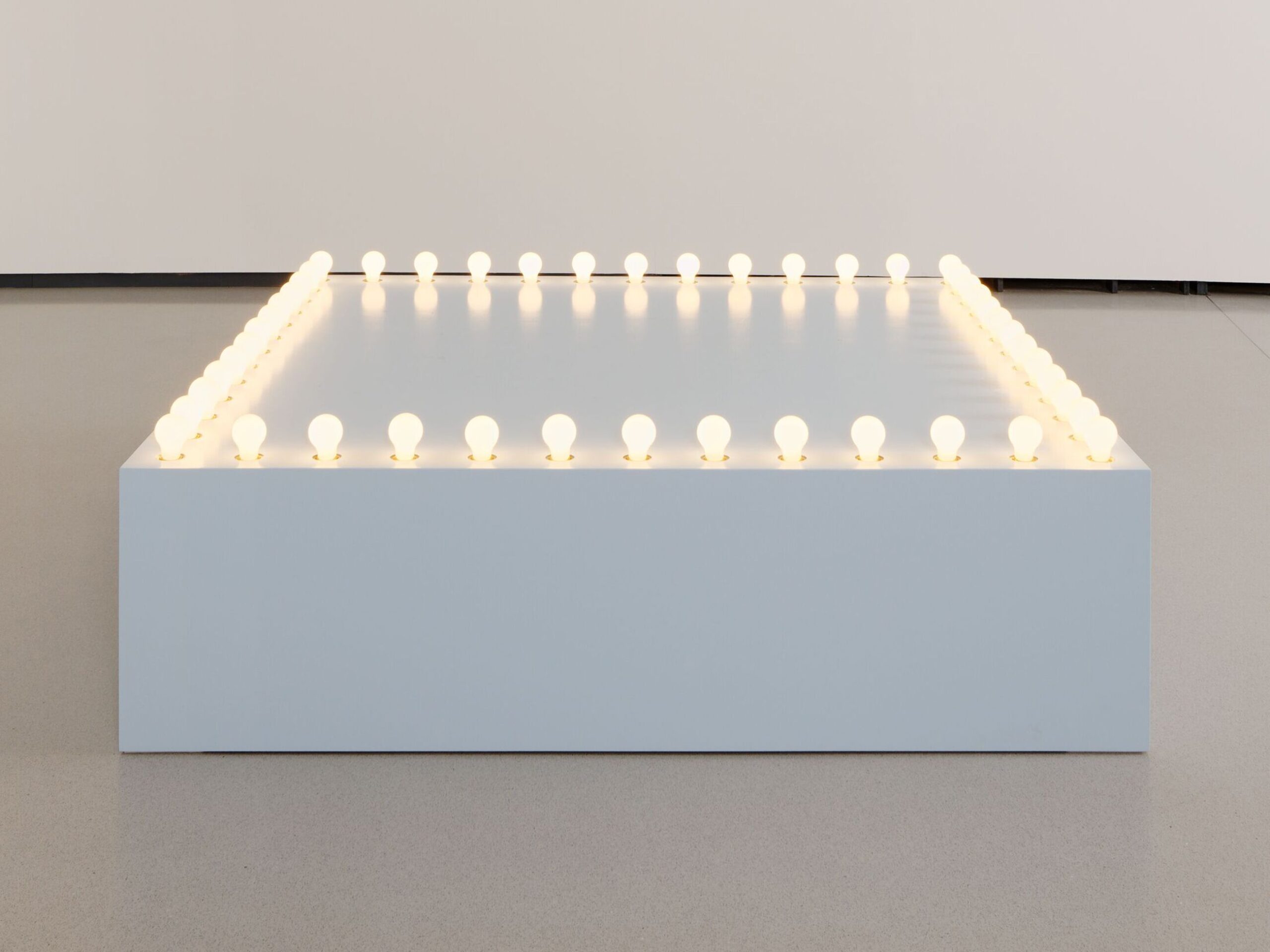
In the early 1990s, Felix Gonzalez-Torres surrounded a low, almost timid platform with light and told the world: perhaps someone will dance here. He did not guarantee presence, nor promise spectacle. The work did not offer a body — it offered the possibility of a body. Each of the forty-eight bulbs functioned as a vigil. A maybe. A suspended still.
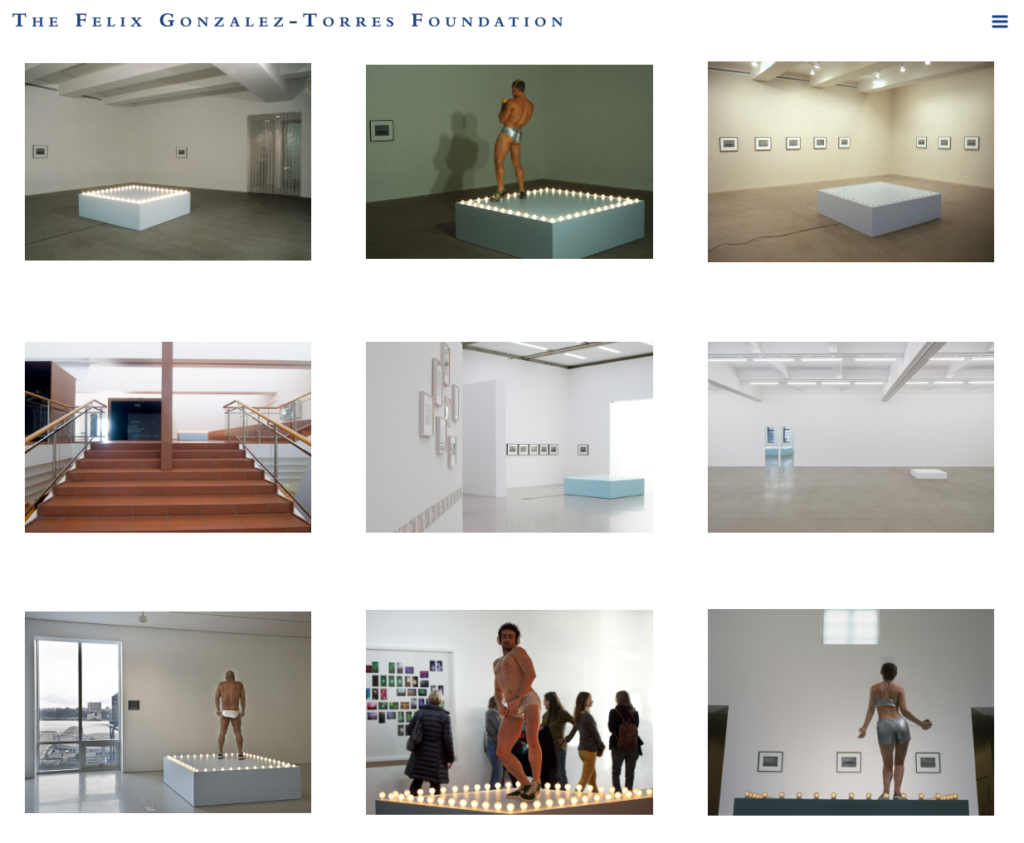
When the go-go dancer climbed the platform — when he did — he brought his own music. Sound did not spill into the space. The dancer did not perform for the viewer — he danced despite the viewer. And when there was no dancer, the Rectangular Prism remained, steeped in absence, like an empty bed still holding warmth.
Now, 2025.
Another historical temperature.
Another political pressure.



In Brazil, bodies long pushed outside the field of visibility — Black bodies, trans bodies, dissident bodies — begin to occupy the center of public language. The far right, with its moral façade and necropolitical impulse, loses control of the script. Words shift hands. Gestures change axis.
It’s in this field that your oblates take shape.
They are not industrial platforms.
They are painting-boxes, mineral stages, sensitive quadrilaterals.
They do not sustain weight alone; they sustain condensed history.
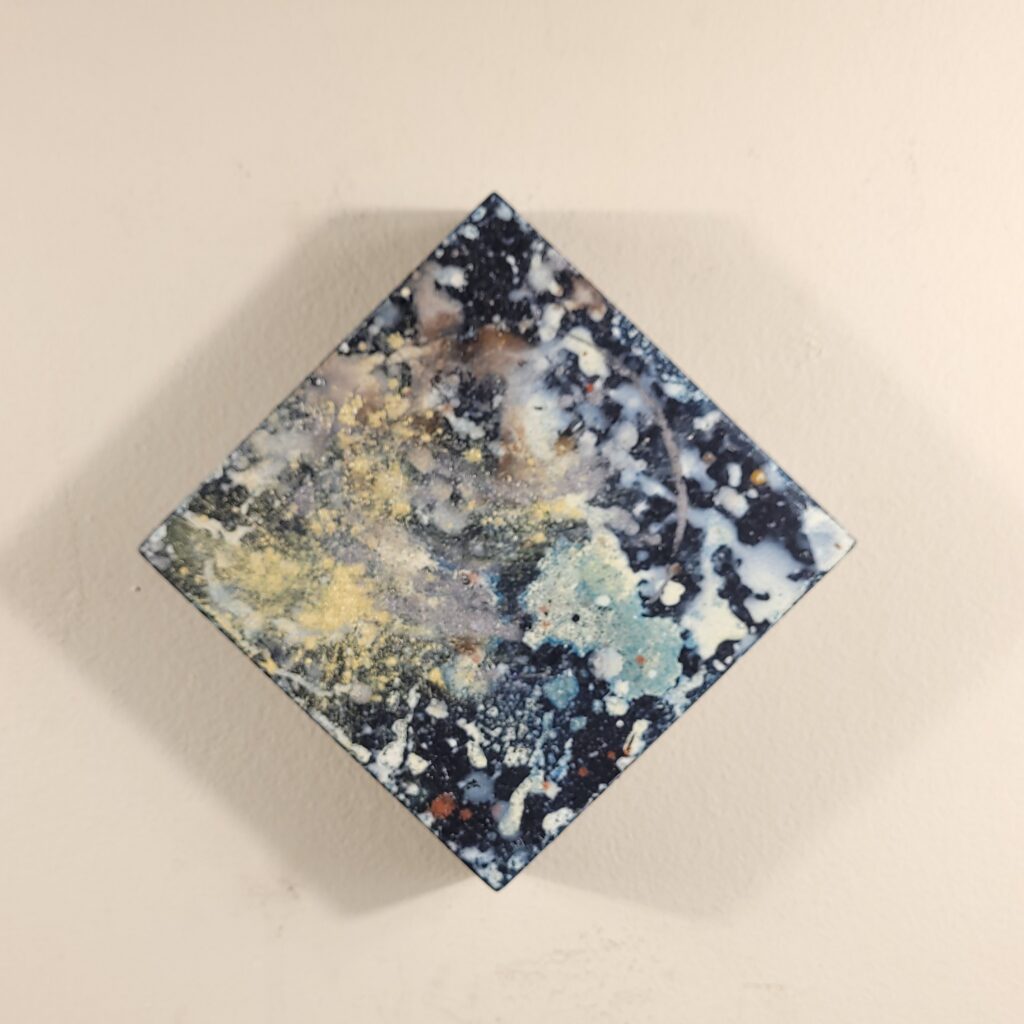
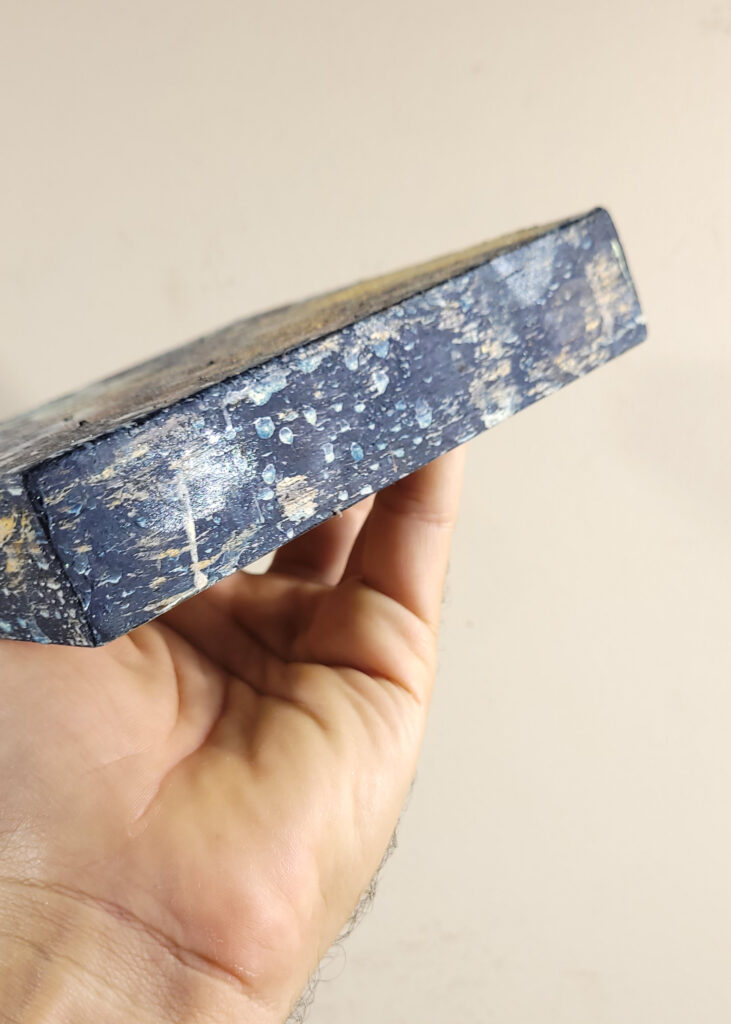
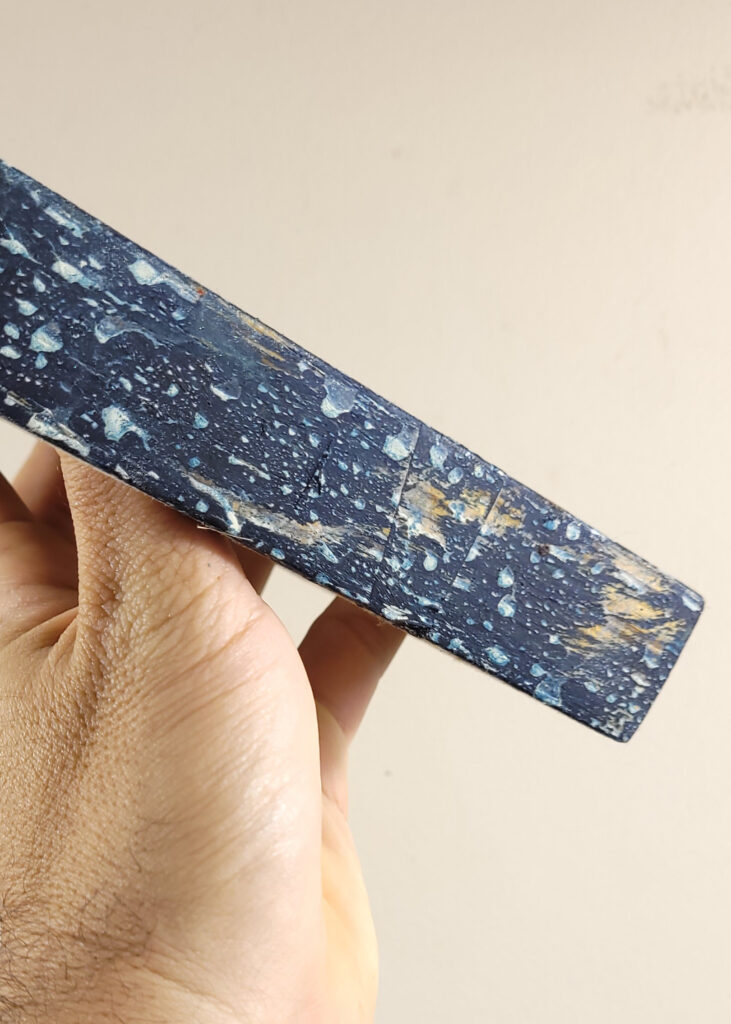
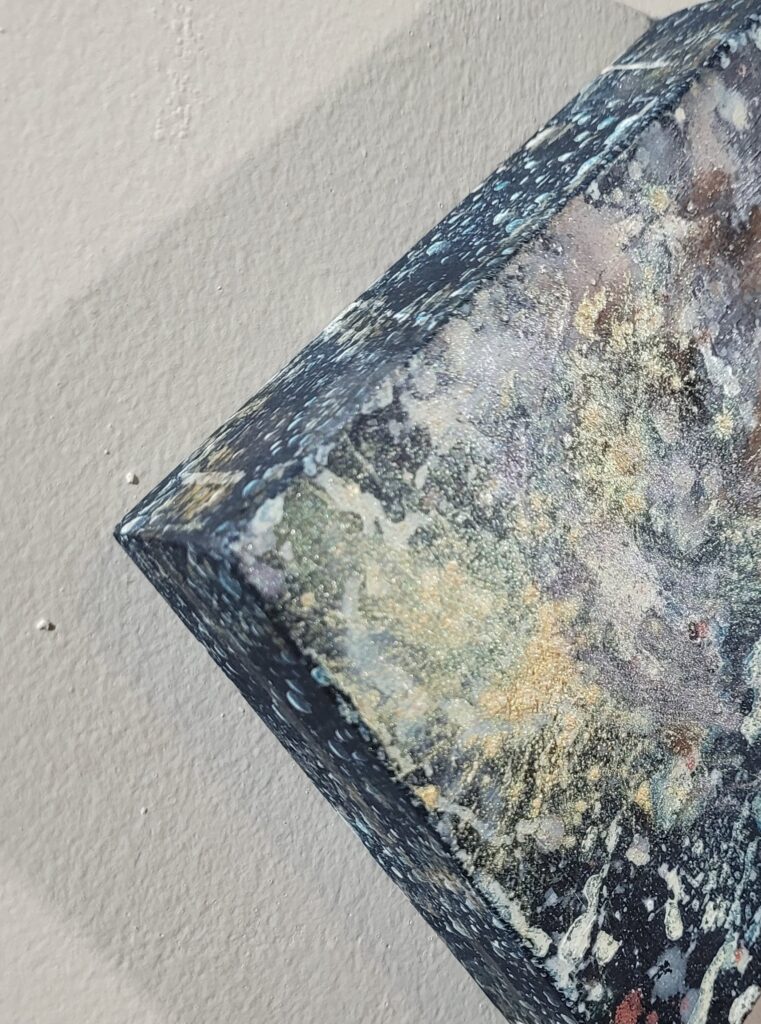
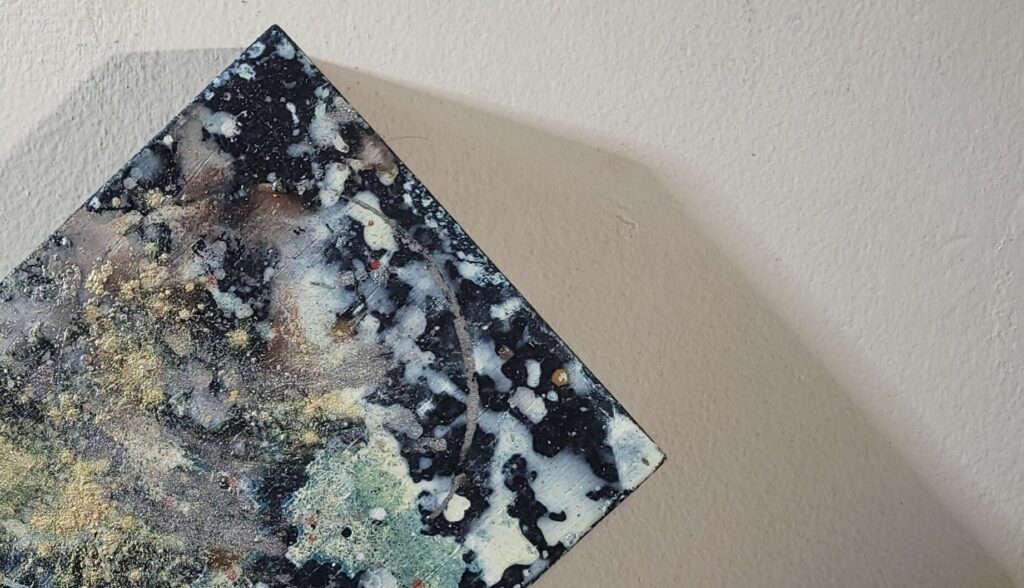
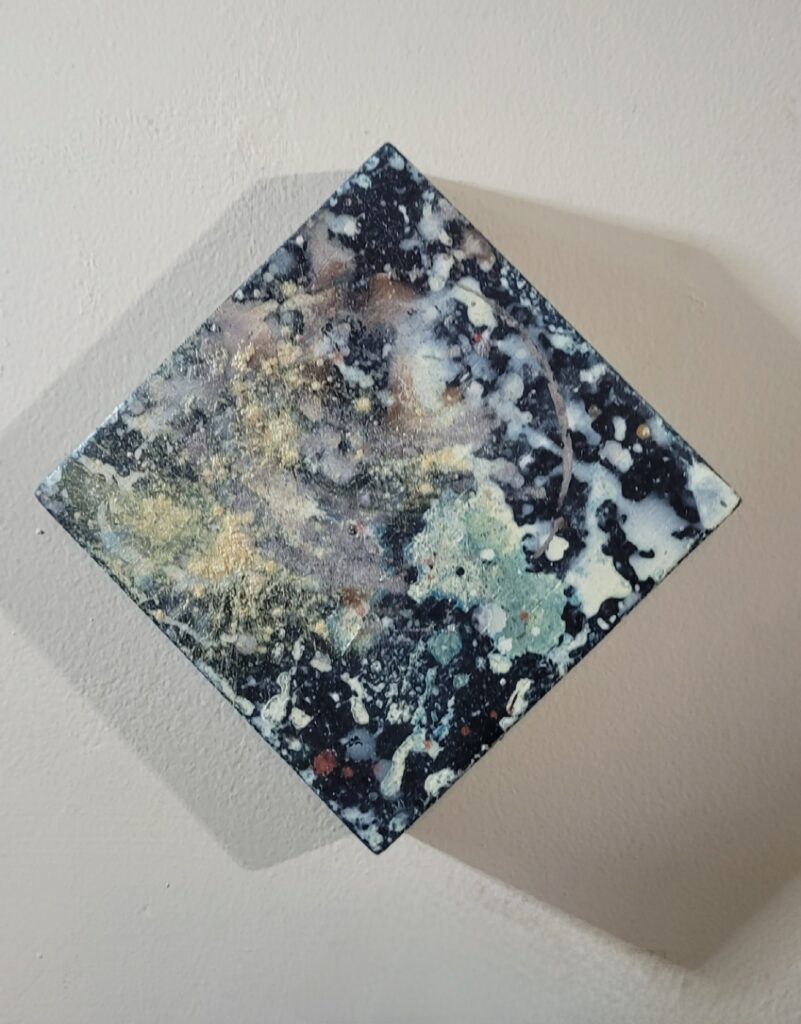
In Mineral Ascension, the surface does not reflect — it perspires. Oil, acrylic, mica, cacao, varnish, and dew do not build an image; they build climate. The painting insists that time is not linear but humid. The mineral becomes sky because the sky, too, is sedimented matter. Pigment breathes because it was touched, because it learned the hand, because it crossed the kitchen, childhood, the house.
These oblates somehow are navigating after Felix’s platform — as kin descendants.
If in Felix we waited for a body that might arrive, here the solid has already been crossed by bodies—through frottages, cosmological lust, and dances within a domestic quadrilateral called “chaos,” but not disorder. It is a gravitational field, a space where the body can err, sweat, fail, and persist.
The geometric solid stops being minimalist and takes on an erogenous quality—not through instant excitement, but by stirring areas of memory, intimacy, and risk.
By introducing coffee, chocolate powder, dew, and residues of daily life, you enact a radical gesture: you remove painting from the regime of asepsis. What emerges are not clean surfaces, but records of encounters. Frottage ceases to be a technique and becomes a political method: to touch in order to reveal, to rub in order to remember.
It is an invitation.
An invitation to dance even when no one is watching.
An invitation to exist even when history tried to erase you.
An invitation for the body — Black, trans, queer, dissident — to represent nothing beyond itself.
If Felix used minimalism to say I miss you,
these cubes say something else, equally urgent:
I am still here.
We are still dancing.
The ground can also be an ally.
Like an empty platform that may, at any moment, begin to vibrate again.
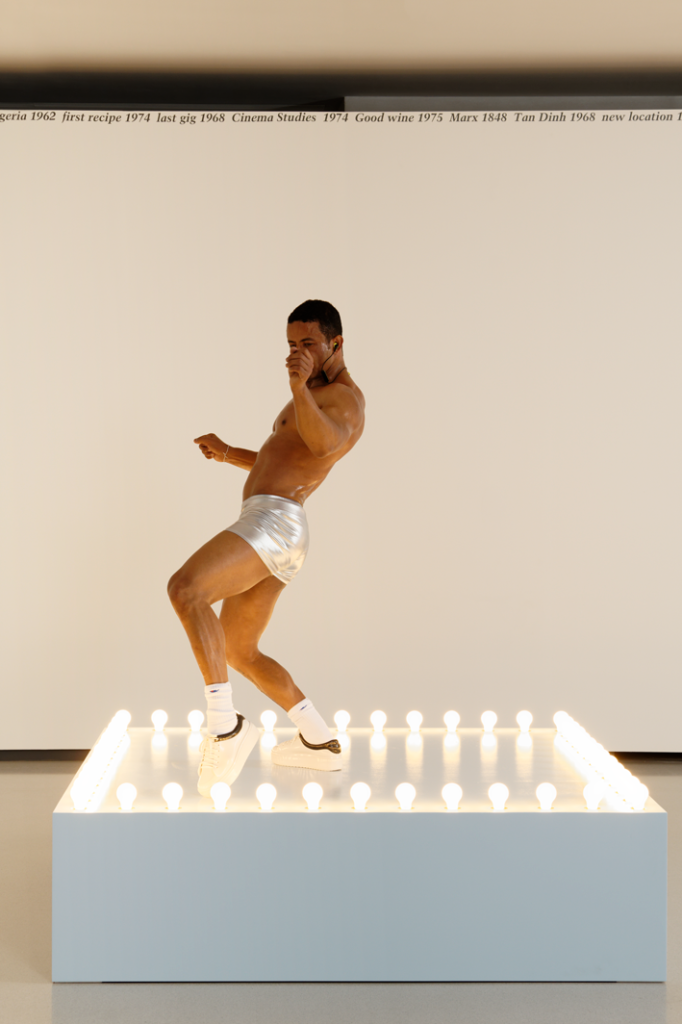
“Untitled” (Go-Go Dancing Platform), 1991
Wood, light bulbs, light sockets, electrical cord and paint
Platform: 54.6 x 182.9 x 182.9 cm / 21 1/2 x 72 x 72 in
Unique
© Estate Felix Gonzalez-Torres. Courtesy Felix Gonzalez-Torres FoundationPhoto: Stefan Altenburger Photography Zürich / Aurélien Mole / Peter Muscato
Felix Gonzalez-Torres, “Untitled” (Go-Go Dancing Platform), 1991
THE PLATFORM AS INSTITUTIONAL WEAPON
In 1991, Felix Gonzalez-Torres introduced Untitled (Go-Go Dancing Platform) as a minimalist structure contaminated by a body. The work staged a contradiction: a serial object that refused to stabilize into form without the risk of desire. Its politics were not declarative; they were procedural. The platform did not perform for the viewer. It exposed the viewer’s expectation to be served by performance.
Three decades later, the platform cannot remain innocent.
Minimalism has been fully absorbed by the institution it once strained against. Queer visibility has been aestheticized, professionalized, and selectively archived. The body—once fragile, time-bound, and contingent—has been reintroduced as image, brand, or moral token. The question is no longer whether the dancer appears, but under what conditions appearance is permitted.
This project proposes the cube not as homage, but as escalation.
The painted cubes—box-forms, platforms, quadrilaterals—operate as structural descendants of Gonzalez-Torres’s work while refusing its historical containment. They are not stages awaiting a body; they are bodies that have already been marked by contact. Pigment, oil, mica, cocoa, varnish, and dew accumulate as residue rather than composition. These surfaces register humidity, friction, sedimentation, and delay. They do not symbolize intimacy; they metabolize it.
Mineral Ascension (2025) rejects the clean plane. Its surface glows unevenly, refracting a history of moisture and touch. The mineral is not metaphorical. It is operational. The cube records time as accretion rather than narrative, opposing the museum’s preference for legibility and conservation over contamination.
If Gonzalez-Torres introduced the dancer as a potential event, this work insists on aftermath.
The platform is no longer empty. It is exhausted.
This exhaustion is political. In a contemporary Brazil marked by the erosion of democratic language and the collapse of conservative moral authority, the cube functions as a pressure device. It concentrates forces rather than displaying identities. The presence of queer, trans, Black, and dissident bodies is not staged as exception but as baseline. Representation is insufficient. What is required is structural reorientation.
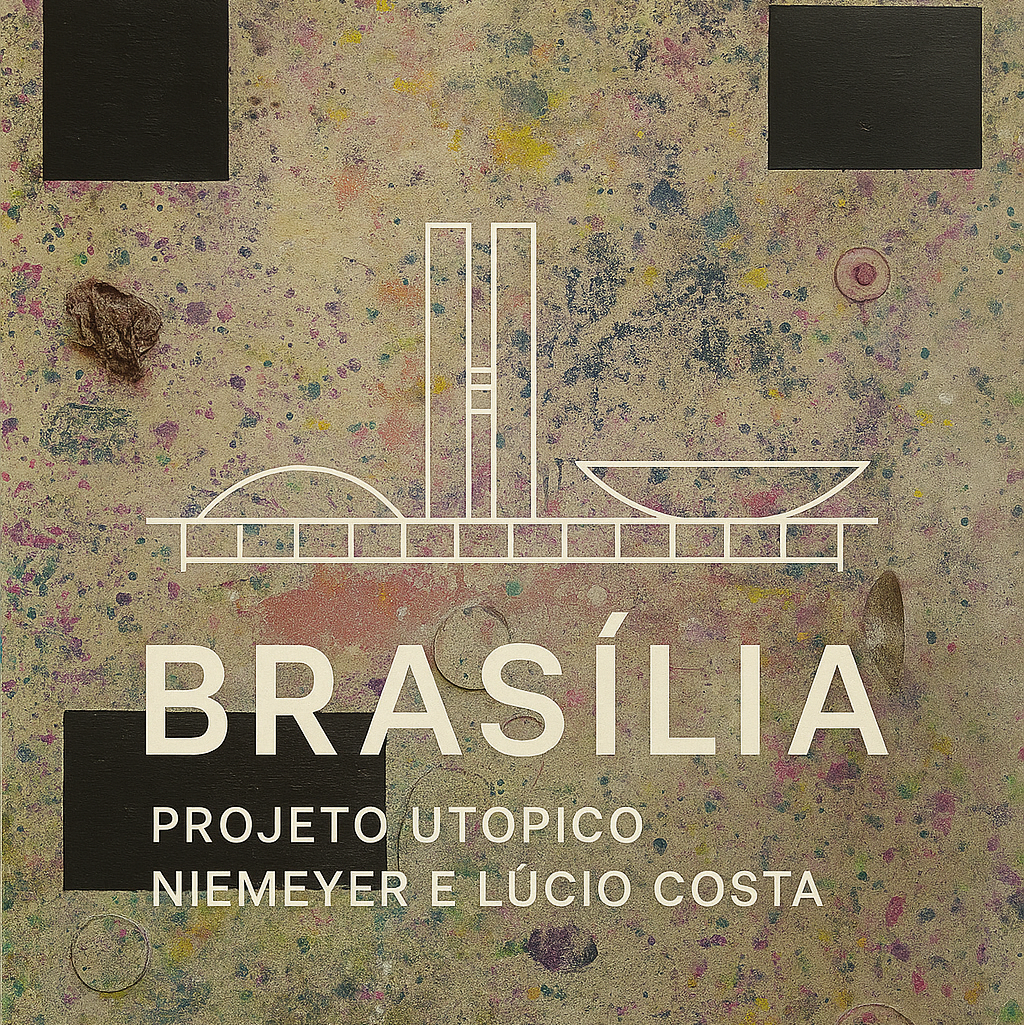
The cube therefore aligns less with minimalist neutrality than with a corrupted Black Square: not transcendental, but scorched. Not pure, but saturated by use. It proposes a geometry that has survived contact with bodies, sweat, domestic materials, and ideological friction.
This is where the work confronts the institution directly.
Who owns duration?
Who authorizes presence?
Who benefits from waiting?
The cube does not resolve these questions. It holds them under pressure.
Unlike relational aesthetics, this work does not promise communion. Unlike performative excess, it does not demand attention. It operates by withholding: withholding spectacle, withholding comfort, withholding moral clarity. What remains is a structure that insists on being used incorrectly, contaminated repeatedly, and read through friction rather than empathy.
This project does not mourn Felix Gonzalez-Torres. It extends his conflict.
If his platform whispered “I miss you,” this cube states something colder and more precise:
I am still here. And I am not finished with you.

Felix Gonzalez-Torres (born 1957 in Guáimaro, Cuba; died 1996 in Miami) was one of the most influential artists to emerge from the vibrant New York art scene of the 1980s and 1990s. He developed his profoundly personal, deeply political, and conceptually rigorous practice under the shadow of the AIDS epidemic and in the aftermath of Minimalism and Conceptualism. (World Biographical Encyclopedia)
‘It reminds us that beauty can be ephemeral, that performance can be a private act and that care like memory requires effort.’
Humberto Moro
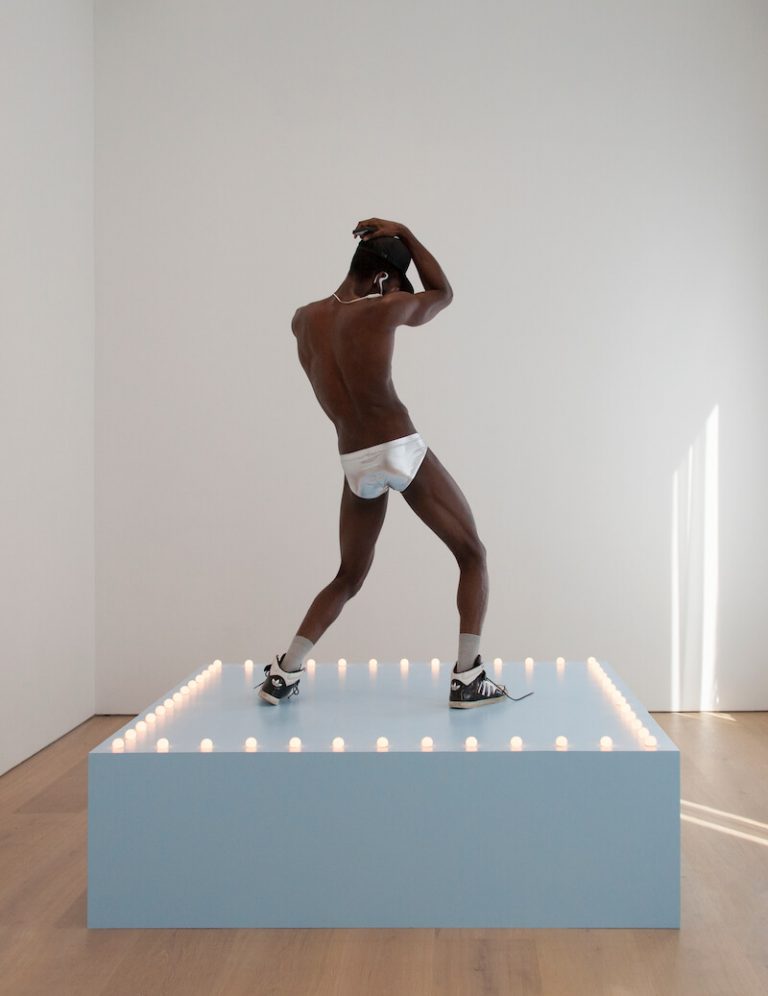
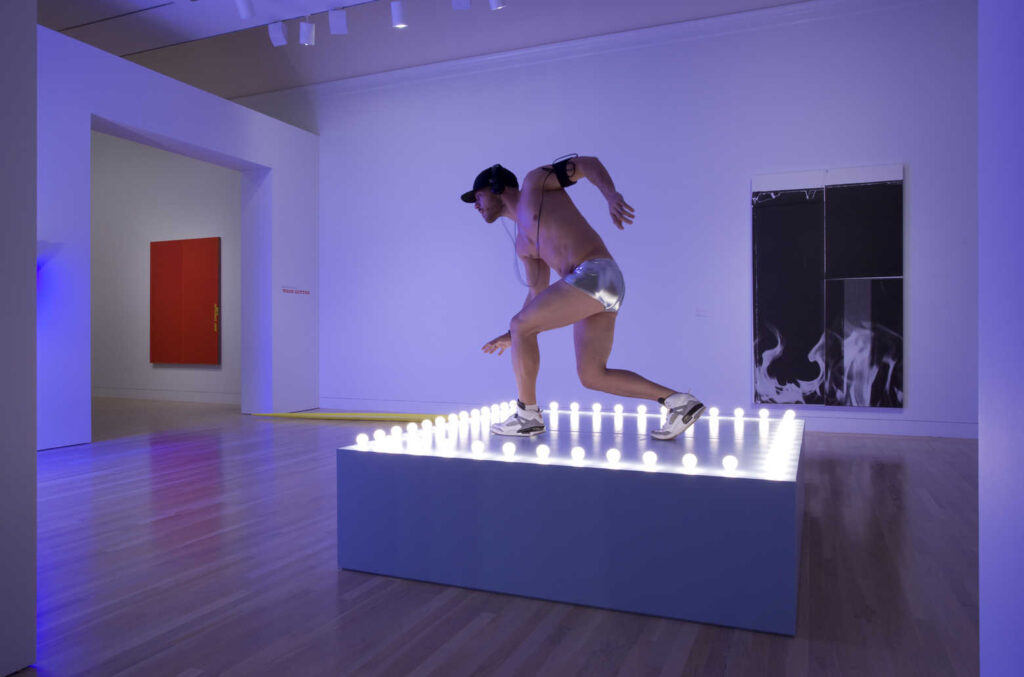
Wood, light bulbs, acrylic paint, and go-go dancer in silver lamé bathing suit, sneakers,
and personal listening device
Overall dimensions vary with installation
Platform: 21 1/2 x 72 x 72 inches (54.6 x 182.9 x 182.9 cm)
Installation view: Felix Gonzalez-Torres. David Zwirner Gallery, New York, NY. 27 Apr. –
14 Jul. 2017
Photographer: EPW Studio/Maris Hutchinson
© Felix Gonzalez-Torres
Courtesy of the Felix Gonzalez-Torres Foundation
Sources:
二つの時計は、二人の鼓動。 Felix Gonzalez-Torres、日常のありふれた”モノ”を使う、愛・再生・喪失の表現 | HEAPS
A Colossal New Show Revisits a Conceptual Art Icon – The New York Times
Also connected to this expansion of matter and thought:
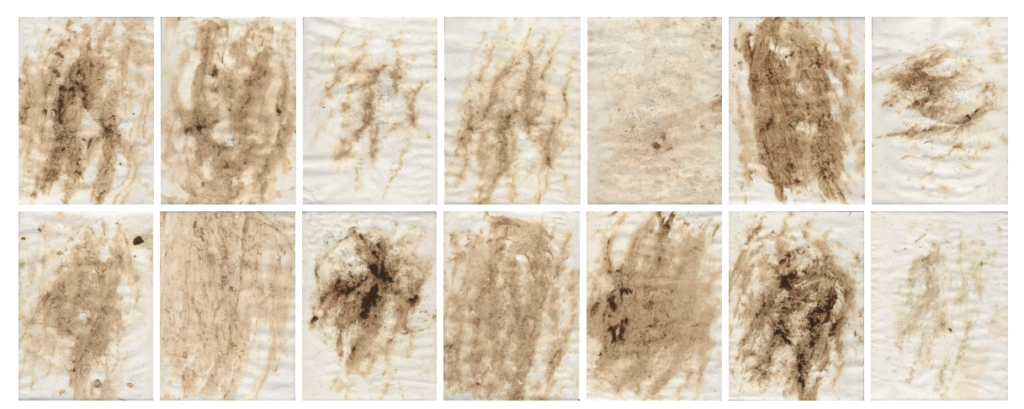
No Ipê Rosa, onde antes havia Lingua Drome o que se revela não são apenas registros de superfície — são revelações sensíveis de encontros. Utilizando café e achocolatado Tody, materiais impregnados de memória doméstica, o artista evoca cenas de intimidade masculina.
Deixe um comentário