Logbook
January 30, 2026
The work that did not pass through the postal system
The first membranes, which were to be exhibited to the public for the first time, never arrived, remaining stuck in the mail without explanation. They were expected to be delivered the next day, but that didn’t happen. In my dream as an artist and in my sense of synchronicity, the artwork would arrive during the opening and be installed in front of the public, aligning with the exhibition’s concept, which involves the dynamic of works being sold, taken away, and the space being rearranged. I commented to Beto that it would be brilliant: the artwork would arrive and you would move others around during the opening—it would be something zeitgeist, fluid, dynamic, symbiotic. I trusted in the synchronicity. But the hours passed—8, 9, 10, 11—and I stopped checking emails, messages, and the tracking, overcome by sadness. Today I woke up to reality: an entire container with works by Paulo Monteiro, a great Brazilian artist, disappeared in the ocean on its way to an art fair in Korea. Even Luisa Strina, the country’s most important gallery owner, couldn’t exhibit at the fair because her works were stuck in customs. Transporting art is frustrating. I have works stuck in Italy, Mexico, and Portugal, places where I lived and exhibited, and I haven’t been able to bring them back because of the high insurance and transport costs. I sent the artwork to Beto’s exhibition as a gift, since it’s not commerce, it’s art—it might sell, it might not.
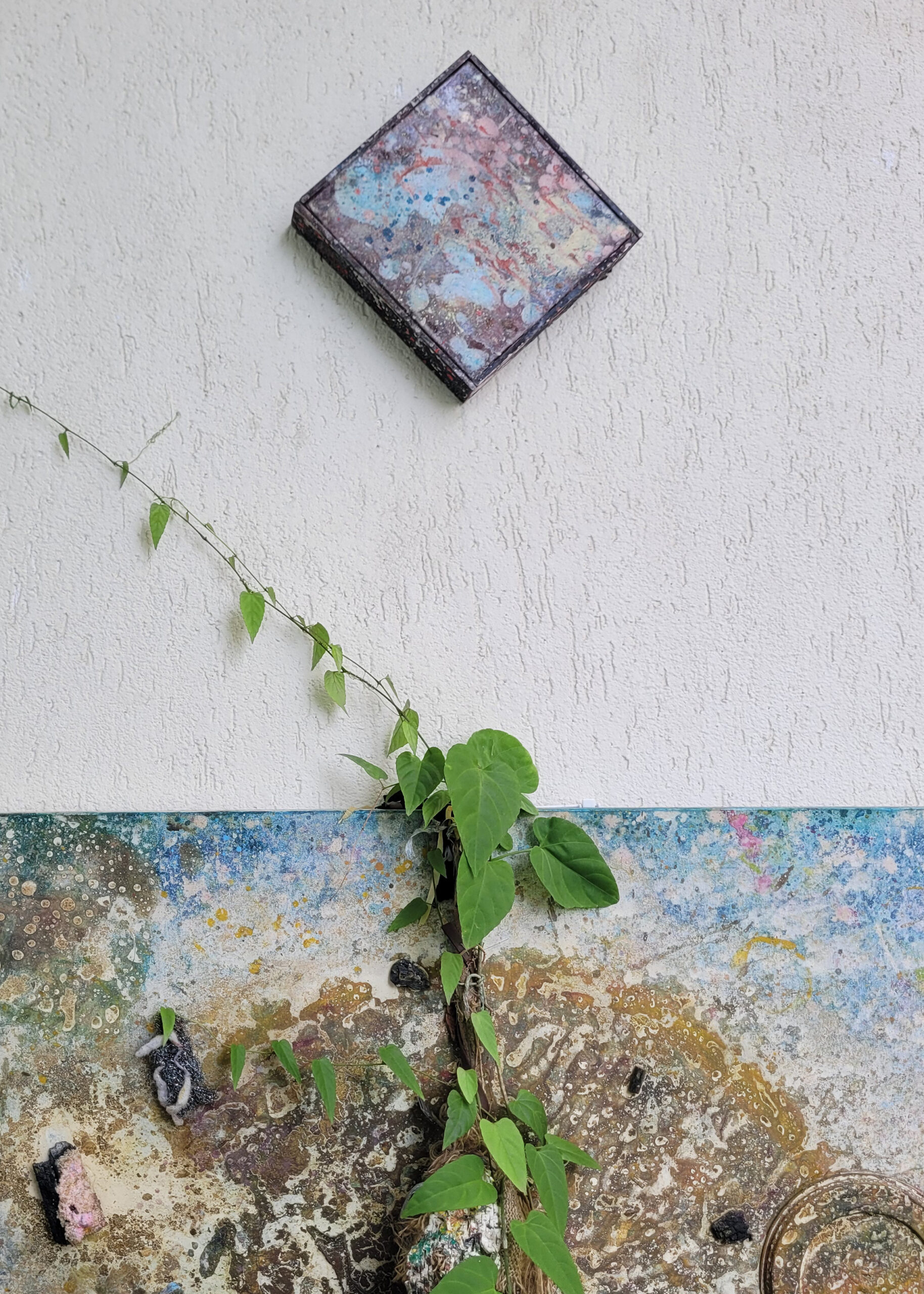
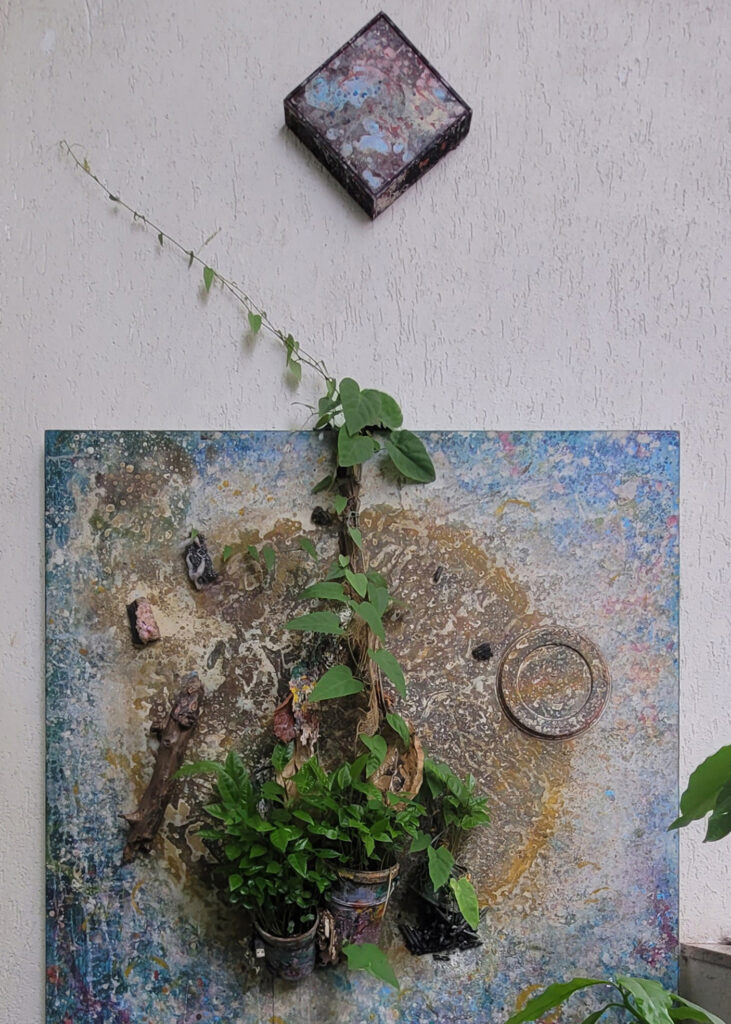
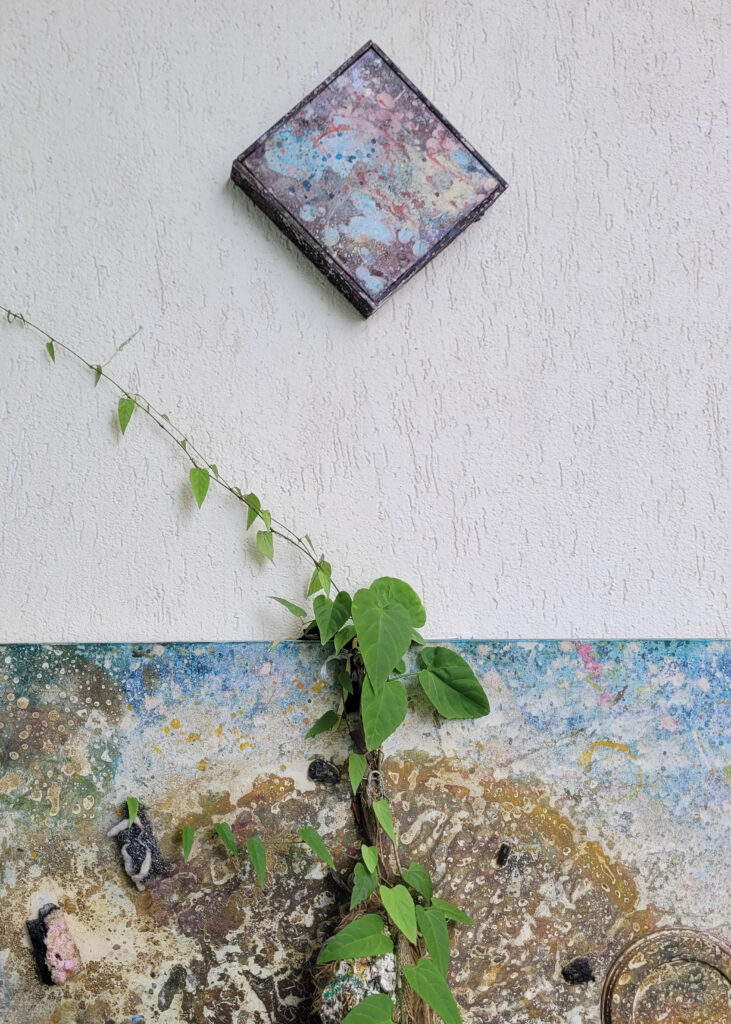
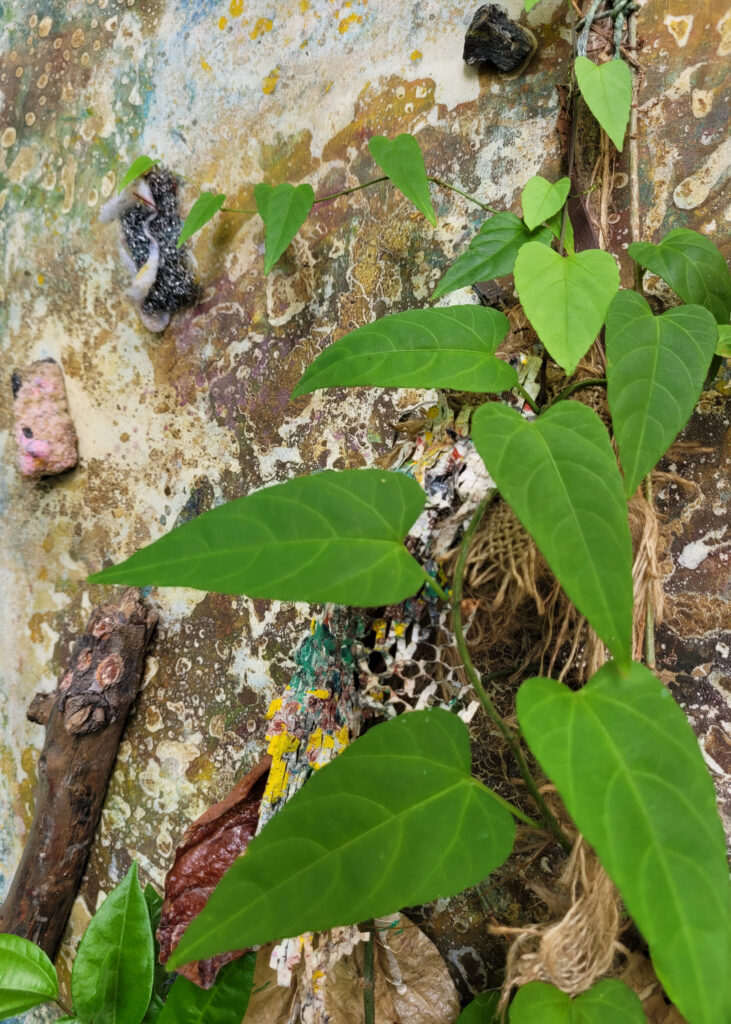
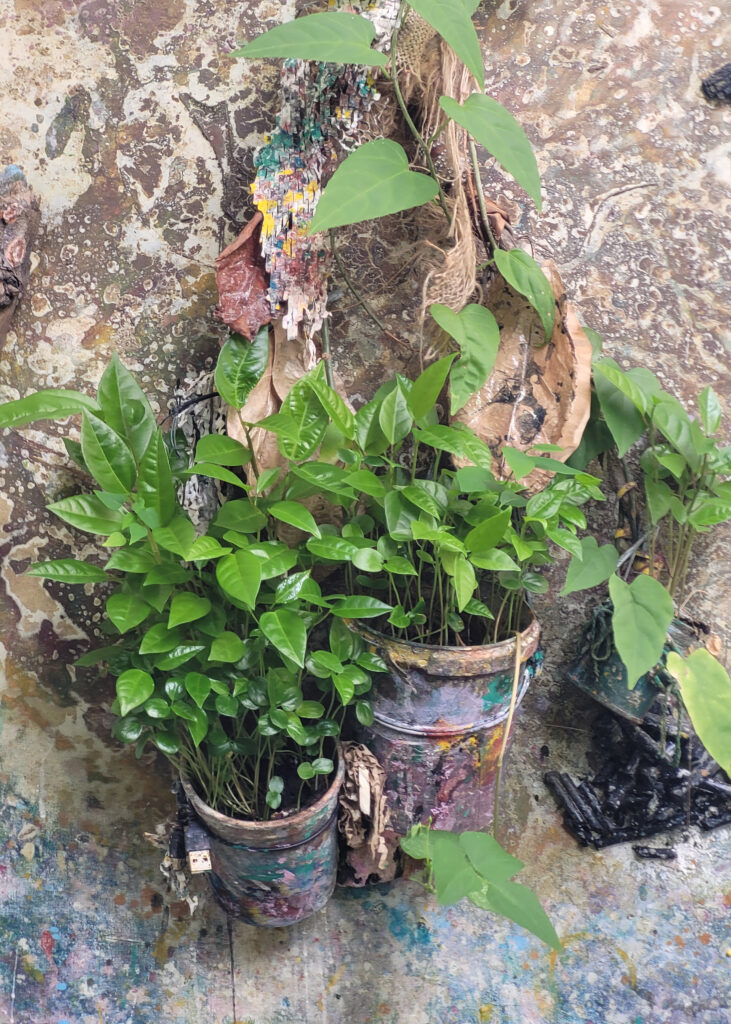
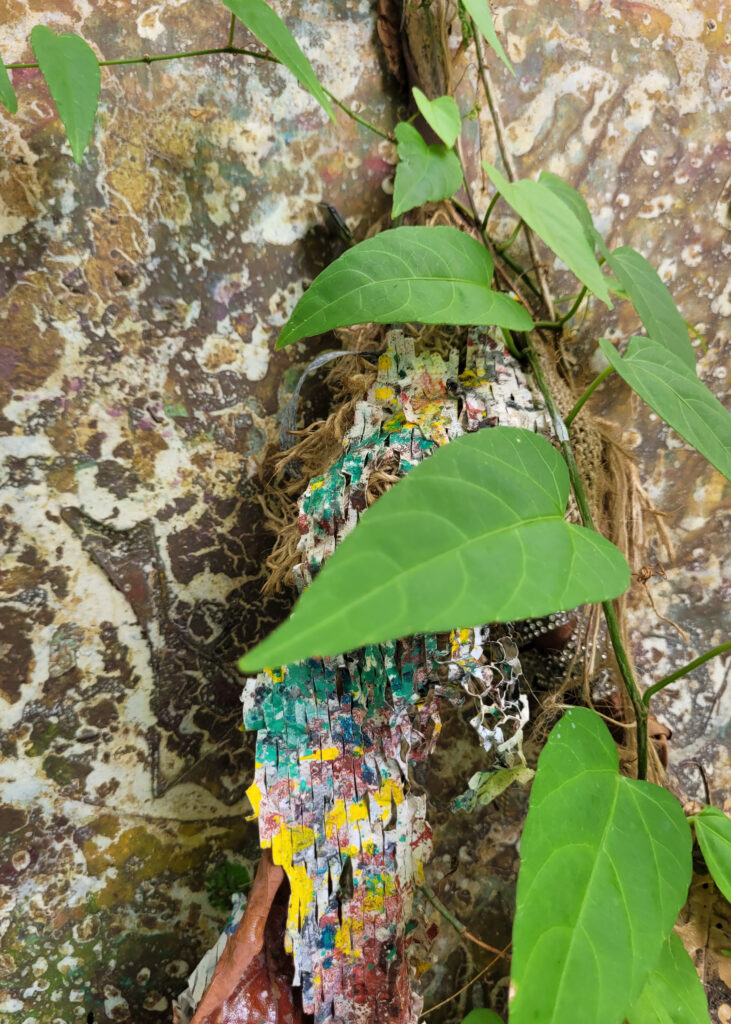
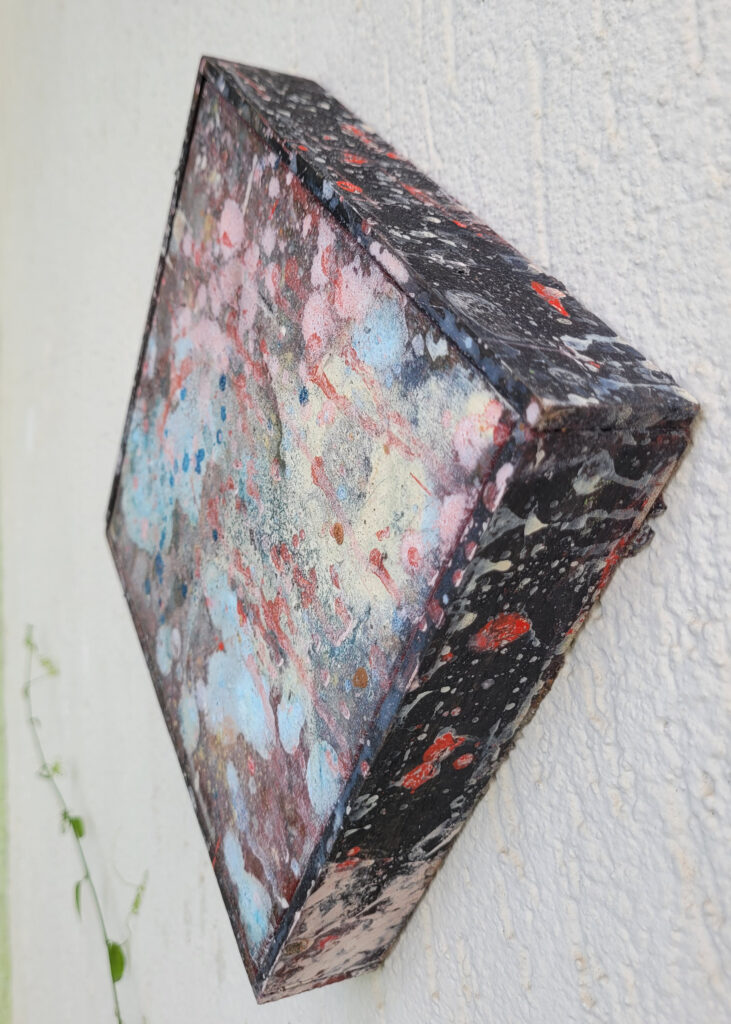
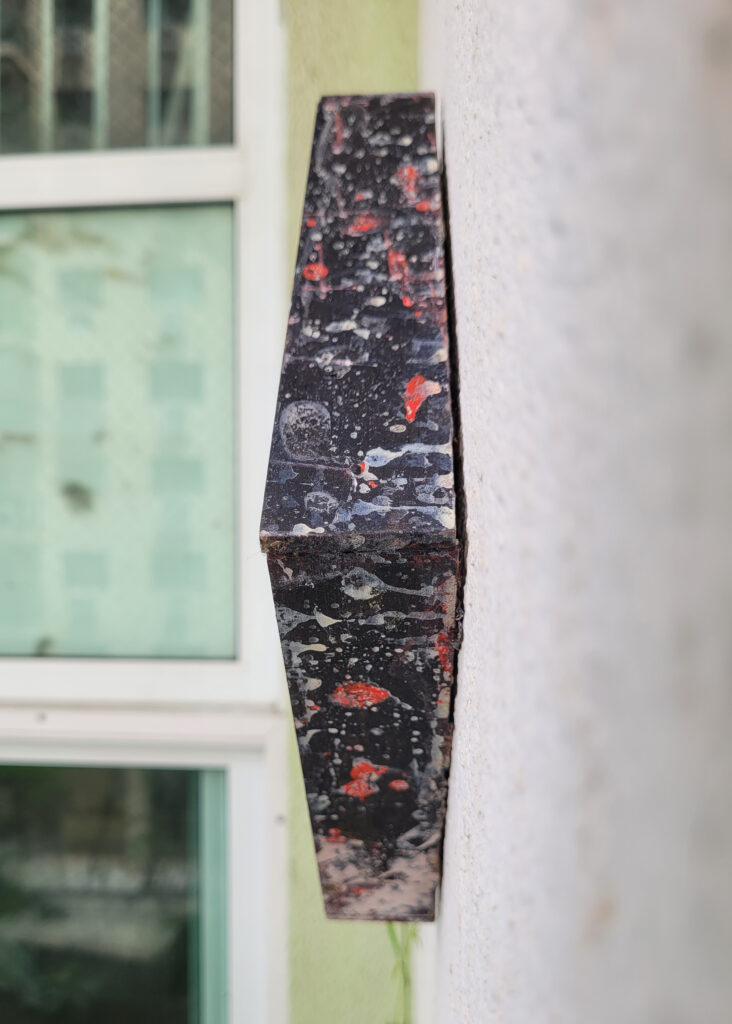
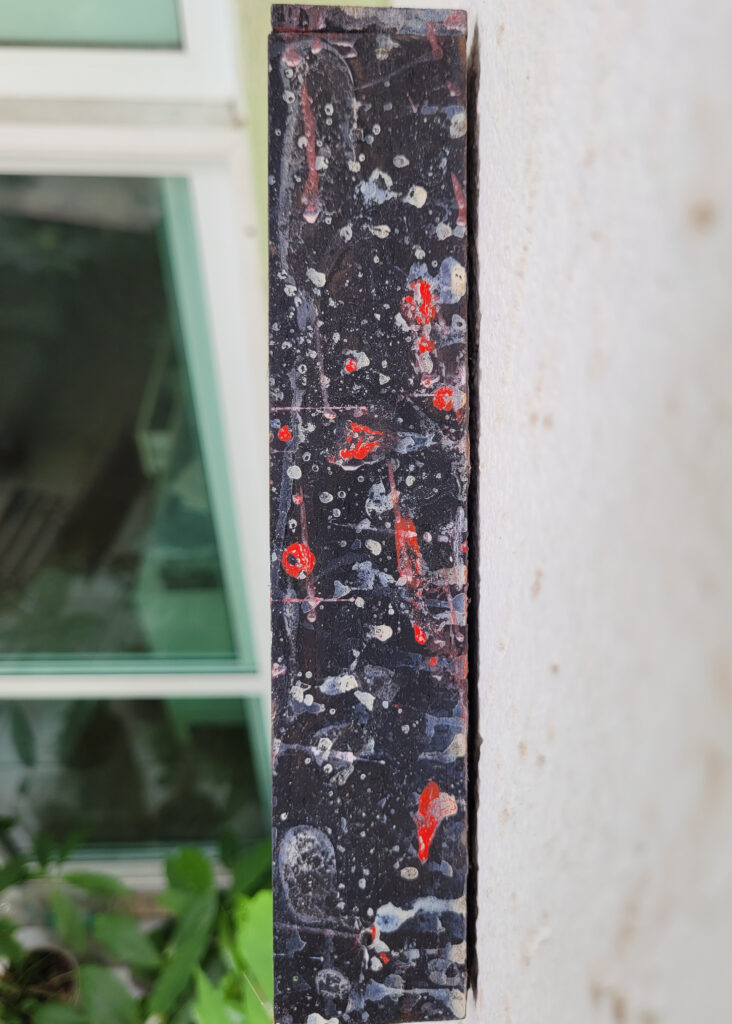
What unfolds here is a displacement between expectation and matter, between logistics and living growth. The images do not operate as documentation of absence, but as evidence of another kind of arrival.
The work that did not pass through the postal system passed through time. While the transport infrastructure failed, the house reorganized itself as an emergency field. What had been conceived as an exhibition became incubation. The membranes, still absent from the public circuit, activated another layer of presence: waiting as a formative force.
There is something decisive in this interval. The plant does not grow as ornament or as illustrative metaphor. It responds. Growth assumes its own geometry, almost as a reading of the support. Leaves follow axes, stems draw diagonals, vegetal volumes occupy the plane as if recognizing a grammar already in place. This is not symmetry, but coupling.
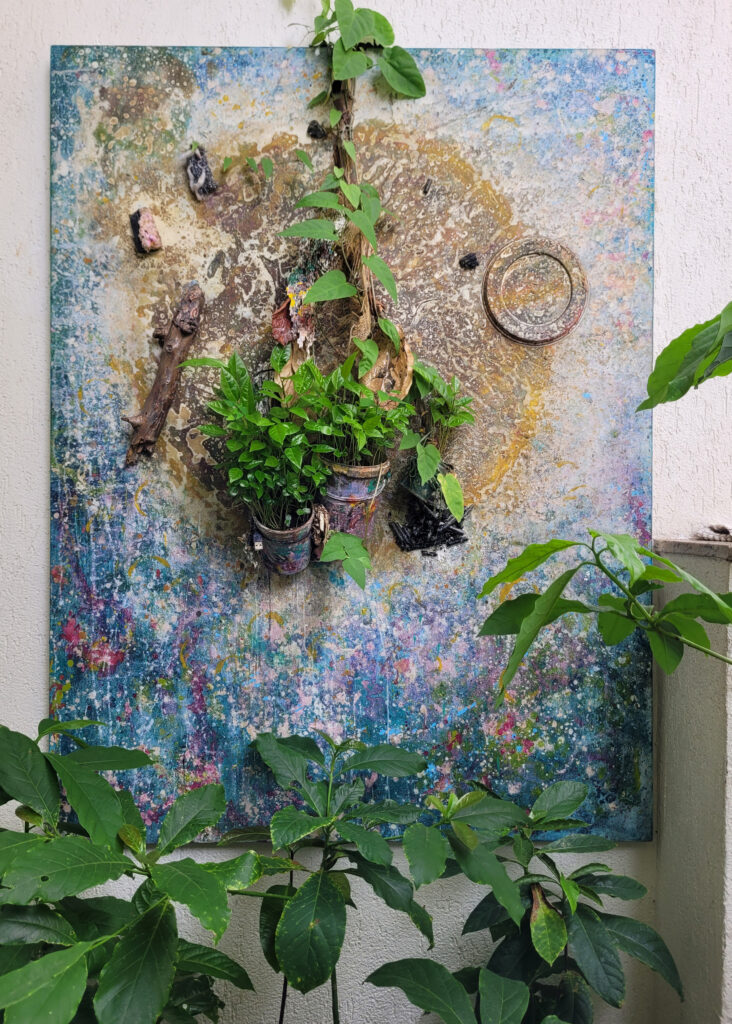
The dream of a performative installation during the opening did not materialize within the institutional space, yet it shifted into the domestic interior, where time does not obey the event’s clock. The house in combustion is not a refuge; it is a laboratory. There, logistical frustration finds biological scale. The failure of the postal system echoes larger stories: containers lost at sea, customs as zones of suspension, artworks retained in past geographies. The global circulation of art reveals its structural fragility.
In this context, offering the work as a gift is not naïveté but an ethical strategy. It withdraws the object from the strict regime of commodity and reinscribes it as gesture, as shared risk. If it sells, it sells; if it does not, it continues to operate. The work does not demand guarantees.
What becomes visible now is a slow choreography between pictorial matter, residues, roots, and leaves. The membrane ceases to be only surface and begins to act as environmental condition. The plant reads the work and responds with form. There is no illustration and no submission. There is a distributed intelligence adjusting volumes, weights, and directions.
Perhaps the event was never the delay itself, but the revelation that the safest place for the work is neither the white cube nor the fair, but this unstable field where art and life are not separated by contract. The work grows where it can breathe. It grows geometrically, as if it had finally encountered a plane capable of listening.
Diário de Bordo
30 de Janeiro 2026
A obra que não atravessou o correio atravessou o tempo.
As primeiras membranas que seriam expostas ao público pela primeira vez não chegaram, ficando presas no correio sem explicação. A previsão era que fossem entregues no dia seguinte, mas isso não aconteceu. No meu sonho de artista e de sincronia, a obra chegaria durante a abertura e seria montada diante do público, alinhando-se ao conceito da exposição, que envolve a dinâmica de obras sendo vendidas, levadas e o espaço sendo refeito. Comentei com o Beto que seria genial: a obra chegaria e vocês mudariam outras de lugar durante a abertura — seria algo zeitgeist, fluido, dinâmico, simbiótico. Confiei na sincronia. Mas as horas passaram — 8, 9, 10, 11 — e parei de checar e-mails, mensagens e o rastreamento, tomado por uma tristeza. Hoje acordei para a realidade: um contêiner inteiro com obras do Paulo Monteiro, grande artista brasileiro, sumiu no oceano a caminho de uma feira de arte na Coreia. Até a Luisa Strina, galerista mais importante do país, não pôde expor na feira porque as obras ficaram presas na alfândega. O transporte de arte é frustrante. Tenho obras presas na Itália, no México e em Portugal, lugares onde morei, expus e não consegui trazer de volta por causa dos altos custos de seguro e transporte. Mandei a obra para a exposição do Beto como um presente, já que não é comércio, é arte — pode ser que venda, pode ser que não.
O que aparece aqui é um deslocamento entre expectativa e matéria, entre logística e crescimento vivo. As imagens não funcionam como documentação de uma falta, mas como prova de uma outra chegada.
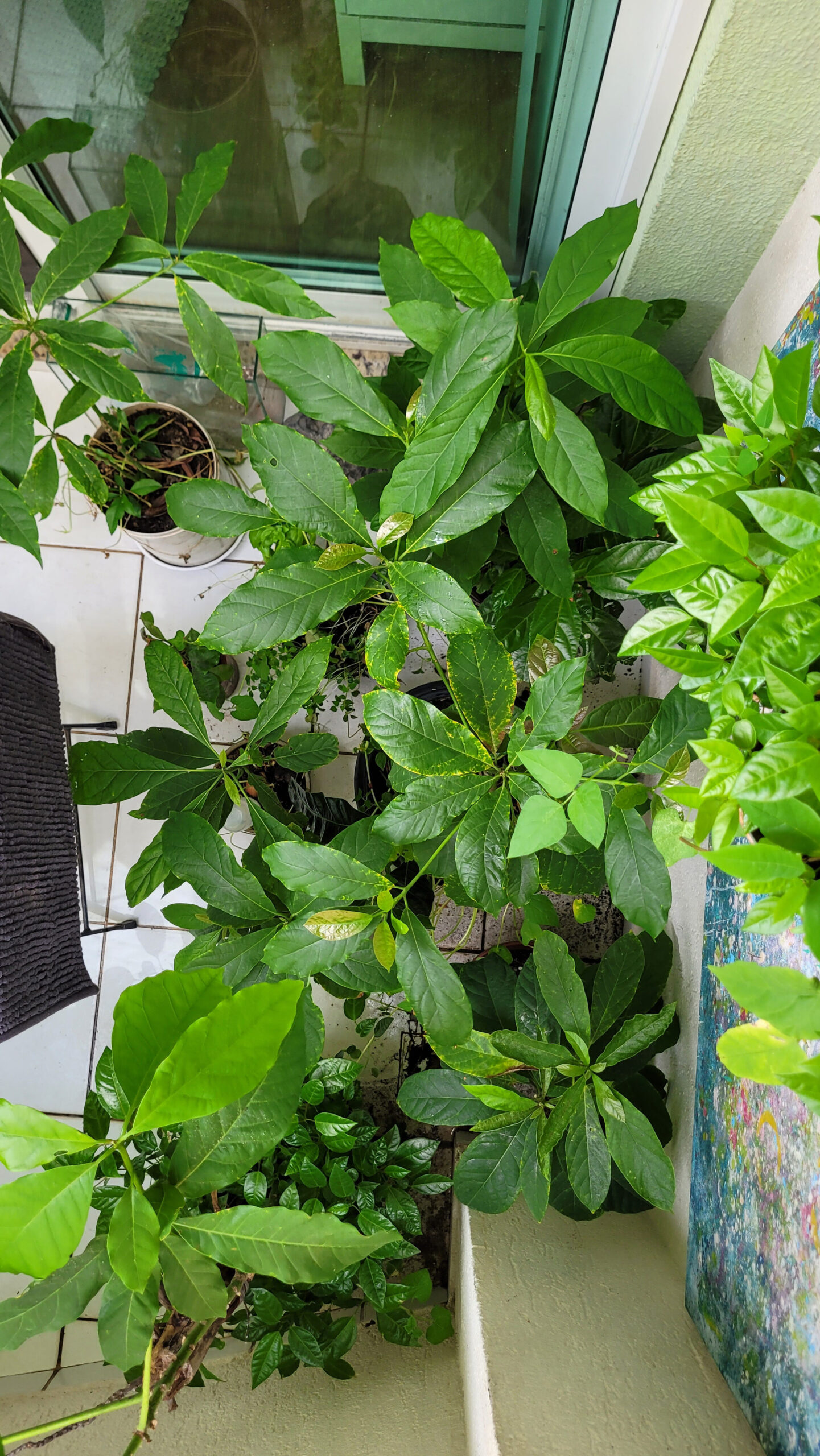
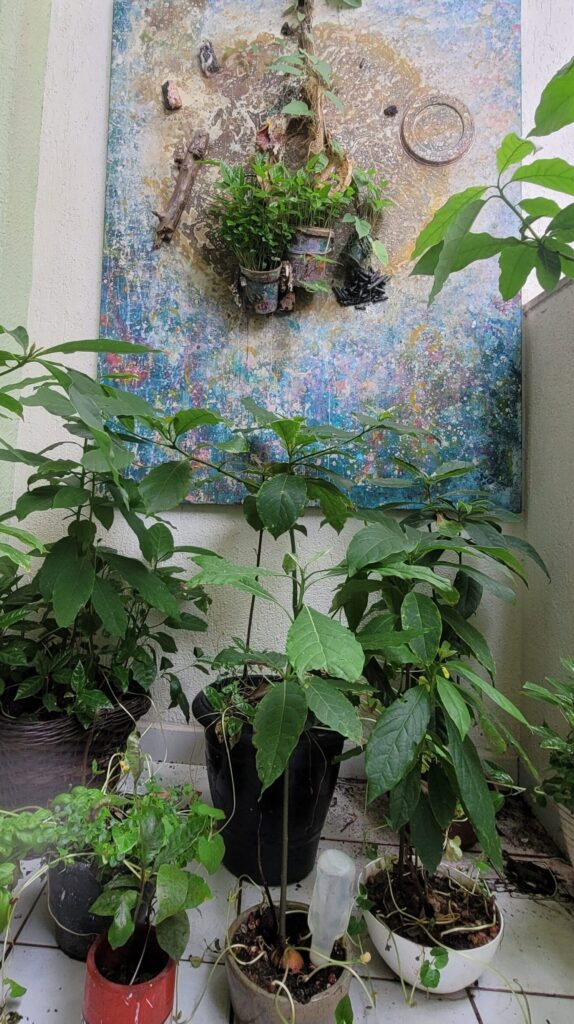
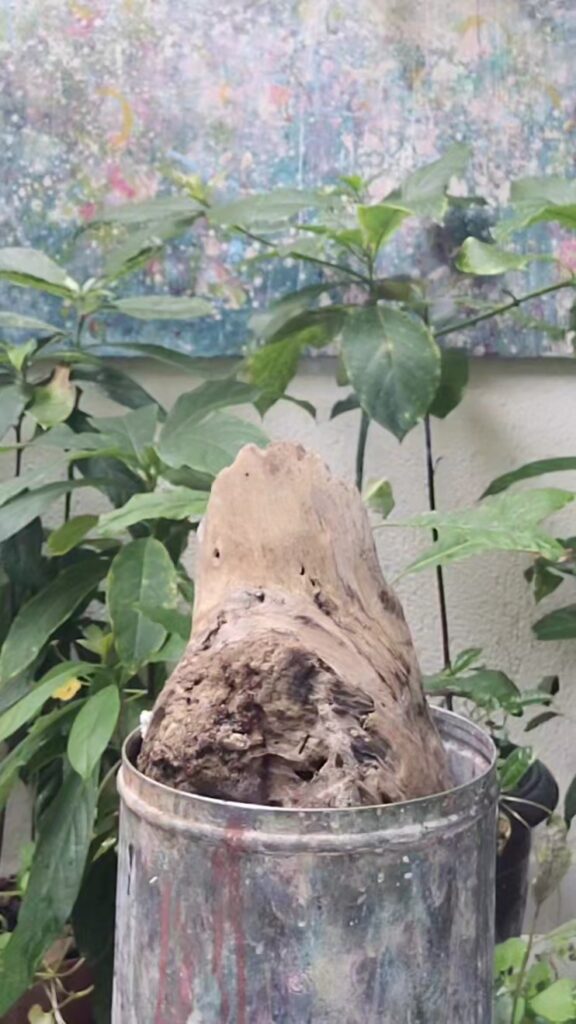
A obra que não atravessou o correio atravessou o tempo. Enquanto o sistema de transporte falhou, a casa se reorganizou como campo de emergência. O que estava pensado como exposição tornou-se incubação. As membranas, ainda ausentes do circuito público, ativaram outra camada de presença: a da espera como força formativa.
Há algo decisivo nesse intervalo. A planta não cresce como ornamento nem como metáfora ilustrativa. Ela responde. O crescimento assume uma geometria própria, quase uma leitura do suporte. Folhas seguem eixos, hastes desenham diagonais, volumes vegetais ocupam o plano como se reconhecessem ali uma gramática já em curso. Não se trata de simetria, mas de acoplamento.
O sonho de uma montagem performativa durante a abertura não se realizou no espaço institucional, mas se deslocou para o interior doméstico, onde o tempo não obedece ao relógio do evento. A casa em combustão não é refúgio; é laboratório. Ali, a frustração logística encontra escala biológica. A falha do correio ecoa histórias maiores, contêineres perdidos no oceano, alfândegas como zonas de suspensão, obras retidas em geografias passadas. A circulação global da arte revela sua fragilidade estrutural.
Nesse contexto, oferecer a obra como presente não é ingenuidade, é estratégia ética. Retirar o objeto do regime estrito da mercadoria para reinscrevê-lo como gesto, como risco compartilhado. Se vende, vende; se não, permanece operando. A obra não pede garantia.
O que se vê agora é uma coreografia lenta entre matéria pictórica, resíduos, raízes e folhas. A membrana deixa de ser apenas superfície e passa a agir como condição ambiental. A planta lê o trabalho e responde com forma. Não há ilustração nem submissão. Há uma inteligência distribuída que ajusta volumes, pesos e direções.
Talvez o acontecimento não tenha sido o atraso, mas a revelação de que o lugar mais seguro para o trabalho não é o cubo branco nem a feira, e sim esse campo instável onde arte e vida não se separam por contrato. A obra cresce onde pode respirar. E cresce geometricamente, como se tivesse encontrado, finalmente, um plano que a escuta.
Deixe um comentário