Painting as a multilamellar organism
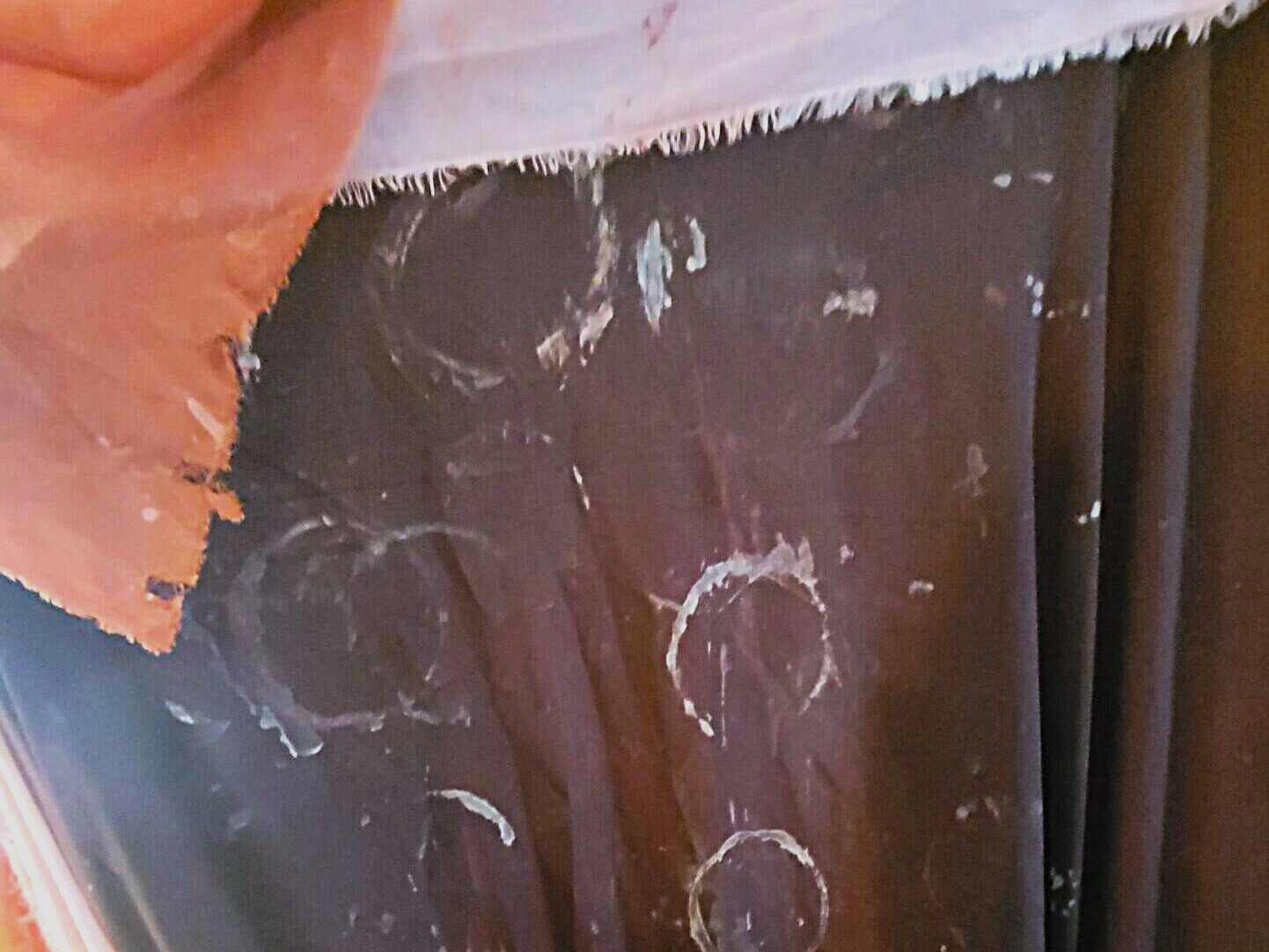
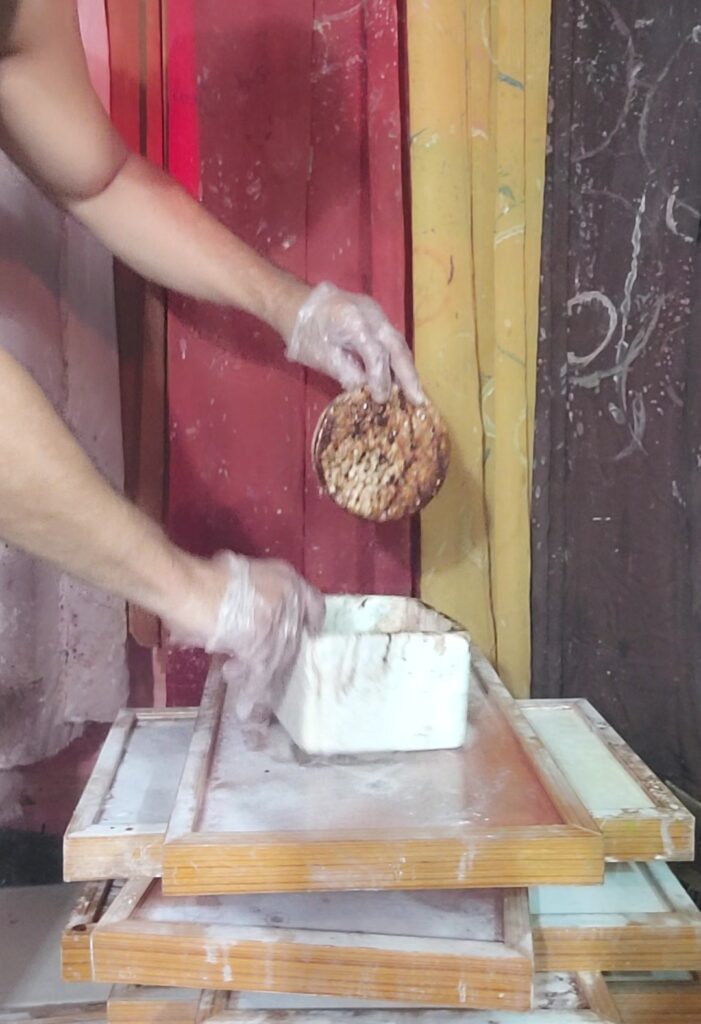
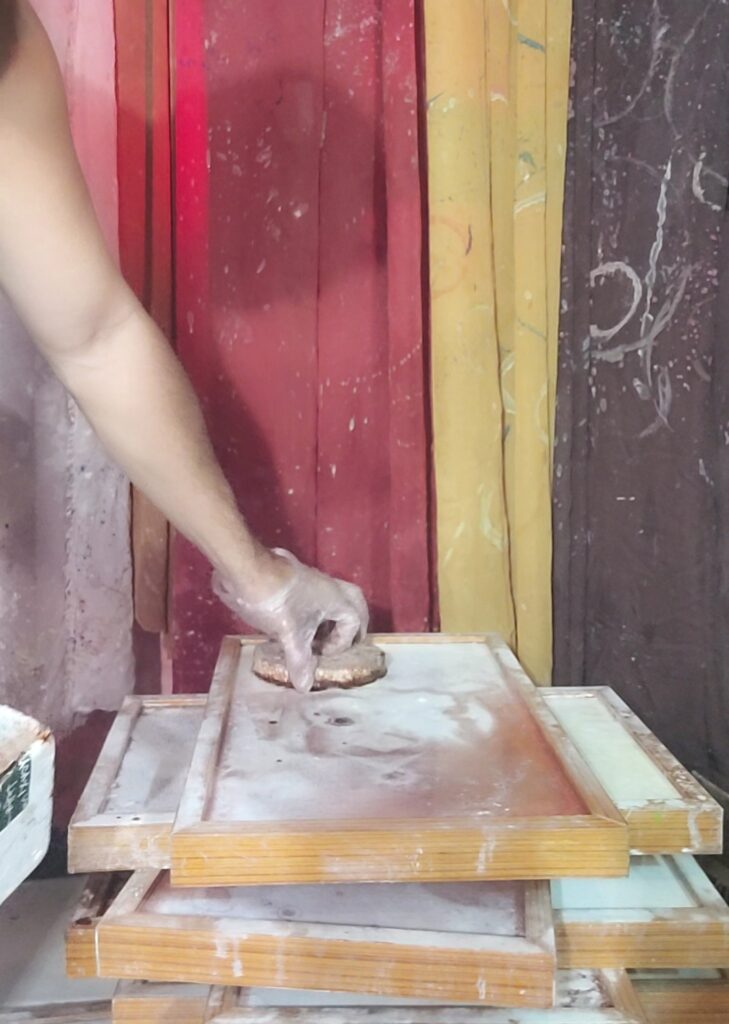
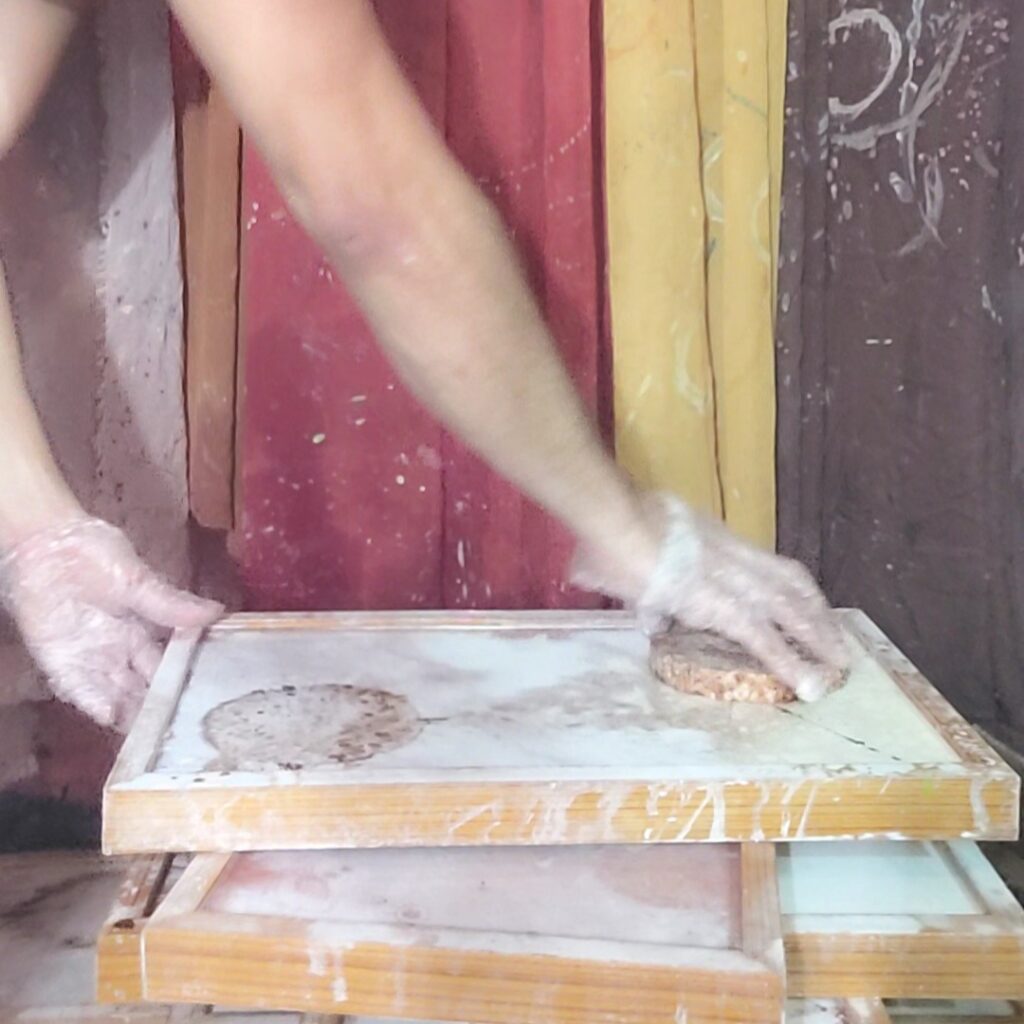
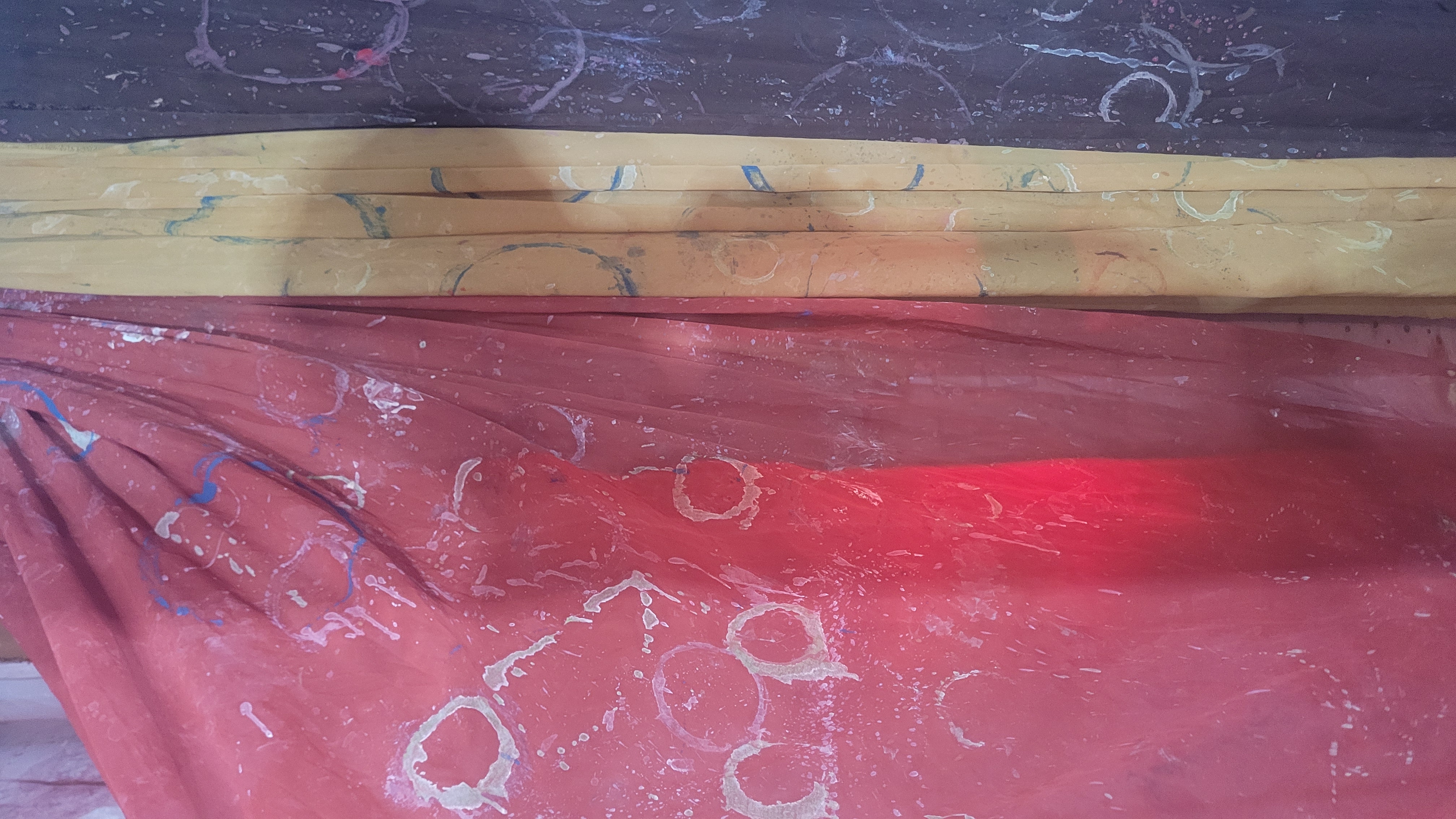
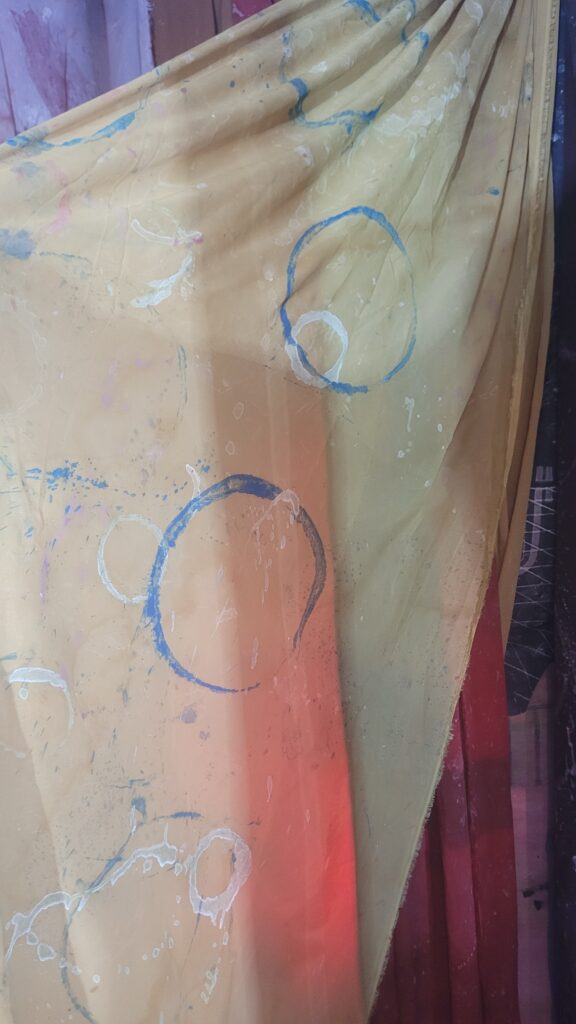
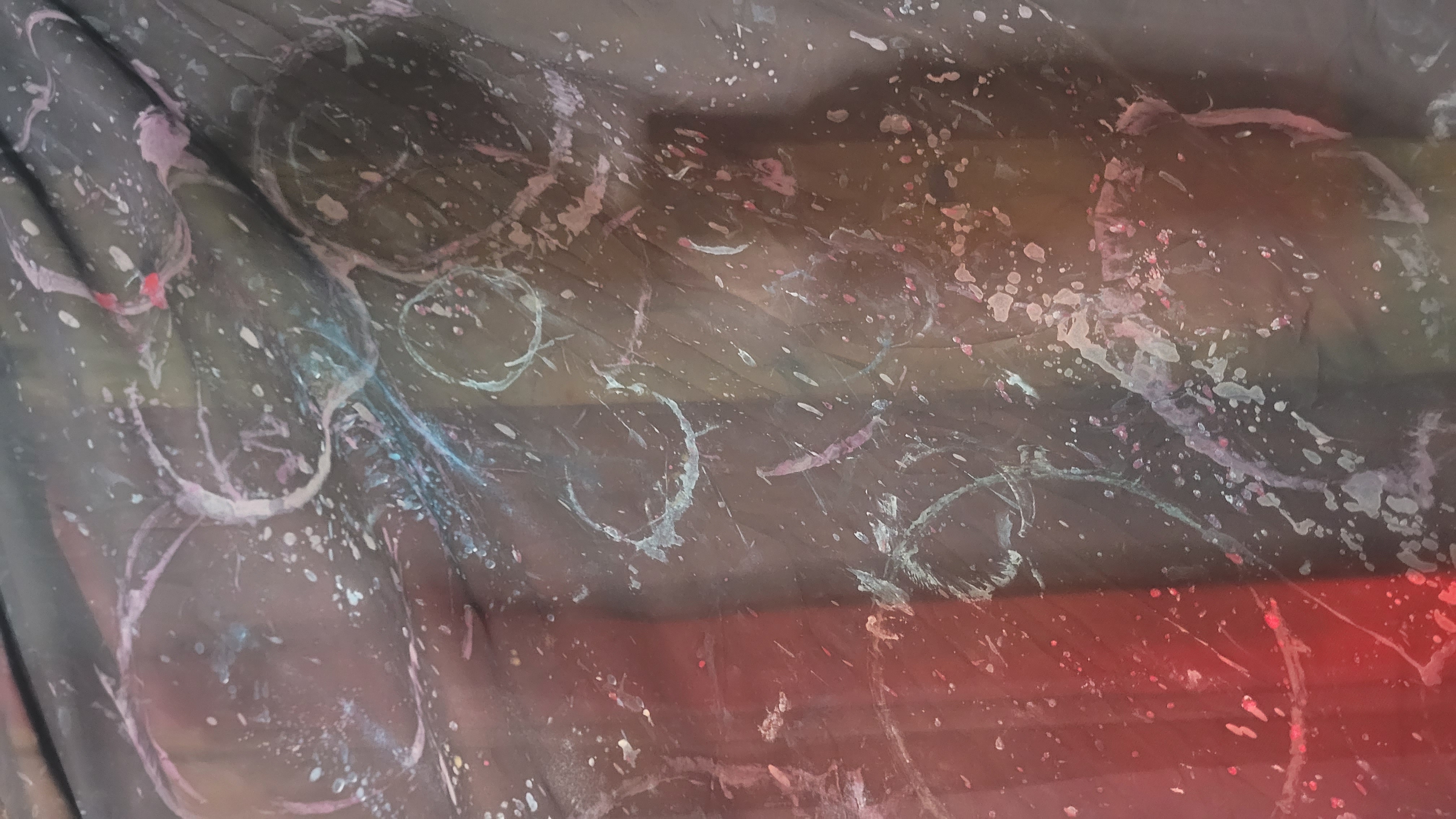
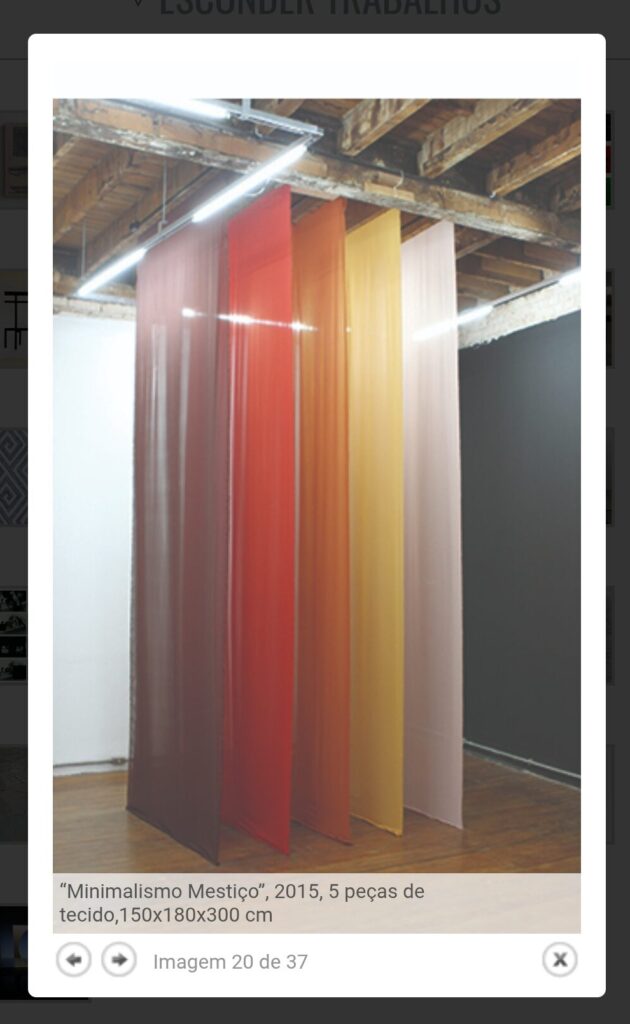
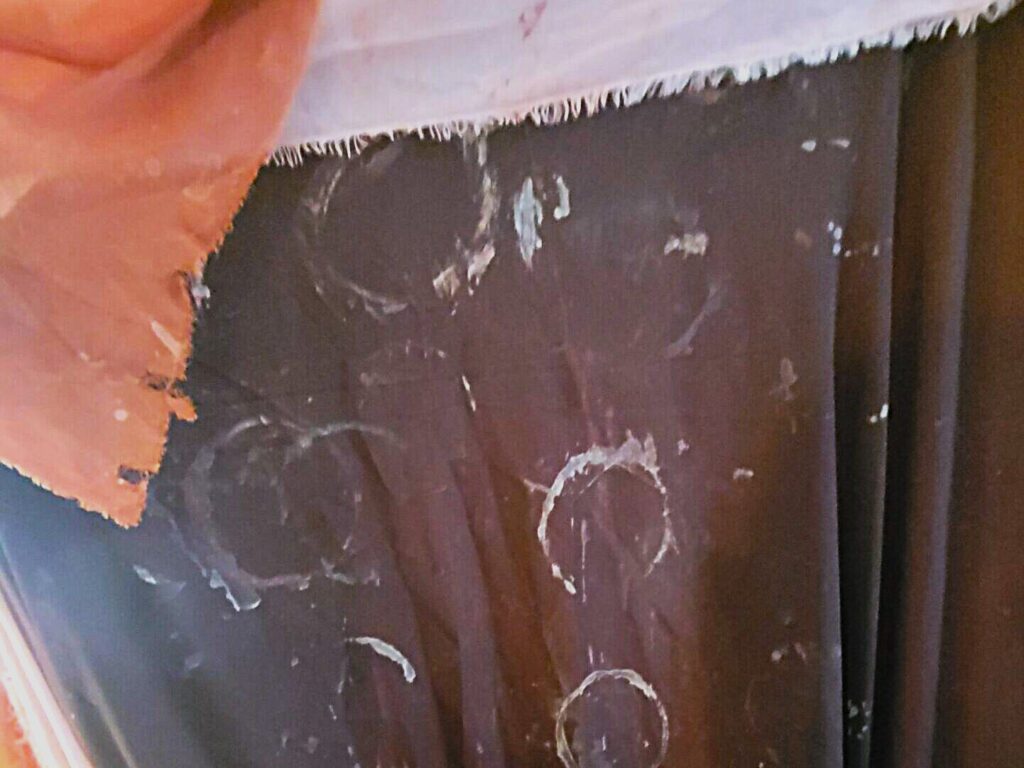
The unfolding of fabrics: Pale pink, terracotta, ochre, brown, red, and once again the stained pink, constitutes more than a chromatic arrangement. Each membrane carries the memory of circular gestures, imprints produced with yogurt jars, sieves, and everyday utensils. These circles traverse the layers like orbital inscriptions, displacing painting from a single surface into a stratigraphy of veils. The result is not a canvas but a multilamellar organism: a topology of porous skins breathing together.
This organism refuses the logic of pictorial unity and instead embraces that of communicative multiplicity. Each layer is autonomous yet dependent, recalling the way cellular organisms connect through osmosis, exchanging fluids, nutrients, and signals. Painting here is not resolved in the frontal visible but insinuates itself through successive folds, as if it were a living archive, always ready to be reorganized in carousel form bringing one layer to the foreground, then letting it recede.
Orbital membranes and the circulation of signs
The circular marks inscribed upon the fabrics operate as communicating orbits: systems that recall both planetary resonance and the physical principle of communicating vessels. The circle, repeated with variation, is more than a geometric figure. It is a device of coupling. Each one function as an interface between layers, allowing a gesture traversed on one fabric to leave its ghost on the subsequent membranes.
This repetition is not ornamental but structural: it designs a network of equivalences and transfers, a kind of mechanics of symbolic resonance. Each circle refuses closure, pointing always toward the next, conjuring a state of equilibrium that never fully stabilizes.
Communicating vessels and interraciality
Pascal’s 17th-century theory of communicating vessels states that liquids in interlinked containers always level out, even when the containers take radically different forms. This physical metaphor can be transposed to the racial and social field.
In Brazil, the myth of racial democracy often operated as a simplistic reading of the communicating vessels principle: as if miscegenation had automatically leveled differences, dissolving hierarchies. History demonstrates the opposite: the vessels were obstructed, their connections severed by structures of power, institutional racism, and material inequality.
The work with orbital membranes, however, proposes another reading: interraciality as porosity as a field of potential equilibria that insists on surfacing despite systemic blockages. The circular imprints crossing diverse layers evoke precisely this subterranean force of communication. They are coupling zones, vessels that desire to connect, resisting the forces that attempt to isolate them.
Thus the pictorial gesture becomes a political one: the repetition of circles across heterogeneous membranes affirms that no plane is isolated, that flows traverse barriers, that leveling is not a given but an ongoing struggle against historical obstruction.
Mestizo minimalism as counter-aesthetic
By naming this stratified work mestizo minimalism, the artist destabilizes the canonical genealogy of Euro-American minimalism. If Donald Judd and Robert Morris sought the purity of industrial form, here the circular form is contaminated by hand gestures, by the use of domestic utensils, by the precariousness of matter.
This mestizo minimalism is an anti-minimalism: rather than erasing difference, it inscribes difference into the very process. There is no purity of line, only the contamination of pigments, drips, and stains. What emerges is a minimalism of mixture, where geometry is not transcendence but the friction of heterogeneous layers.
Porosity as ethics and aesthetics
What is drawn across these orbital membranes is an aesthetics of porosity. Unlike the solidity of modernist forms, value here lies in the interstice: in what leaks, seeps, infiltrates. This is where the work touches an ethical dimension as well: proposing porosity as a model of coexistence racial, cultural, political.
Porosity is not fusion but coexistence; not erasure, but passage. The work thus enacts an ethics of communicating vessels: to recognize that flows of life, desire, violence, and repair cross distinct containers, and that only by allowing their communication can new equilibria be imagined.
Conclusion: painting as a cosmopolitics of the veil
The layers exposed in carousel form are not merely pictorial objects. They are cosmopolitics of the veil: modes of negotiating visibility and invisibility, planes that reveal themselves and retract, borders that allow the passage of what should have been contained.
In the end, painting becomes an expanded metaphor for the social body itself: a field of orbital membranes, traversed by communicating orbits, where the struggle is always against blockages that prevent flow.
The work does not propose synthesis but insists on the right of difference-in-communication.
Deixe um comentário