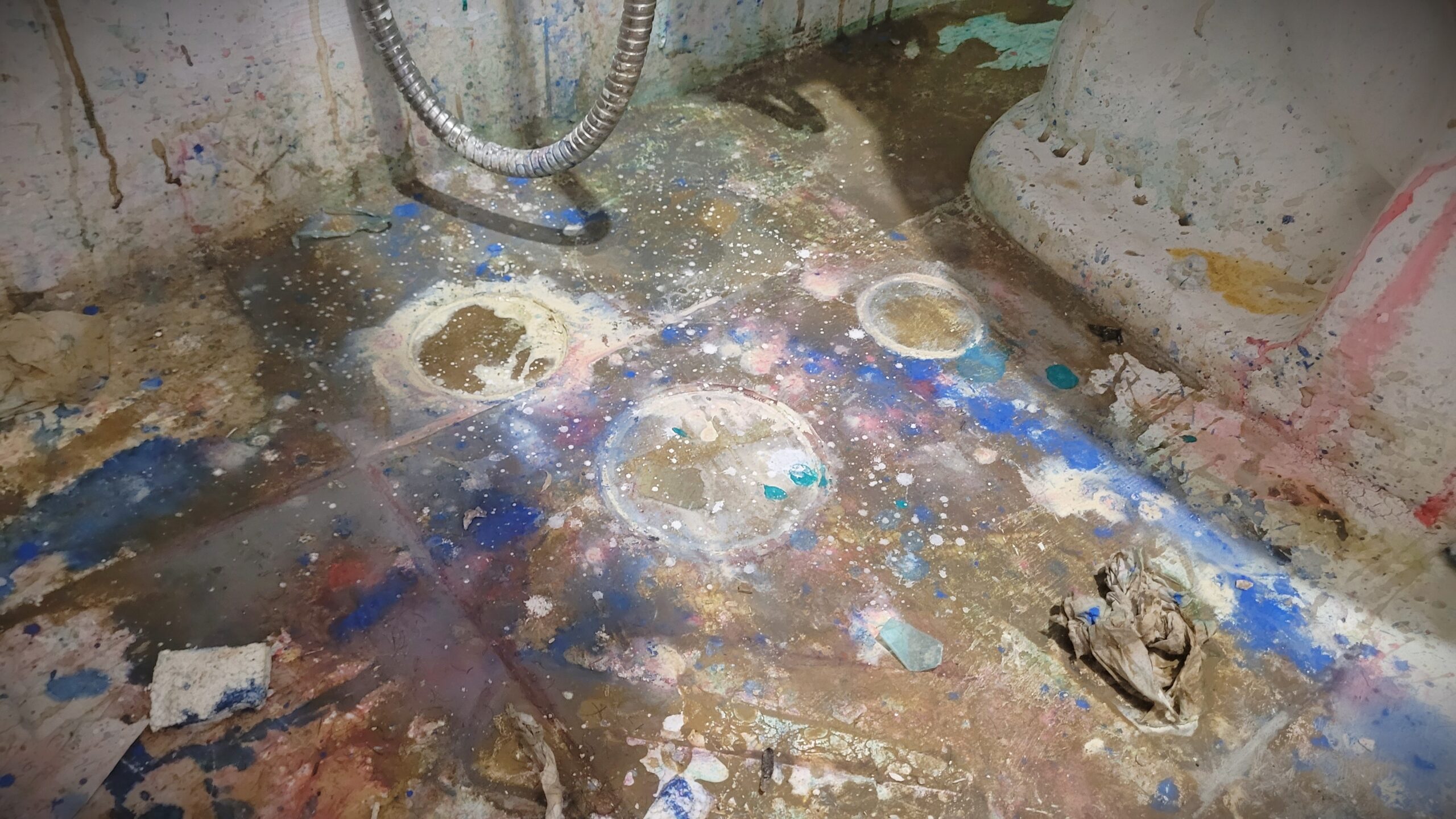
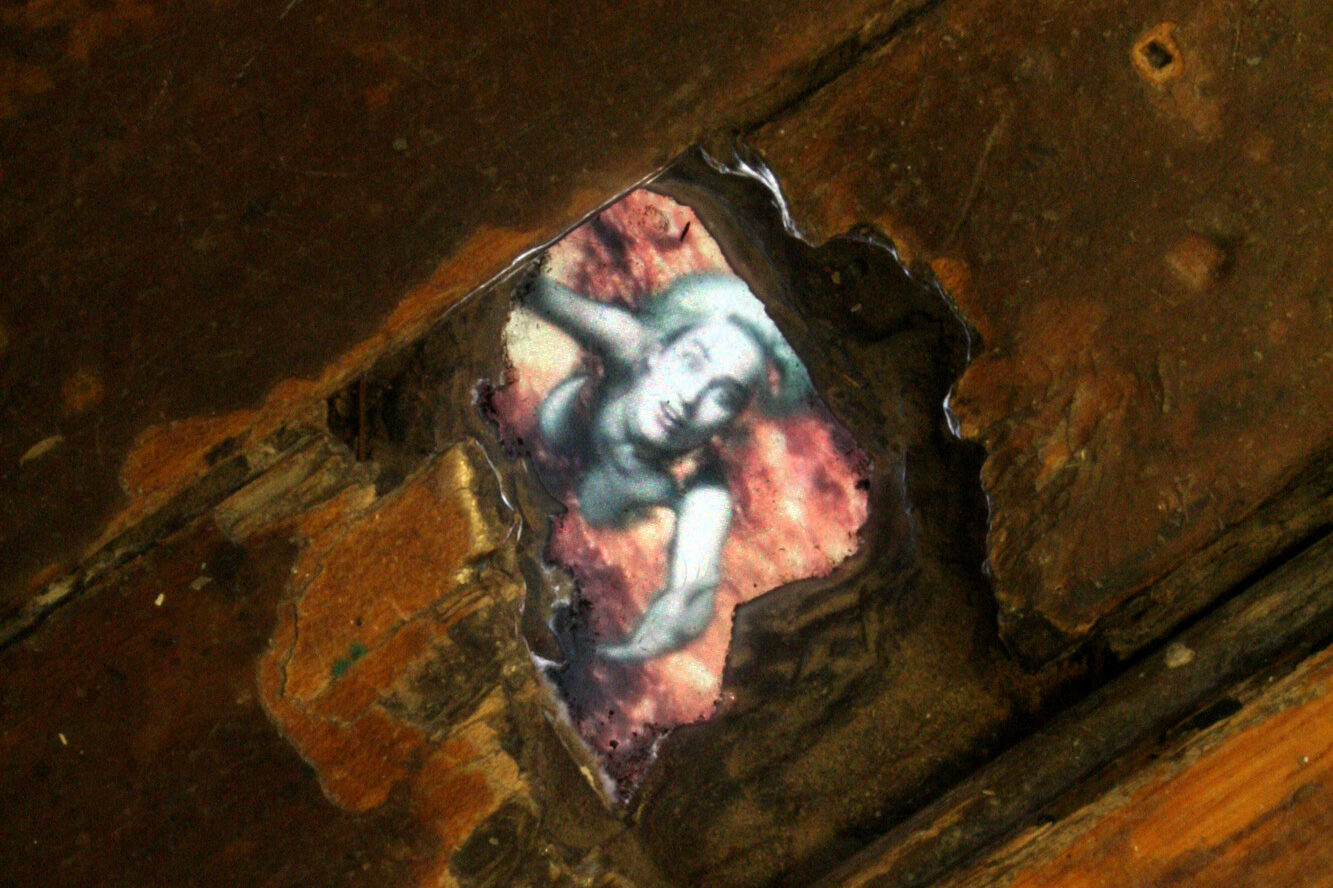
A resonance between Bathroom in Sympoiesis and the art interventions of Rist, Mullican, and Rockman asks for attention All four works share a fundamental rejection of the neutral, vertical gallery wall. Instead, they operate through architectural parasitism infiltrating the infrastructural “guts” of a space and demanding a physical, almost devotional repositioning of the viewer’s body. What would these resonances look like in these specific interventions?
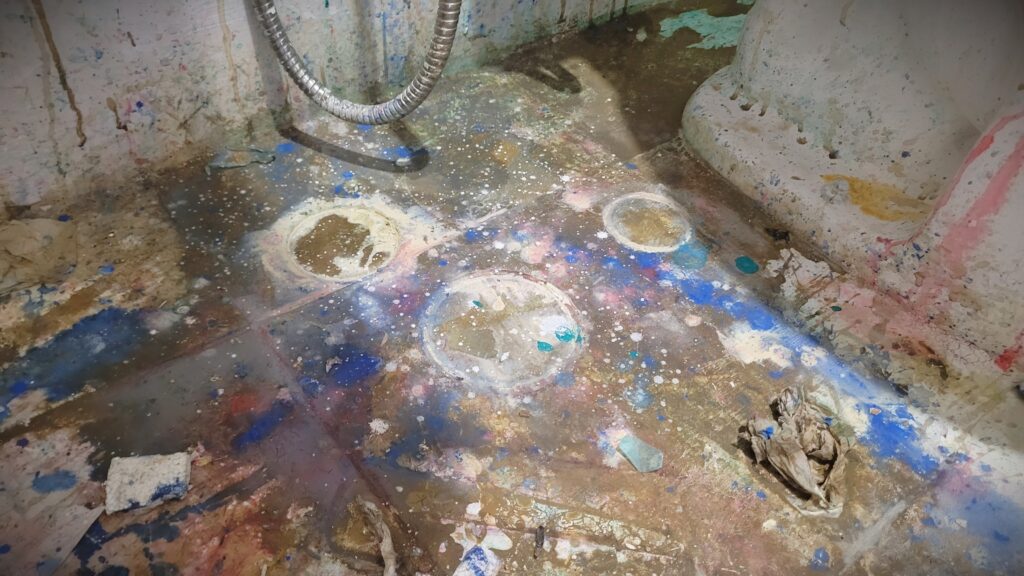
April 19, 2026, Rio de Janeiro, Brazil
Rodrigo Garcia Dutra
The Archeology of Infrastructure
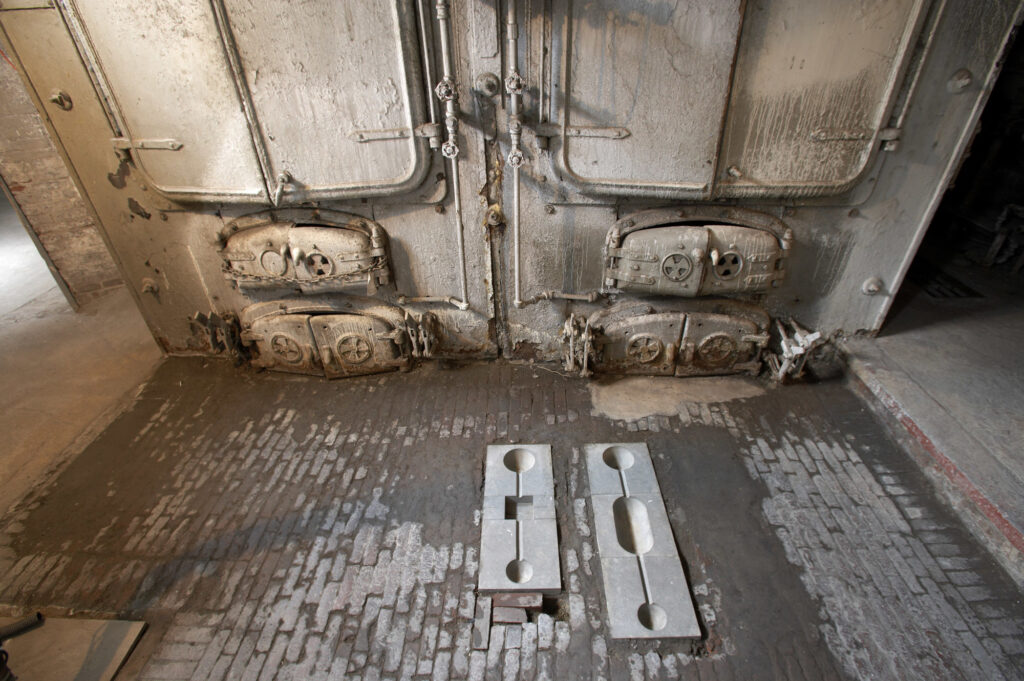
Mullican’s placement of steel flagstones in the MoMA PS1 boiler room speaks directly to the spatial logic of the bathroom. Both the boiler room and the bathroom are the hidden, utilitarian bowels of architecture, sites defined by plumbing, thermal regulation, fluid dynamics, and waste. By inserting his symbols into the floor of this functional zone, Mullican treats the building’s infrastructure as an archeological site.
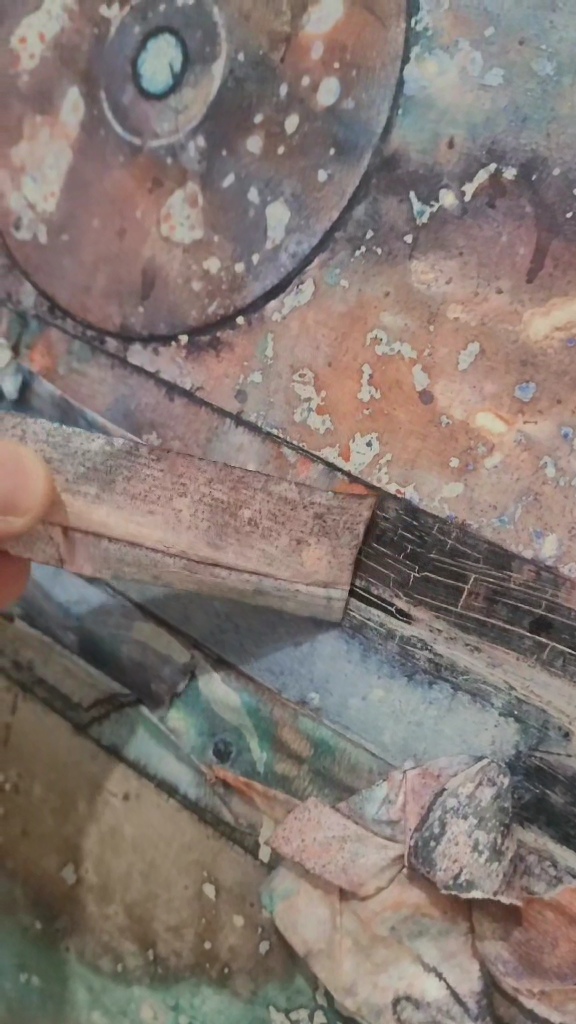
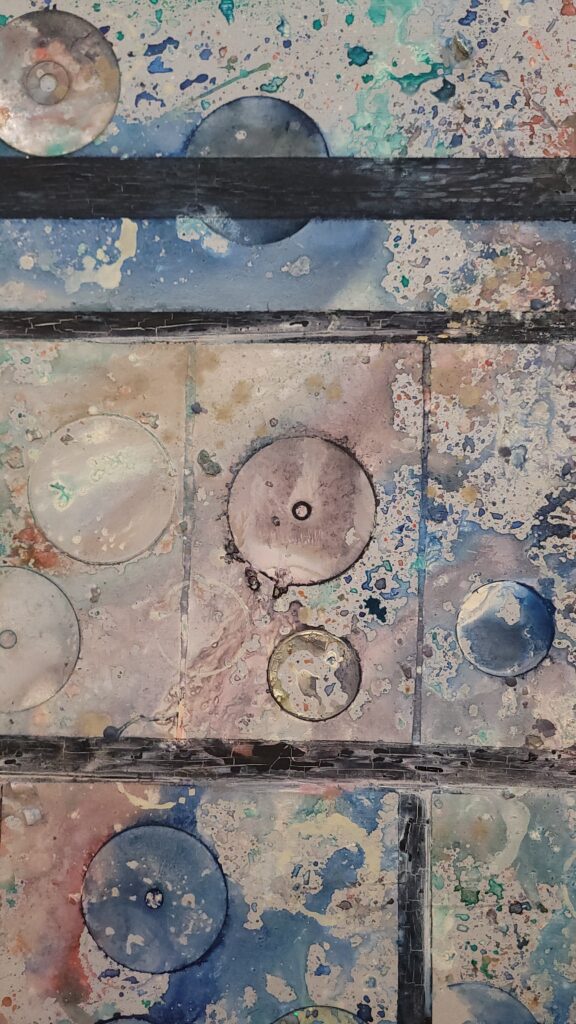
This mirrors your use of CDs as “anachronistic devices” embedded in the floor. Neither the steel flagstones nor the optical discs serve their original storage or structural purposes anymore. They have been grounded, forced into the horizontal plane to become reflective, aesthetic matter. They both establish an unstable temporal economy, marking the floor not as a static foundation, but as a site of historical sedimentation.
The Organic Breach
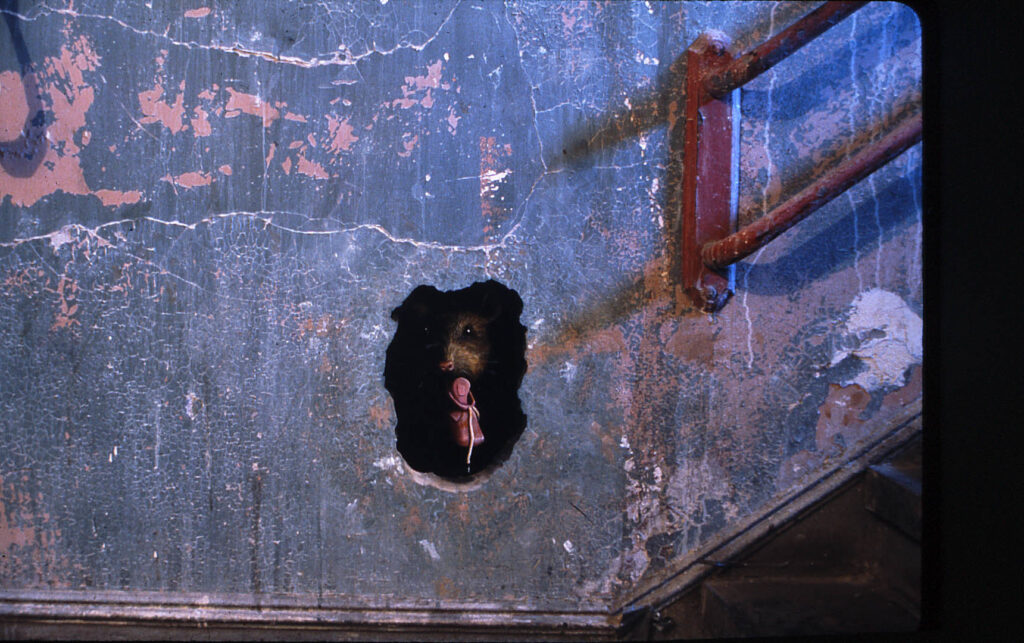
If Rist’s Selbstlos im Lavabad represents liquid earth erupting from a knot in the floorboards, Rockman’s creature is the biological necessity of decay. The piece occupies a literal rupture in the peeling plaster, a wound in the architecture. The detail of the creature’s tongue protruding from the void, reaching past the threshold of the wall, activates the hole not as a mere framing device, but as a breathing, consumptive mouth.
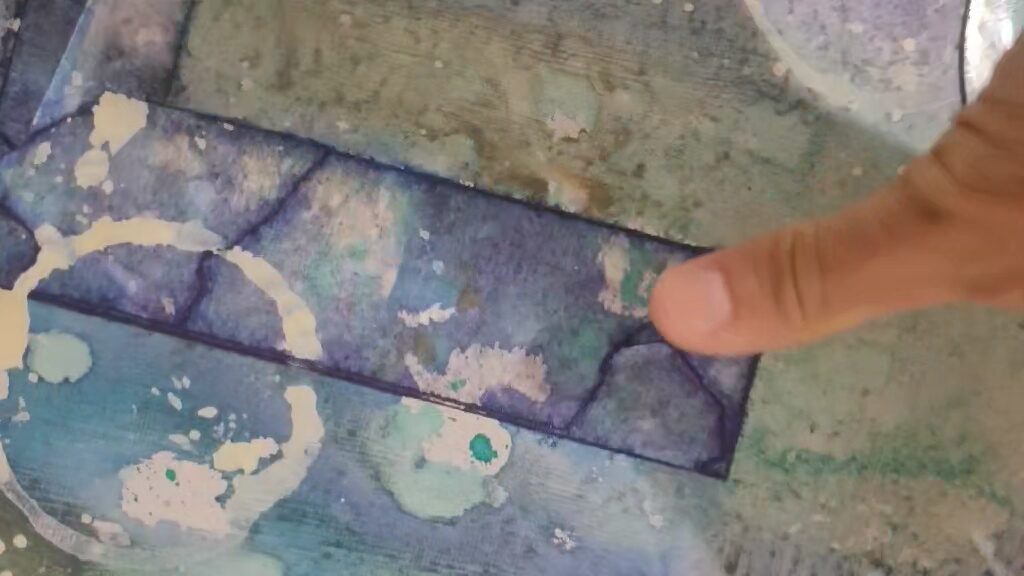
This aligns seamlessly with the concept of “reactive materiality.” Rockman’s creature thrives in the structural collapse of the building, much like the sodium bicarbonate, saliva, and domestic residues that transform your floor into a living, chemical system. It is the realization of the “worm and the flower” cycle: the acknowledgment that true sympoiesis requires an embrace of the abject, the vermin, and the organic matter that reclaims human-built environments.
Cultivating the Cavern
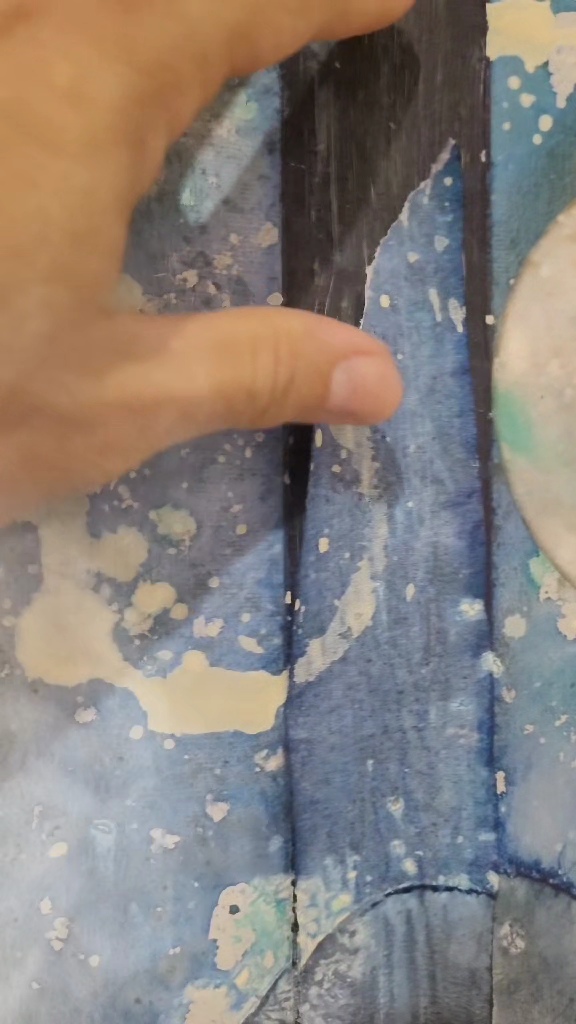
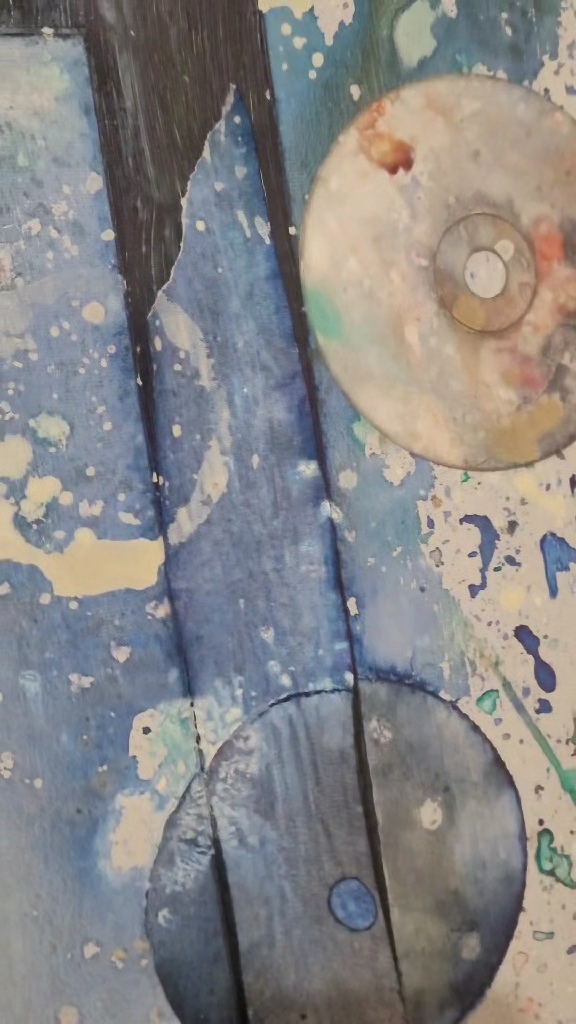
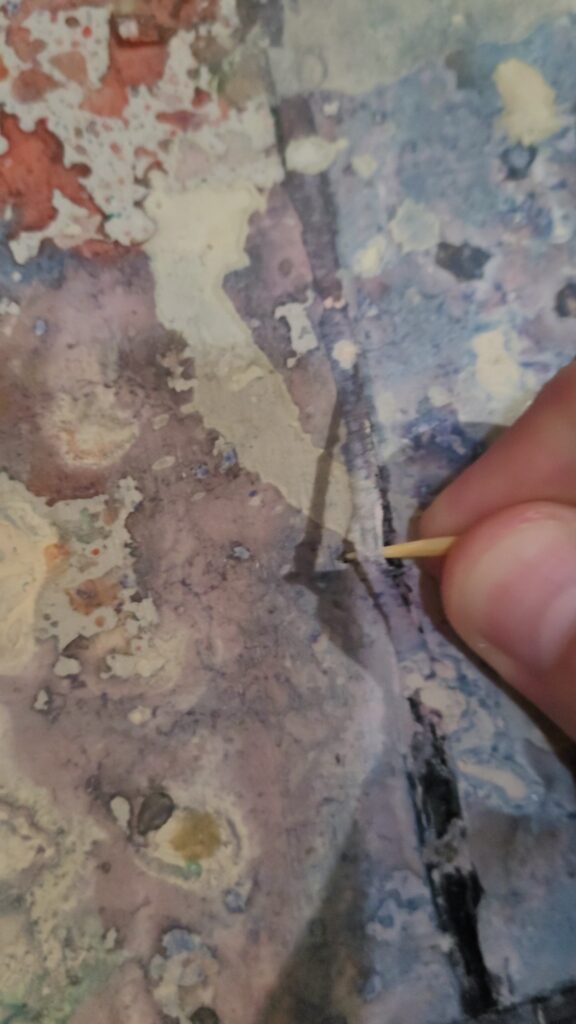
Collectively, these works frame the architectural enclosure not as a shelter, but as a porous, entropic body. The descent into a deliberate, cave-like aesthetic, where mineral textures, pigments, and water converge. A domestic bathroom shed its sterile function. It becomes a gruta, a primordial cavity. In such an environment, the lighting ceases to be merely functional. The integration of specialized illumination, such as indoors grow lights, would not simply reveal the CDs and chemical reactions in the penumbra, but would actively participate in the space’s biological and optical unfolding.
By treating the floor as a site of accumulation and leakage, the boundary between geological time (the lava, the minerals, the steel) and biological time (the saliva, the rat, the viewer’s bent spine) dissolves entirely.
Leave a Reply