The present text does not organize itself as communication, but as residue. Its function is not to be immediately read, but to persist as an index of an ongoing process.
The notion of sympoiesis, as elaborated by Donna Haraway, proposes systems that are collectively produced, refusing the idea of isolated authorship.



April 19, 2026
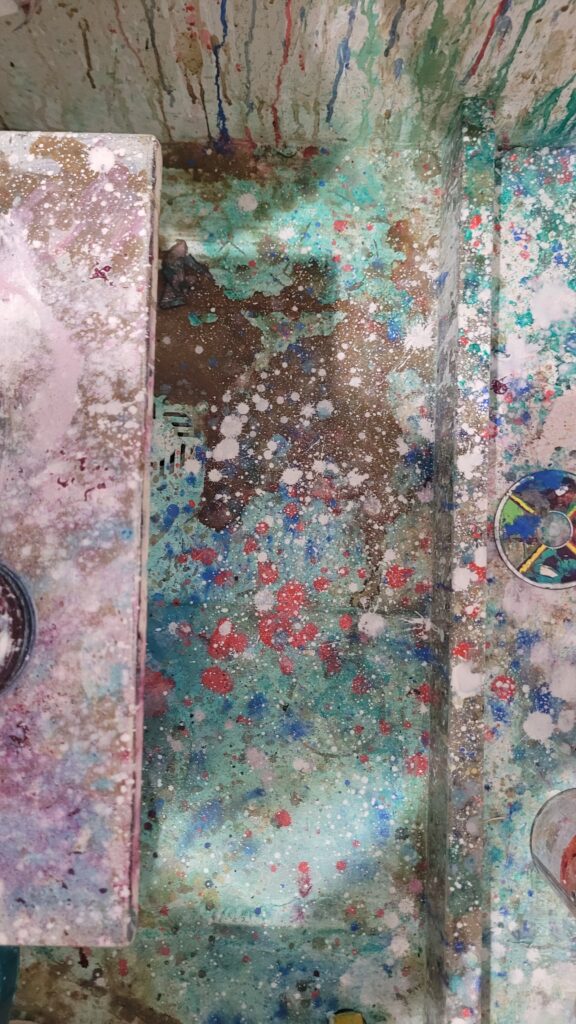
In this context, the bathroom emerges as a sympoietic system: paint, humidity, organic residues, artificial light, and human gesture constitute a network of co-production where no stable hierarchy is sustained.
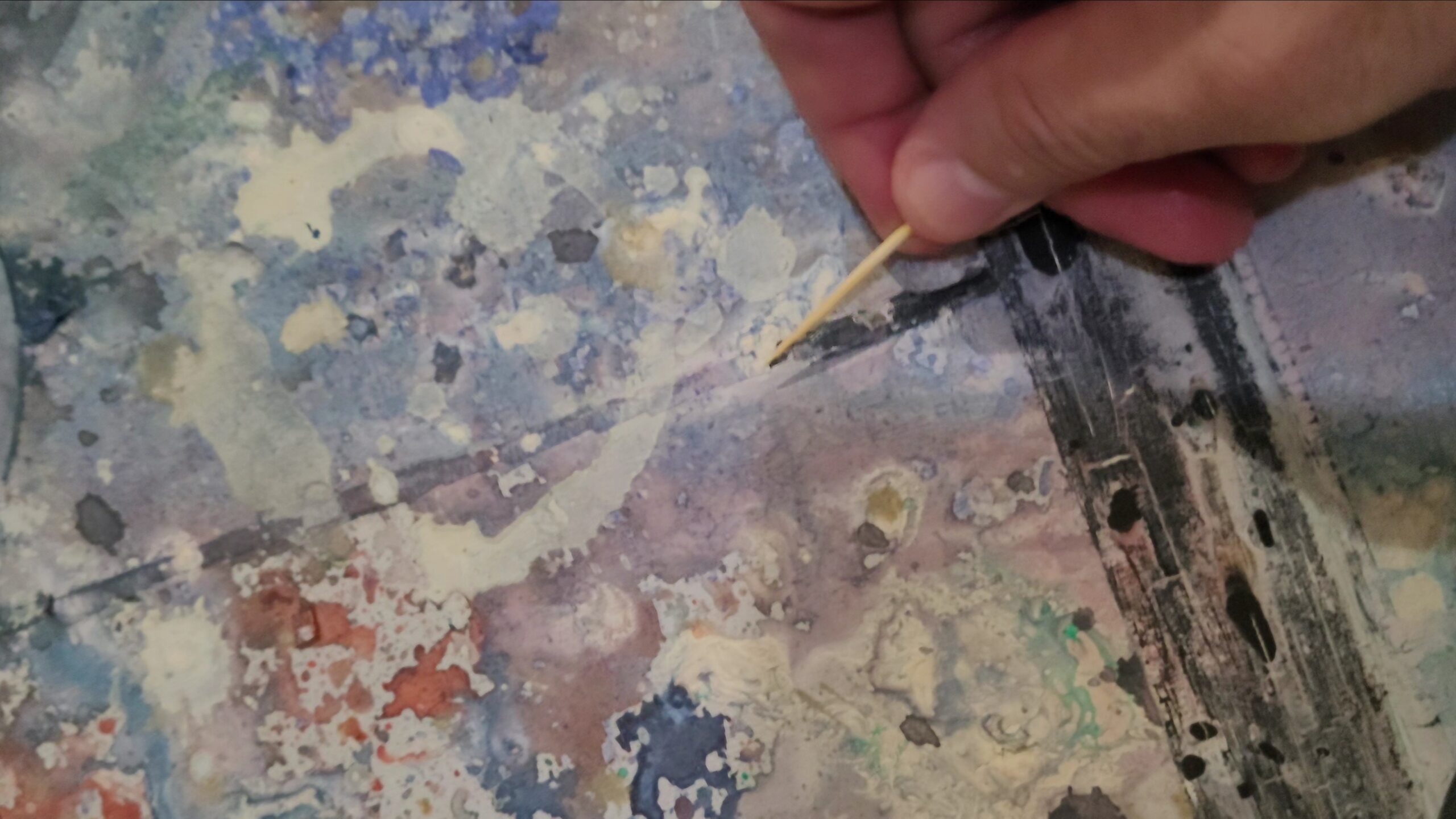
The removal of masking tapes, described as striptease, must be understood as an operation of structural unveiling. There is no eroticization of the body here, but an exposure of operative layers. The pictorial surface reveals itself as a stratified field, where each layer retains the memory of applied forces: pressure, containment, leakage.
The CDs reinserted into the painting function as anachronistic devices. Their presence introduces a displaced temporality, where obsolete technologies are reinscribed as aesthetic matter. They cease to operate as storage media and begin to act as reflective surfaces, establishing an unstable optical economy.
The incorporation of unconventional materials such as sodium bicarbonate, saliva, and domestic residues displaces painting into the field of reactive materiality. The work ceases to be representation and becomes process. The surface is no longer merely a support, but a system in continuous transformation, susceptible to chemical reactions, sedimentation, and potential collapse.
In this sense, the decision between fixing or allowing the layers to fall is not merely technical, but epistemological. Fixing implies stabilizing the process, converting it into an object. Allowing it to fall maintains the work in a state of openness, where entropy participates as an agent.
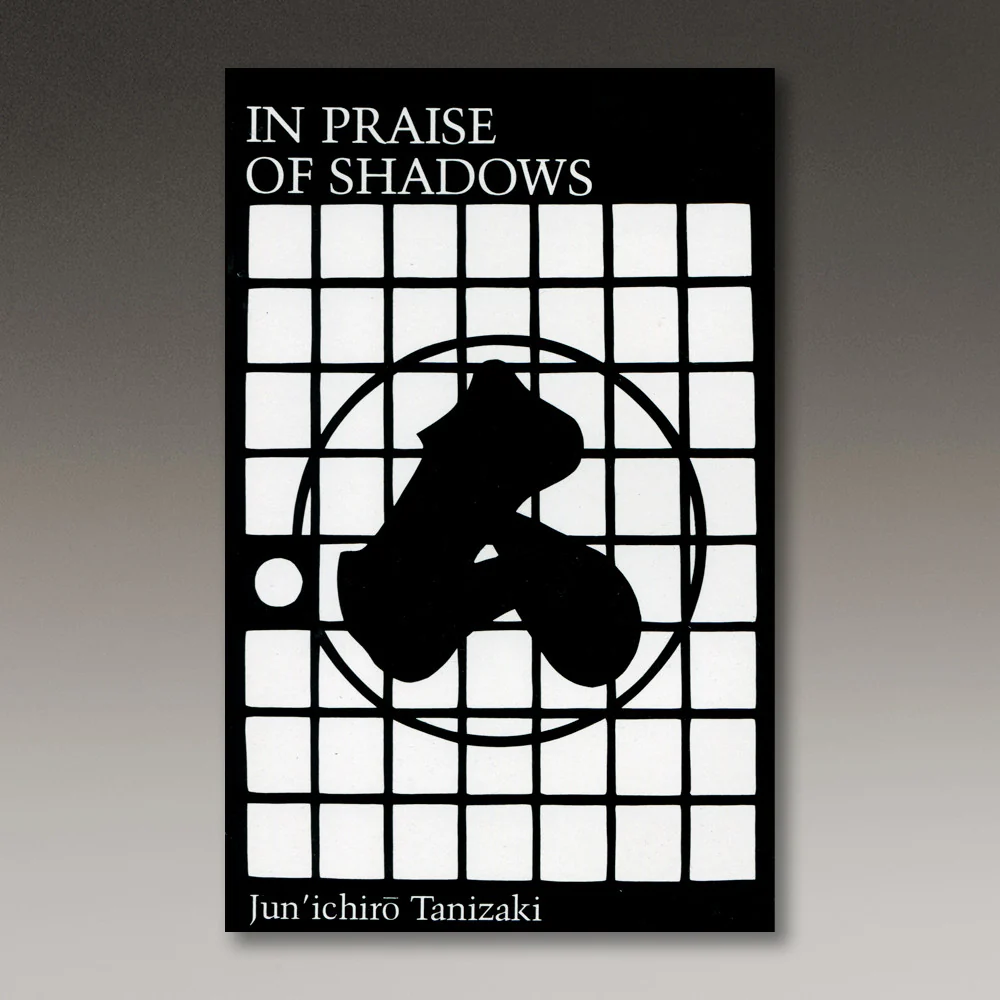
1933 essay by Japanese novelist
Jun’ichirō Tanizaki
The reference to In Praise of Shadows by Jun’ichirō Tanizaki introduces an aesthetic dimension that privileges penumbra, opacity, and temporal accumulation. Beauty does not reside in clarity, but in the density of relations that become perceptible only under conditions of reduced visibility.
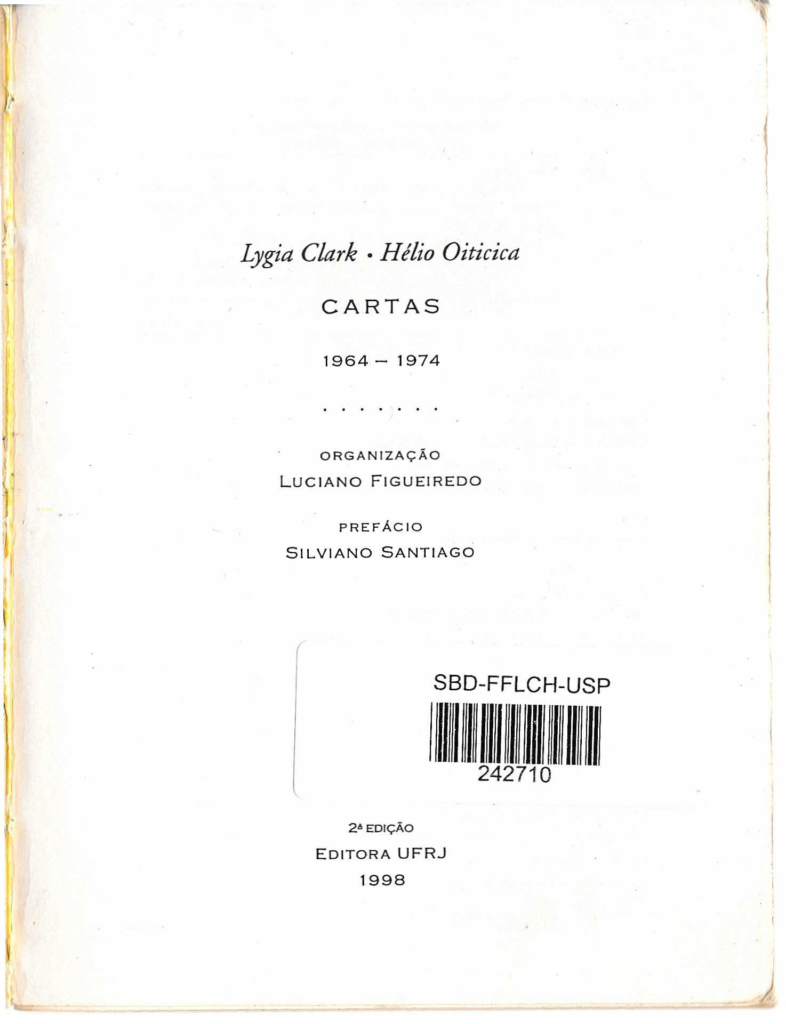
This epistolary must be understood as a living archive. Its legibility is not immediate, and may never be total. Like the correspondences between Lygia Clark and Hélio Oiticica, its potency lies in its capacity to activate a deferred reading, where time itself operates as co-author.
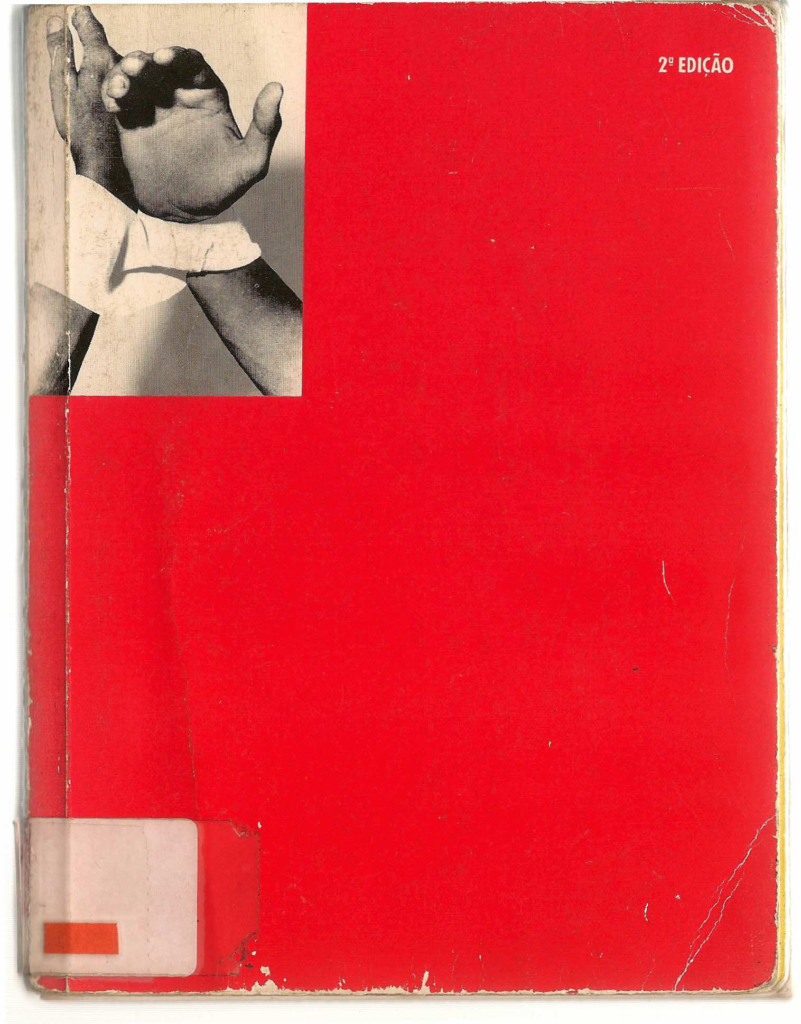
The observation that “no one reads” does not constitute failure, but condition. The archive does not demand an immediate audience. It projects itself as a reserve of meaning, available for future interpretative activations.
Leave a Reply